Seishiro Nagi Character Analysis: Blue Lock’s Lazy Genius Explained
Spoiler warning: This article covers Blue Lock manga and anime events through the Neo Egoist League, including major developments in Nagi’s arc.
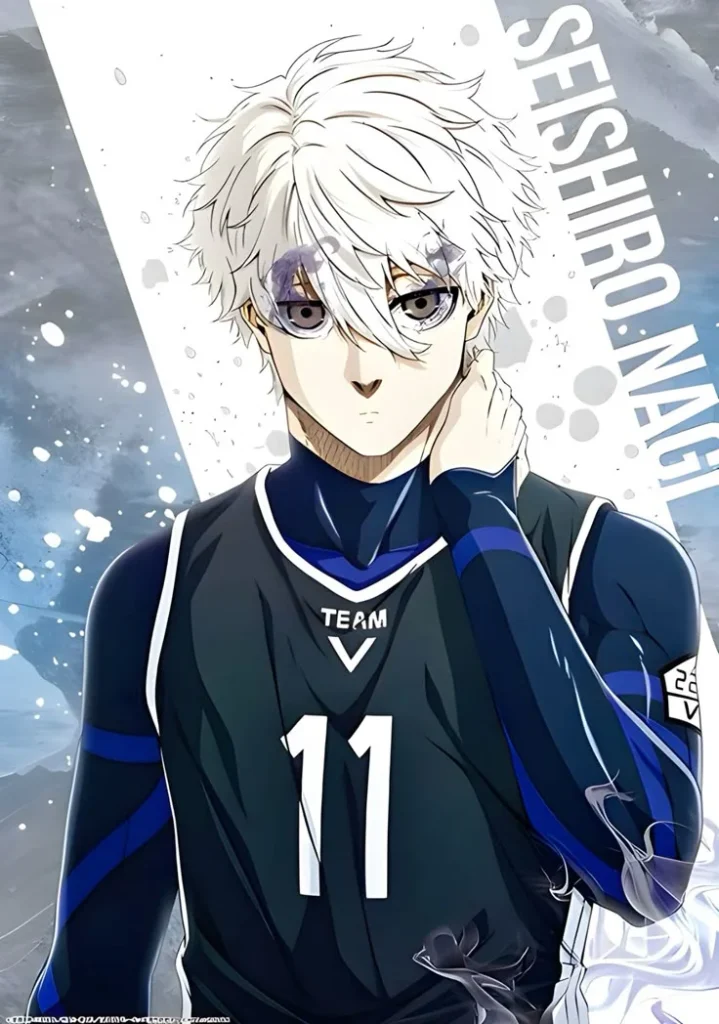
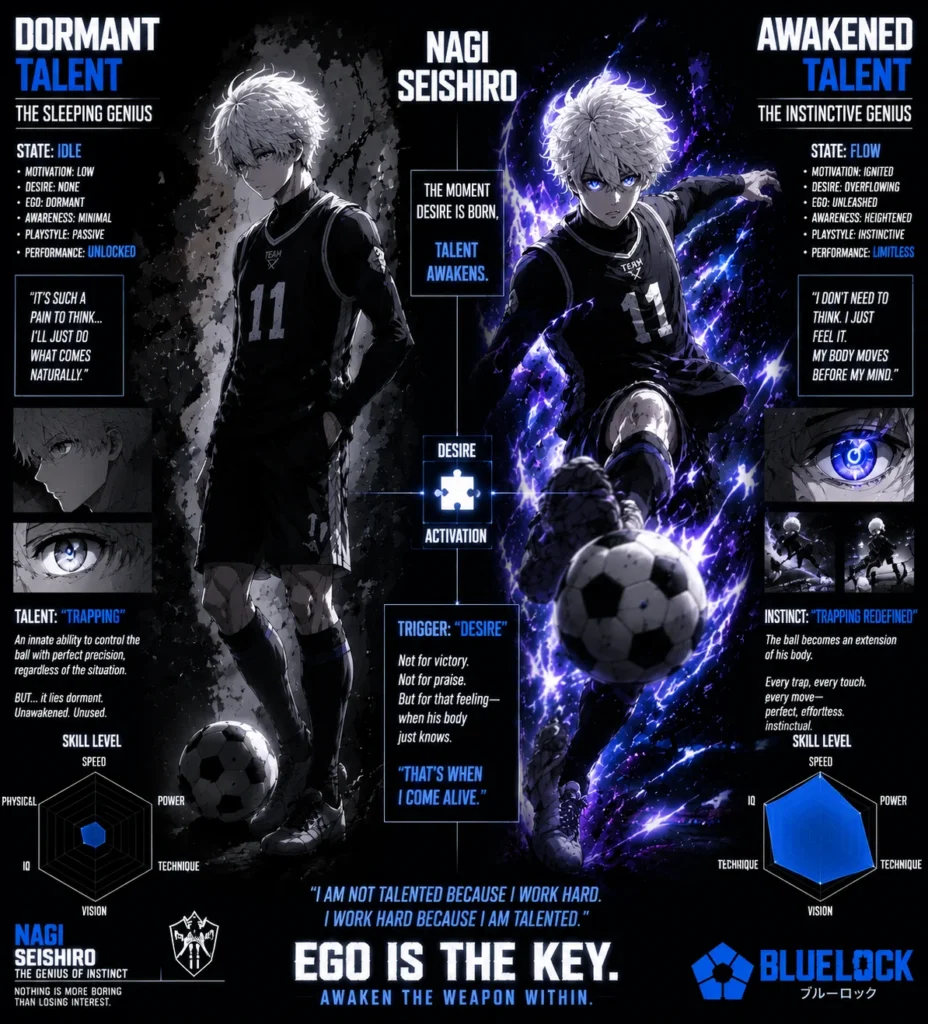
Seishiro Nagi is Blue Lock’s genius striker, known for his elite trapping ability, aerial control, and effortless finishing. His story is not just about talent, but about learning to build his own ego instead of relying on Reo Mikage’s dream.
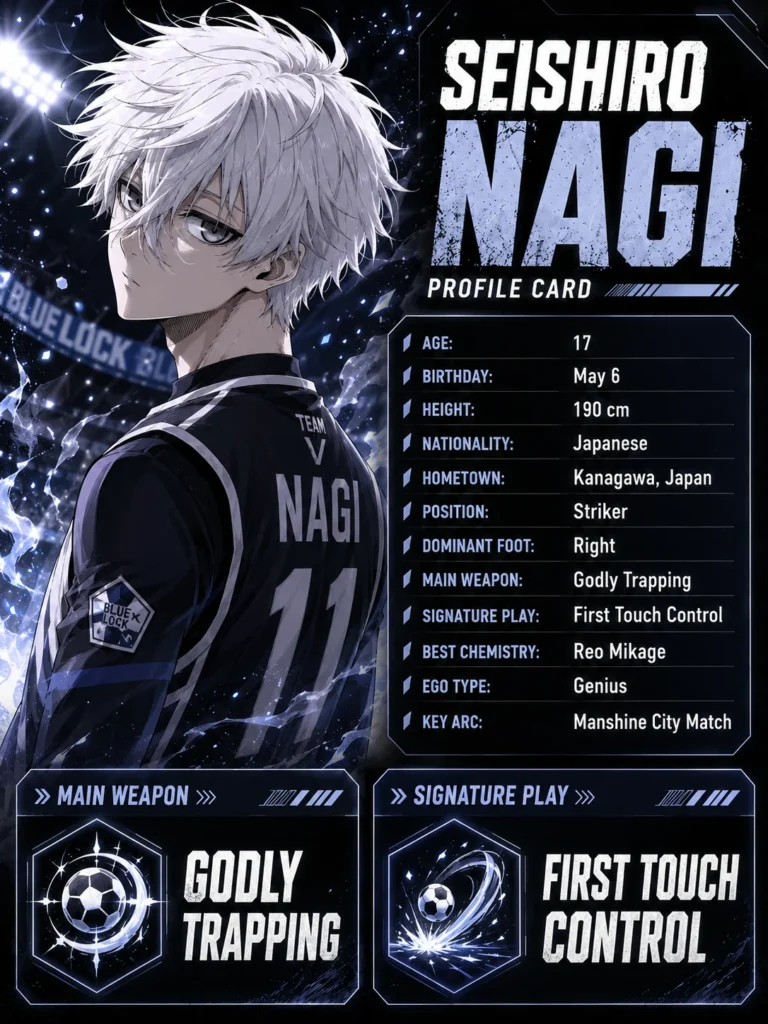
Who Is Seishiro Nagi?
Every Blue Lock fan knows Nagi is a genius. Most stop right there.
They see a tall, sleepy striker who barely tries and still scores goals that leave everyone speechless. They call him the lazy genius, laugh at his low-effort attitude, and move on. But that reading misses the real point of his character.
Nagi is not interesting because he is talented and lazy. He is interesting because his laziness was never really laziness. It was the absence of a reason to care.
Despite playing football for only six months before entering Blue Lock, he ranked 221st overall and immediately became the top scorer of Team V with seven goals at debut. Six months. Top scorer. Goals scored without truly trying.
That is the paradox the story builds from the start. The rest of his arc answers one question: what happens when someone this talented finally finds a real reason to care?
How Reo Mikage Found Nagi
Nagi’s story starts on a staircase. Reo threw a phone at him, Nagi jumped down all 17 steps and caught it with his foot. Reo saw the talent immediately and invited him to play football. Nagi agreed, not because football interested him, but because being with Reo was not too much trouble.
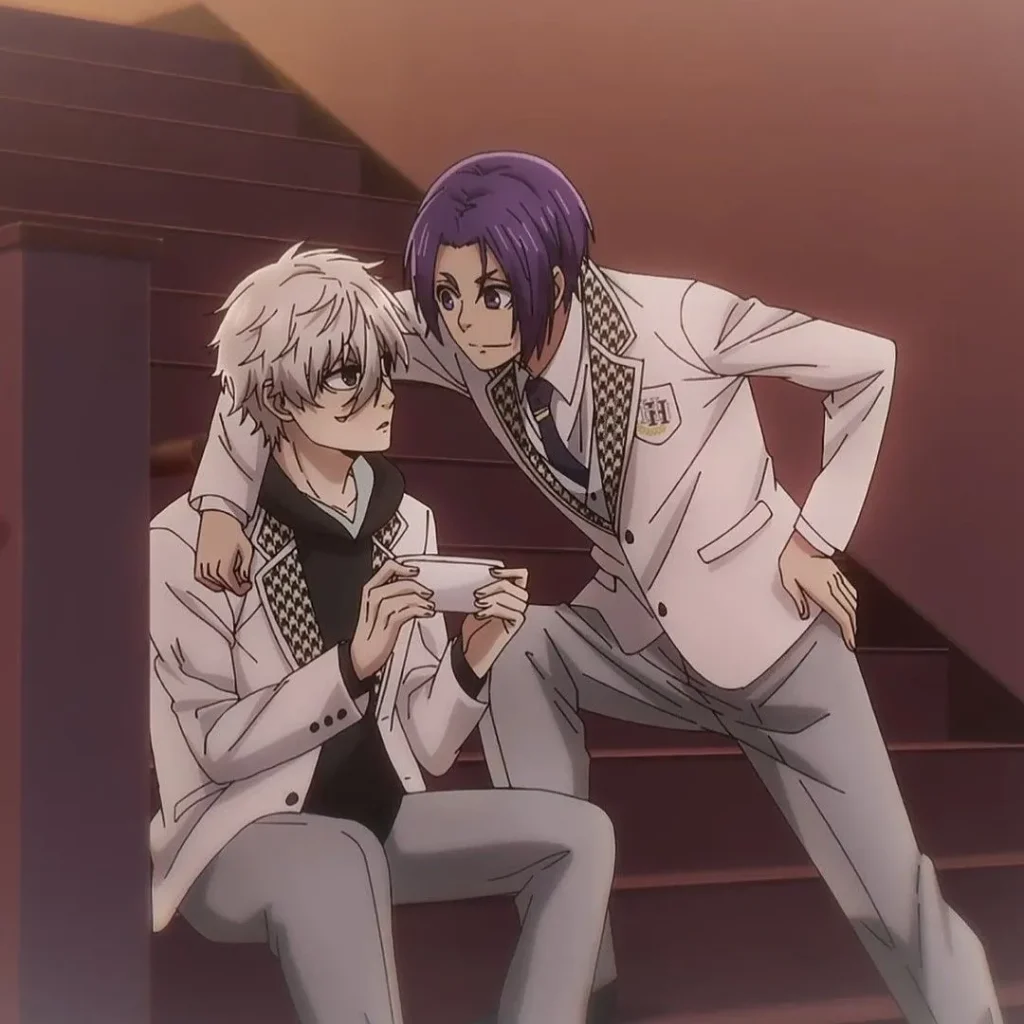
His entry into the sport was completely passive. Someone else spotted the potential. Someone else made the decision. Nagi just went along.
This is exactly the problem Blue Lock eventually forces him to face. Borrowed motivation can take a player far. It cannot take them to the top.
Nagi’s Trap: What Makes It Special
His trap is the best first touch in Blue Lock. He can control any ball, from any angle or speed, in a single contact using his toes, heels, back, or any part of his body.
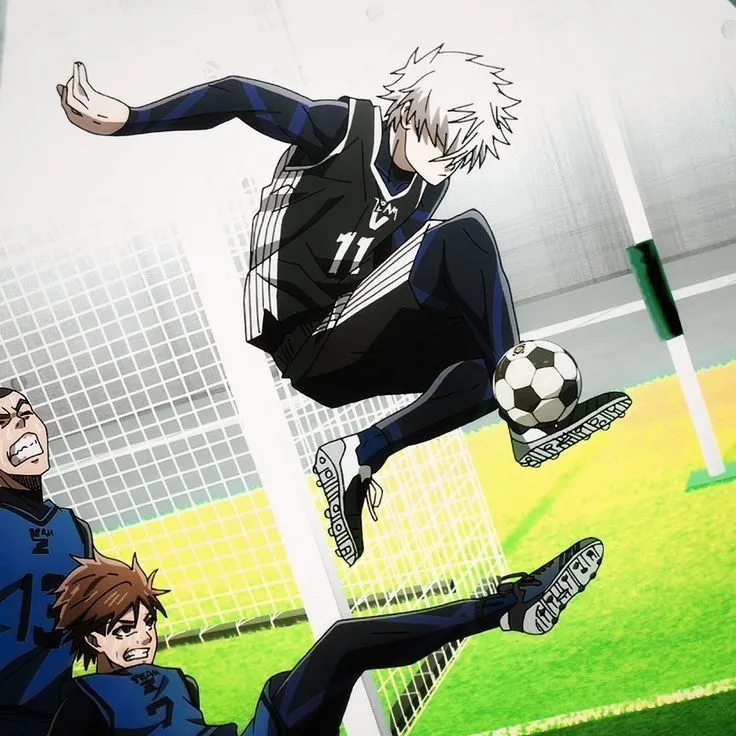
Most players trap the ball and then think about the next move. Nagi combines both into one action. The trap is not a reset. It is the play itself. By the time defenders figure out what happened, the chance is already gone.
This is also why the Reo partnership works so well early in the series. Reo finds Nagi in tight spaces with precise passes. Nagi converts balls that most strikers cannot even receive cleanly. Together they work as one unit, Reo providing the service and Nagi providing the finish.
But their first real test exposes the problem. Against Team Z, it becomes obvious that Nagi’s best football depends almost entirely on Reo’s passes. Without that service, he cannot create on his own. The trap is elite. The player using it has no personal drive yet.
“Nice to Meet You, Japan”: The Goal That Changes Everything
This is the scene that defines Nagi. If you only remember one moment from his arc, make it this one.
Blue Lock falls behind in the U-20 match. Their shots keep getting saved or blocked. Then the ball falls to Nagi in a crowded area near the goal.
Instead of going for a straightforward shot, he stops the ball with one foot while holding off two defenders, taps it to the other side, spins 360 degrees, and volleys it into the net. The stadium goes silent.
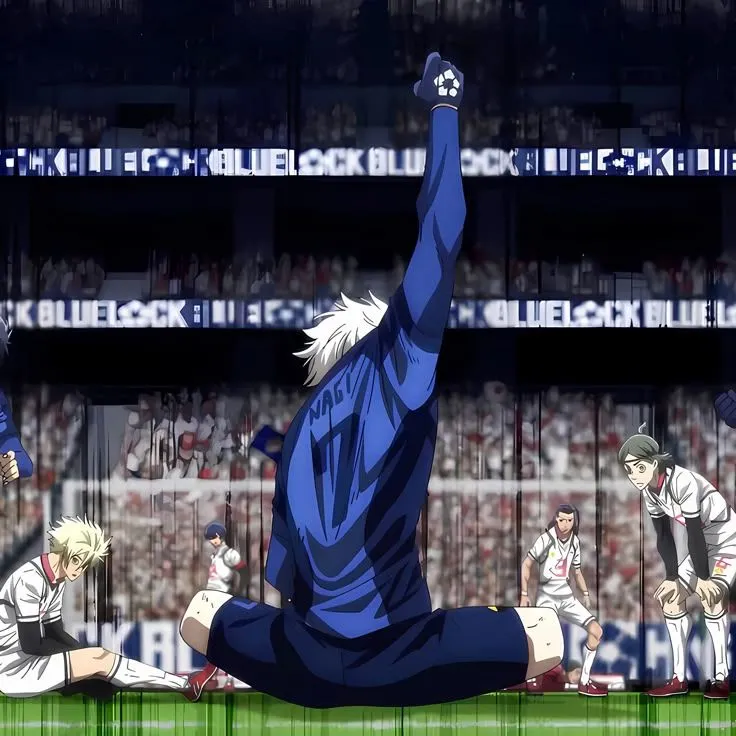
He sits down on the pitch, pumps his fist once, and says: “Nice to meet you, Japan. I’m Nagi Seishiro.”
The anime adapted this scene with noticeably better production quality than surrounding episodes, and fans immediately called it one of the standout moments of the season.
The line sounds like a casual greeting. It is actually an announcement. Nagi is not introducing himself as a Blue Lock experiment or Reo’s partner. He is introducing himself as a footballer who belongs on this stage.
Up to this point, every goal Nagi scored was inside Reo’s plan. This one was his. That makes it the first real step toward his own ego, and everything after it reflects that shift.
Why “Lazy Genius” Is the Wrong Label
Laziness means choosing not to try. That is not what is happening with Nagi.
He grew up finding everything easy. School, games, everyday challenges, none of them gave him any real resistance. When nothing pushes back, there is no reason to push forward.
Football was different. When Reo first showed it to him, it was unpredictable in a way Nagi could not immediately figure out. That caught his attention. He picked it up fast, but it was the first thing that actually challenged him.
So the real issue was never effort. It was the absence of something worth giving effort for. Blue Lock cannot create desire from nothing. What it can do is build the right conditions for desire to grow. That is what it slowly does with Nagi across the series.
Nagi and Reo: Why Their Bond Is Also His Biggest Problem
Reo discovered Nagi, introduced him to football, and gave him a goal to chase. Without Reo, Nagi would probably still be sleeping and playing video games.
But as the story develops, that same bond starts working against Nagi.
Reo needs Nagi to fulfill his World Cup dream. Nagi, having no personal dream of his own, slots comfortably into that role. It works well on the surface. Underneath, Nagi is not building his own ego. He is supporting someone else.
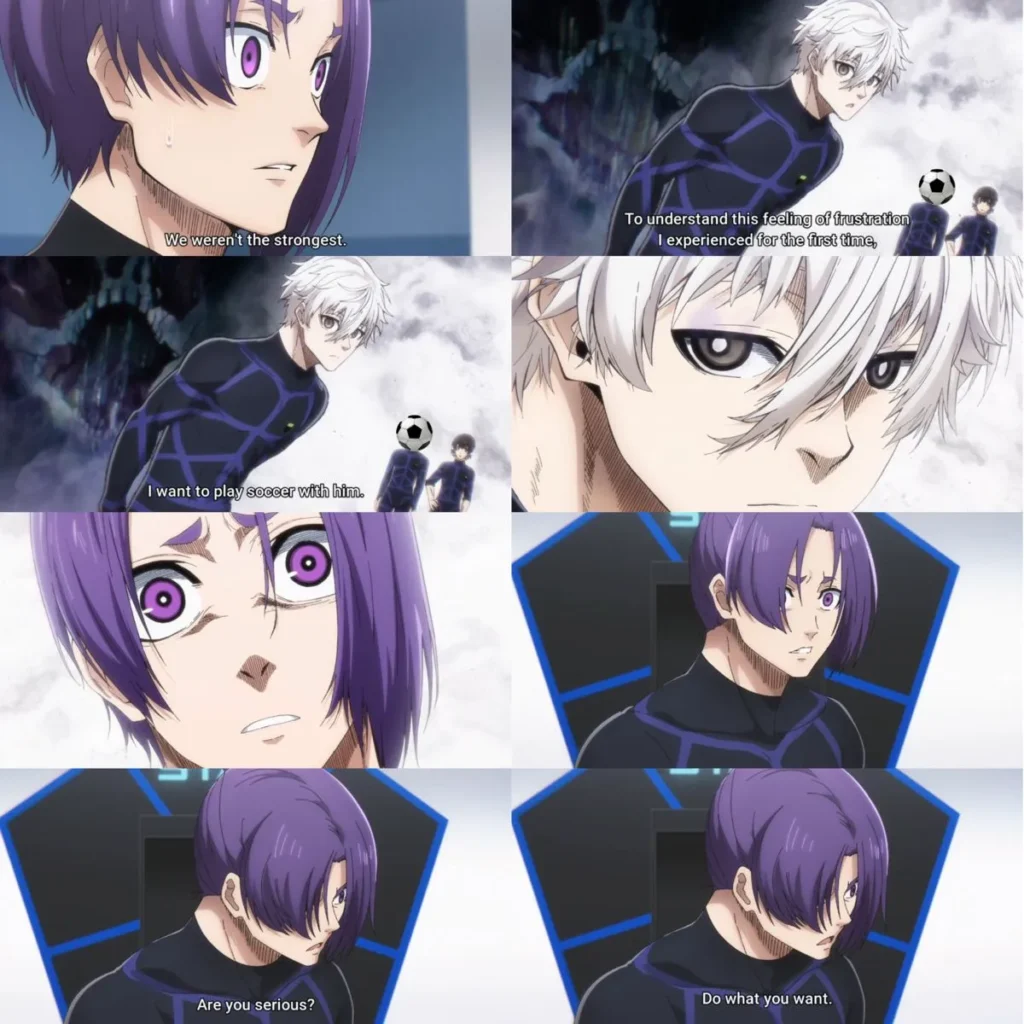
After Team Z beats them in the First Selection, Nagi starts caring more about football. But even that motivation is mostly about helping Reo, not about what Nagi himself wants. The improvement is real, but the foundation is still borrowed.
The turning point comes in the Neo Egoist League. Nagi tells Reo not to pass to him anymore. He wants to score the deciding goal on his own, without relying on his partner, even though it scares him.
That is the most important moment in his arc. Not his best goal. Not a ranking achievement. Just a decision to stop playing inside someone else’s story.
Nagi’s Ego Development: Four Clear Phases
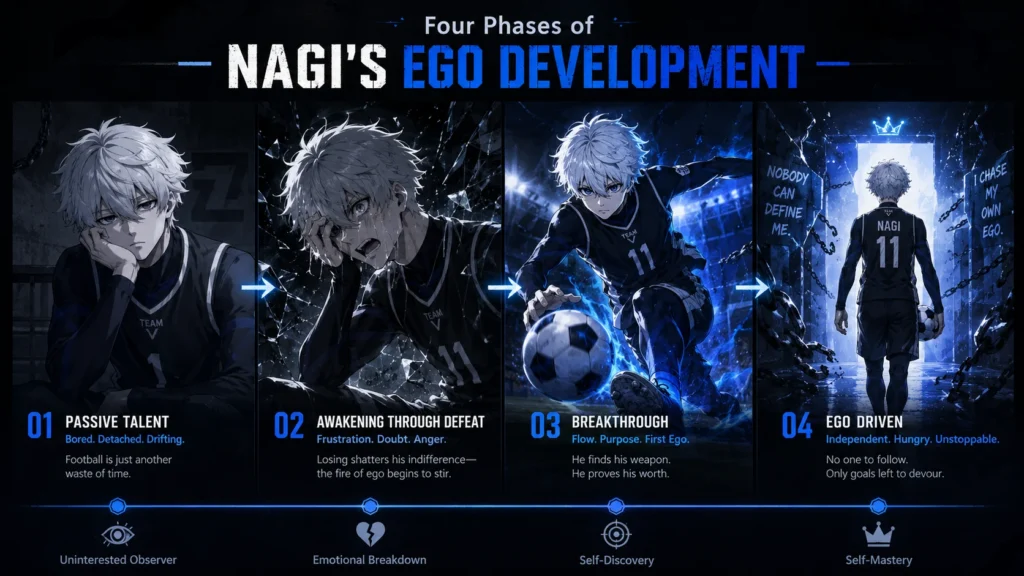
Phase 1: Playing for Reo
Nagi joins Blue Lock because Reo wants him there. His goals serve Reo’s dream, not his own.
Phase 2: First real loss
Team Z beats them, and Nagi experiences frustration for the first time. He starts caring, but mostly because he wants to help Reo recover.
Phase 3: His own introduction
The U-20 goal is the shift. He scores something that belongs entirely to him.
Phase 4: Choosing his own path
In the Neo Egoist League, Nagi starts moving toward the kind of player he wants to become.
His peak in this phase is the Five Shot Revolver Fake Volley. He juggles the ball in midair while evading defenders and finishes with a shot so unpredictable that even Ego says it cannot be recreated. That is what Nagi looks like when his talent and genuine desire are both switched on at the same time.
Nagi’s Blue Lock Setback: What Ego Actually Said
This section covers the Neo Egoist League outcome. Skip ahead if you prefer to avoid that detail.
Ego does not remove Nagi because he failed. He removes him because he stopped being hungry after he succeeded.
After producing a miracle goal against Isagi, Nagi feels satisfied. He got what he wanted. The problem is that satisfaction in Blue Lock is a dead end. Ego explains it plainly: an animal with a full stomach forgets to hunt.
Nagi should have recognised that the goal was better than his current level deserved and pushed further. Instead, he let it convince him the chase was over. His desire quietly switched off.
When Nagi says goodbye to Reo, he does not blame the system or call the decision unfair. He admits it honestly: his wish to stay close to Reo was stronger than his ambition to be the best. He apologises for not finding his own dream in time, and for not shooting alone when the moment came.
It is the most honest thing he says in the entire series.
Nagi vs Isagi vs Barou
These three represent three completely different answers to what a striker’s ego looks like.
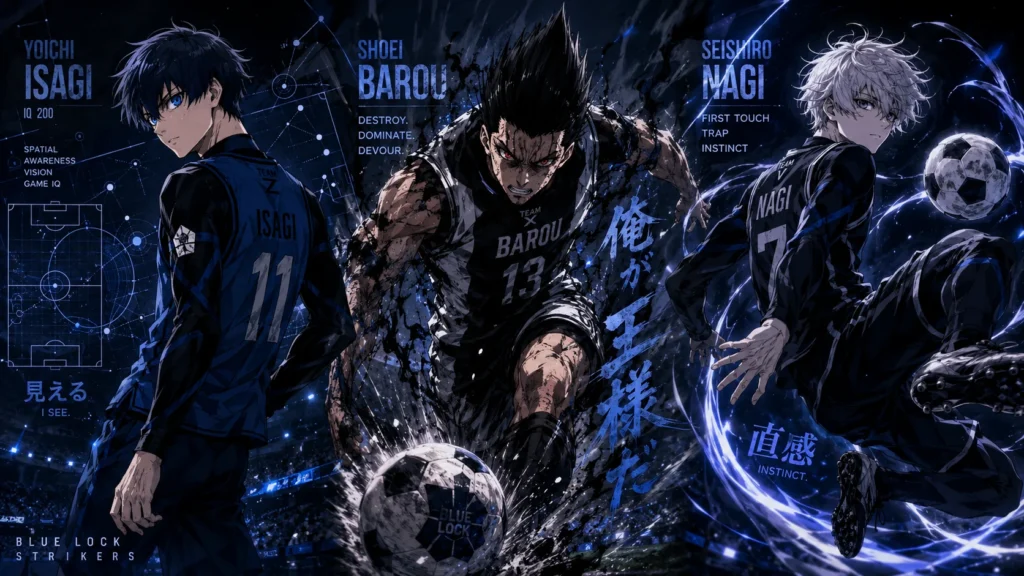
Isagi thinks his way to goals. He reads the field, spots patterns, and rebuilds his game constantly. His level keeps rising because his method does not depend on how he feels on a given day.
Barou forces his way to goals. He plays like the pitch belongs to him and never accepts less than dominance. His drive is always present regardless of the situation.
Nagi feels his way to goals. When he is locked in and genuinely challenged, his football is unlike anything else in Blue Lock. The trap, the aerial control, the instinctive finishing, it all flows from a place no other player can access.
But that is also the risk. Isagi performs consistently because his process is disciplined. Barou performs consistently because his hunger does not turn off. Nagi’s best football depends on being in the right mental state. When that state is there, almost nobody in the series matches him. When it is not, all that talent sits unused.
What Nagi’s Setback Means for His Future
After his setback, Nagi’s story points toward a new kind of hunger. For most of the series, he either played because Reo wanted him to or because football briefly felt interesting. But once he understands that borrowed motivation is not enough, his arc shifts toward something more personal: the desire to become the best for himself.
The important shift is that Nagi can no longer survive as Reo’s dream alone. If he wants to return to the top, he has to build an ego strong enough to exist without borrowed motivation.
That is the ego Ego Jinpachi was waiting for. Not the mirror of someone else’s dream. Not fun seeking. A direct personal declaration with real stakes behind it.
It takes Nagi almost the entire series to reach the starting point most Blue Lock players arrived with on day one. But that is what makes it count.
Why the Story Needs Nagi
Nagi forces Blue Lock to ask a question nobody else raises: what if the talent was always there, but the person was not?
Isagi is the series lead because he wants it so badly. His drive compensates for whatever he lacks in raw ability. Most characters in Blue Lock follow a similar logic. Hunger is the engine.
Nagi breaks that pattern. He may be more naturally gifted than Isagi in certain areas. But for most of the story, that talent sits idle because there is nothing pulling it out. Blue Lock cannot build desire from scratch. The best it can do is create pressure until something real starts to grow.
That is a more honest story than most sports manga tell. Talent without a reason is just potential. And potential, by itself, does not win anything.
Conclusion
Seishiro Nagi is not a lazy genius. He is what talent looks like when it has not yet found its purpose.
The trap was always there. The spatial awareness was always there. The ability to score goals that nobody else could imagine was always there. What took the entire series to develop was the person willing to actually use all of it.
The “Nice to meet you, Japan” goal is the moment he introduces himself to himself. The Neo Egoist League setback is the moment he learns that feeling satisfied too early can be just as dangerous as giving up. The return is the moment he finally stops borrowing someone else’s ambition and builds his own.
That arc, slow and imperfect as it is, makes Nagi one of the most honest characters in Blue Lock. Not because of how good he was from the start. But because of how hard it was for him to care.
Frequently Asked Questions
What is Nagi’s ability in Blue Lock?
His trap is his main weapon and is considered the best first touch in the series. He can control any ball in a single contact from any angle or speed, using any part of his body. That ability, combined with strong spatial awareness and aerial control, makes him one of the most dangerous finishers in Blue Lock when he is fully engaged.
Why is Nagi called the lazy genius?
Because he entered Blue Lock having played football for only six months and immediately became a top scorer without visible effort or personal ambition. The label fits on the surface, but the series shows that his disinterest was not laziness. He simply had never found anything worth caring about.
Why did Nagi fall out of Blue Lock?
Ego’s verdict is that satisfaction killed his drive. After scoring a miracle goal and feeling he had defeated Isagi, Nagi stopped pushing. Ego calls it plainly: an animal with a full stomach forgets to hunt. The talent was still there. The hunger was gone.
What is the Five-Shot Revolver Fake Volley?
It is Nagi’s most powerful goal in the Neo Egoist League. He juggles in midair, evades defenders, and finishes with a shot so original that Ego himself says it cannot be repeated. It is what Nagi looks like when everything clicks at once.
Is Nagi stronger than Isagi?
In certain moments, Nagi’s technical ceiling is arguably higher. But Isagi’s consistency and drive make him more reliable over a full match. Nagi at his best is incredible. The question is whether he can stay there long enough.
Why did Nagi choose Manshine City?
He heard about Dennis Bergkamp’s trapping ability and learned Bergkamp played in England. That was enough. He picked England. It was the first football decision he made based on the player he wanted to become rather than following Reo.
Does Nagi come back after his setback?
Yes. He returns to the committee and declares he wants to be the best in the world and is prepared to destroy Blue Lock to get there. It is the most direct and personal statement he makes in the entire series.