BLUE LOCK CHAPTER 8: MESSAGE
BLUE LOCK CHAPTER 8: – A DETAILED BREAKDOWN
MESSAGE
Introduction: The Frustration and Tension After the Match
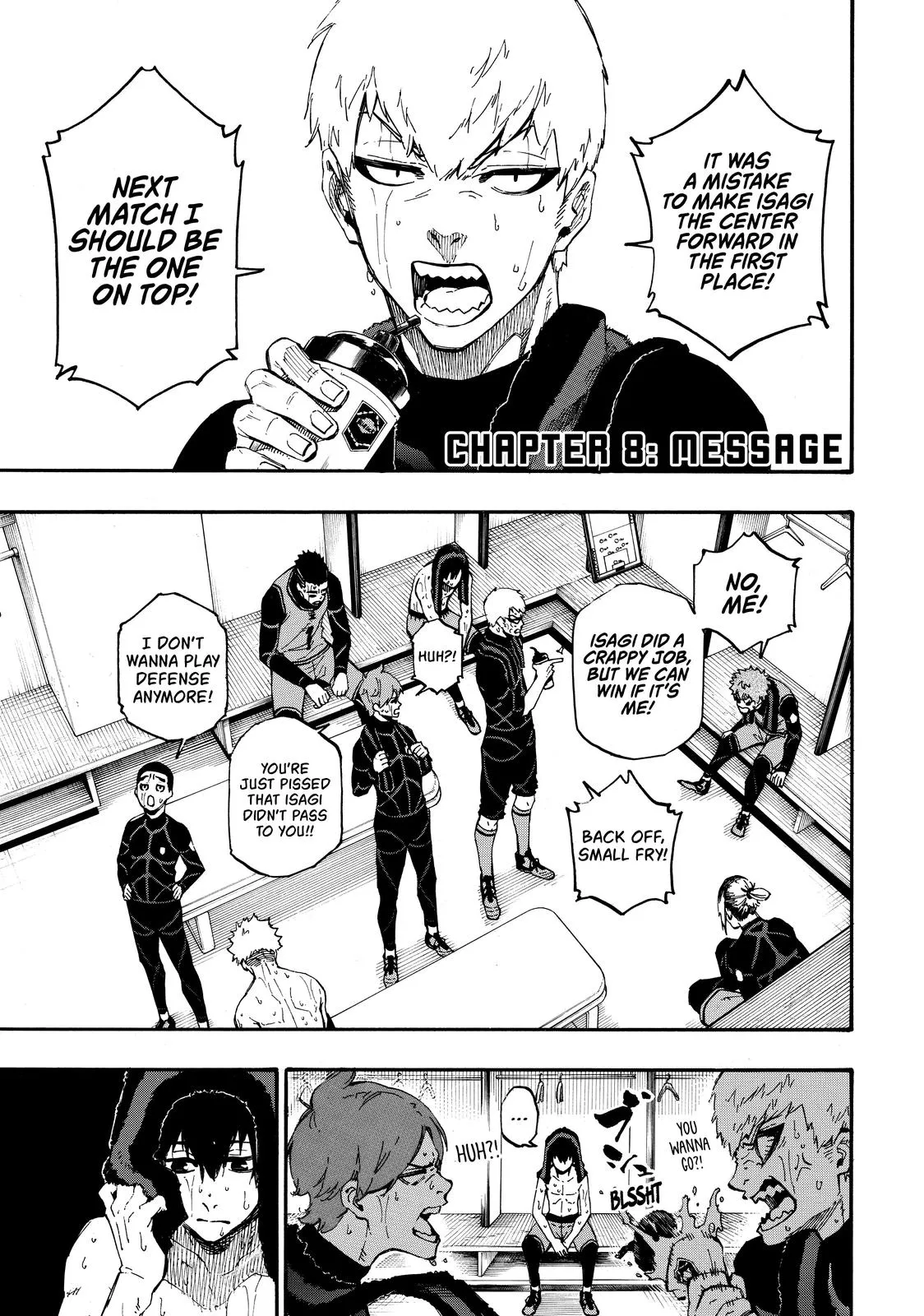
The chapter opens with an intense atmosphere in the locker room, where frustration brews among the players. The scene starts with one of the characters, drenched in sweat and visibly upset, exclaiming:
“NEXT MATCH I SHOULD BE THE ONE ON TOP!”
This line signals a desire for redemption and ambition to prove himself as a standout player. His anger stems from the fact that he feels he was overlooked, and he blames it on his teammate, Isagi. He declares:
“IT WAS A MISTAKE TO MAKE ISAGI THE CENTER FORWARD IN THE FIRST PLACE!”
This sets the tone for the chapter, revealing how the previous match has left wounds that have yet to heal. The tension grows as another character, equally agitated, responds with a sentiment of frustration:
“I DON’T WANNA PLAY DEFENSE ANYMORE!”
The anger is palpable in the locker room, but what’s also interesting is the realization that players have individual goals now — they are hungry for their own success rather than focusing solely on the team.
Team Dynamics: Self-Interest and Disagreement
As the players bicker, the true sense of rivalry within Team Z becomes apparent. While some argue over who is to blame for the loss, others make accusations in an attempt to shift the responsibility. A character, most likely frustrated by his lack of opportunities, snaps:
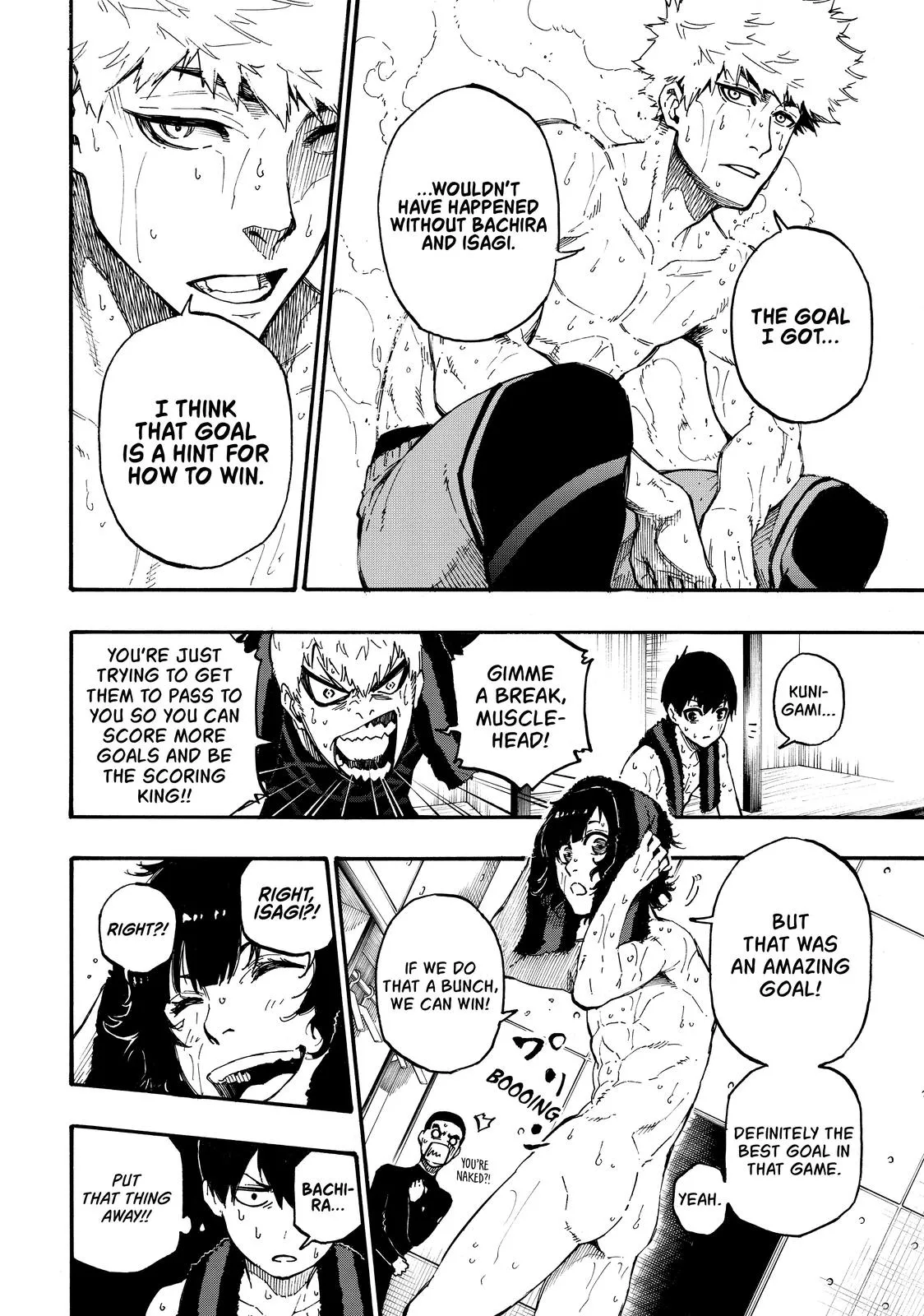
“YOU’RE JUST PISSED THAT ISAGI DIDN’T PASS TO YOU!!”
This breaks down the dynamic within the team, showing the self-centeredness that is taking hold. Players are no longer thinking about working together but are instead concerned with their own personal performance and reputation.
“ISAGI DID A CRAPPY JOB, BUT WE CAN WIN IF IT’S ME!” one player asserts, emphasizing his belief that he is the key to the team’s victory.
Another character, more aggressive, demands:
“BACK OFF, SMALL FRY!”
But, just as the situation is escalating, another character interrupts with a challenge, signaling the growing tension among teammates:
“YOU WANNA GO?!”
This verbal confrontation clearly reveals how much personal frustration the players are feeling. There’s no unity, just a fight for dominance. Their focus is no longer just about the match they lost but about their egos clashing.
The Struggle of Self Doubt: The Consequences of Playing in Blue Lock
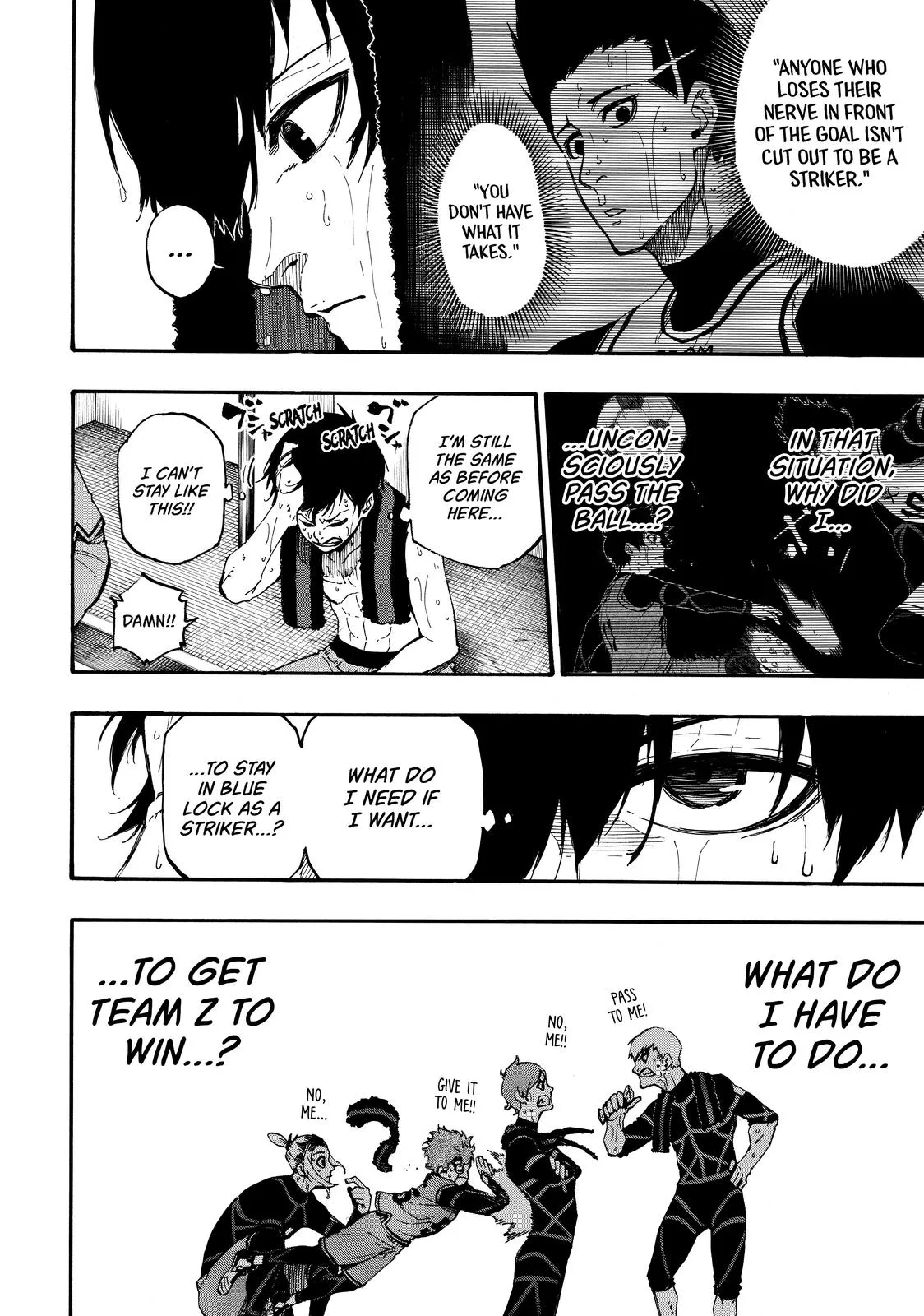
Cutting to a quieter, more reflective moment, one of the players begins to wrestle with his own doubts. He recalls the harsh reality of the situation and the scathing critique he received from his mentors.
“ANYONE WHO LOSES THEIR NERVE IN FRONT OF THE GOAL ISN’T CUT OUT TO BE A STRIKER.”
The weight of this criticism weighs heavily on him. He feels as if he doesn’t measure up to the expectations of Blue Lock and, perhaps worse, doubts his abilities to be a striker.
The character reflects on his own limitations, the mental block that prevents him from taking the next step. His frustration with himself deepens:
“I CAN’T STAY LIKE THIS!!”
This feeling of being stuck is echoed when he wonders:
“WHAT DO I NEED IF I WANT TO STAY IN BLUE LOCK AS A STRIKER?”
The introspection leads to a critical turning point where he realizes that, in order to survive in this hyper-competitive environment, he needs to find his own unique way to contribute.
A New Plan: Understanding the Role of the Striker
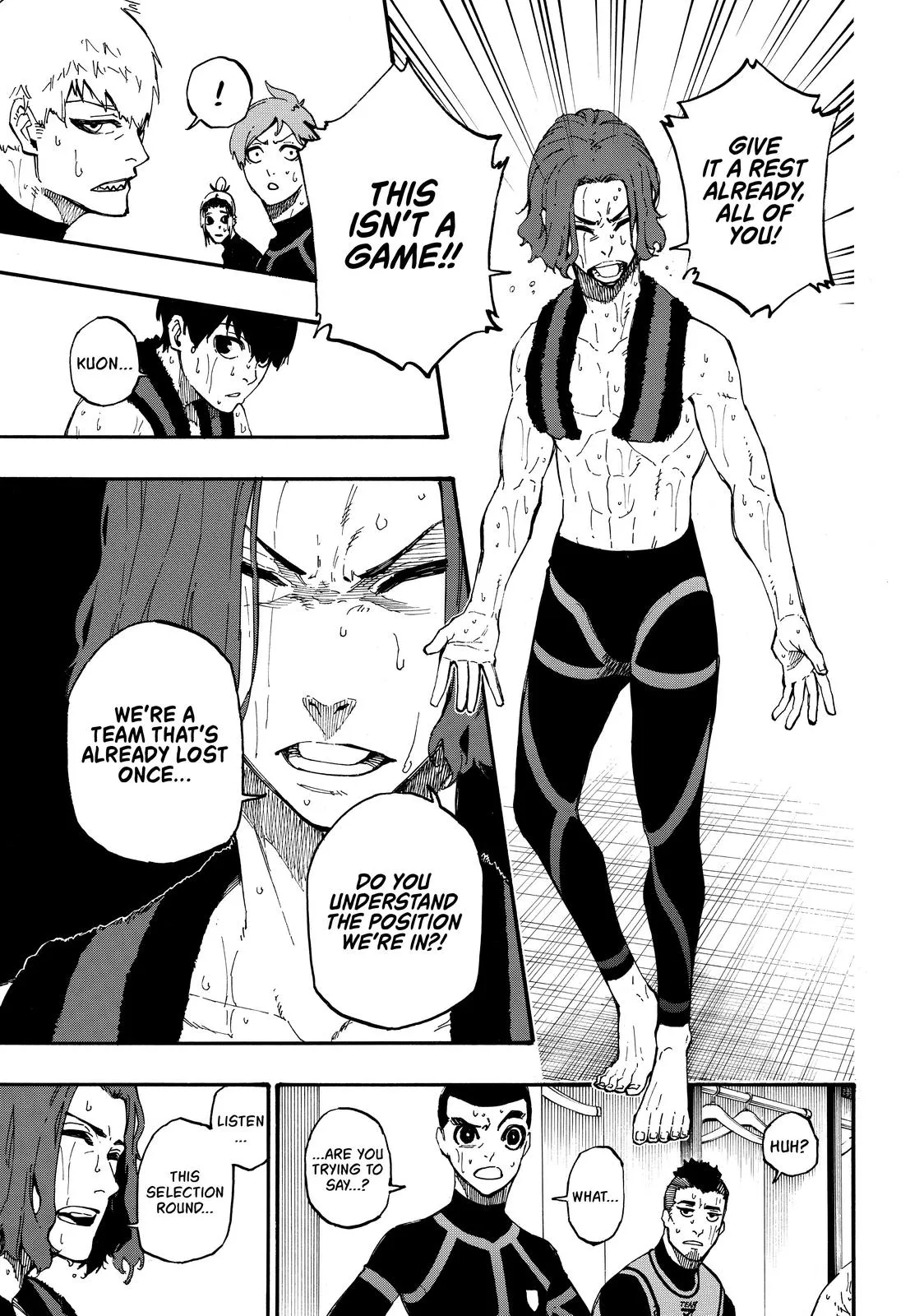
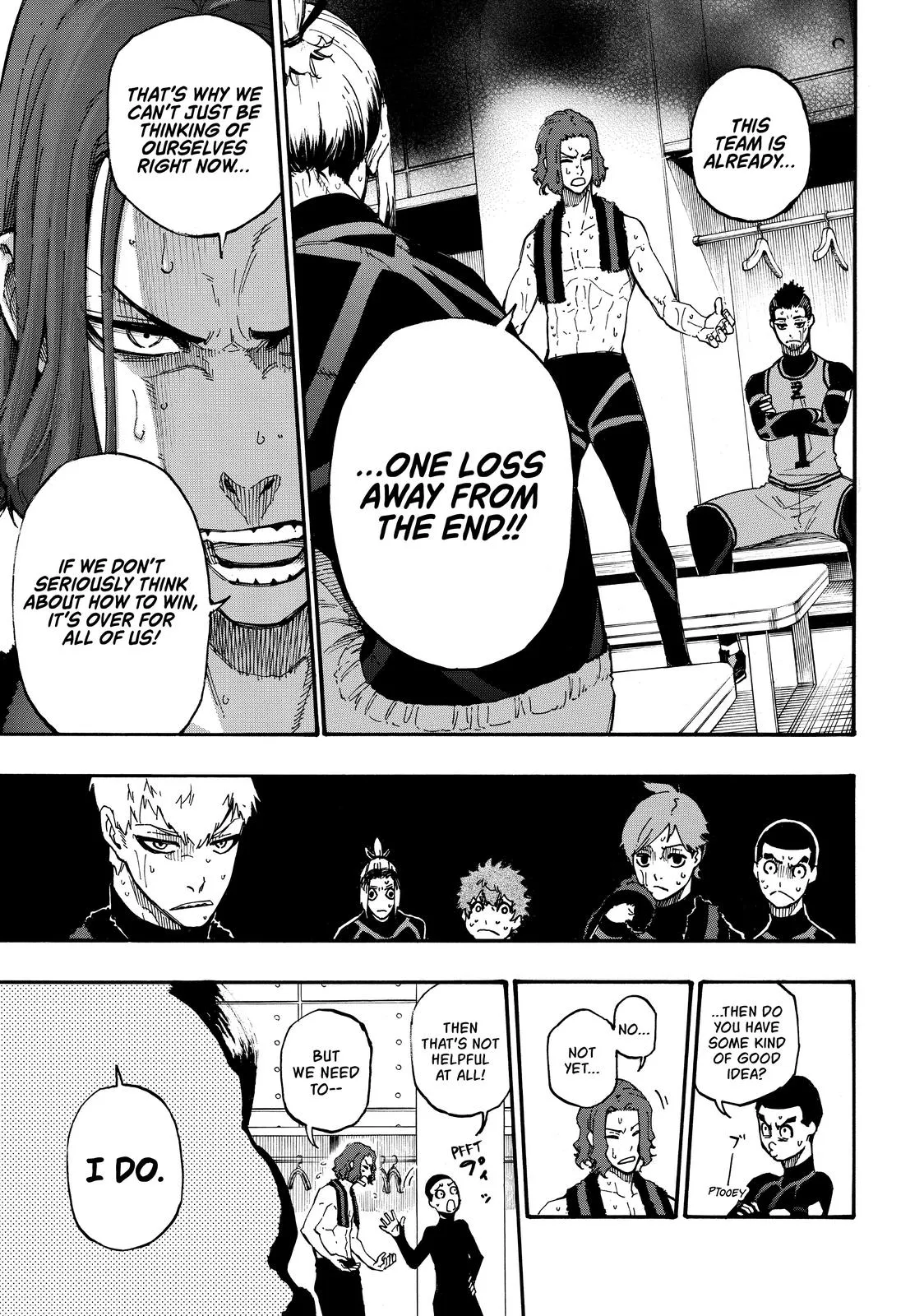
Despite all the internal struggles, a turning point comes when the realization dawns on the team. “WE’RE A TEAM THAT’S ALREADY LOST ONCE…” The gravity of the situation becomes clear as the players are confronted with the harsh truth:
“THIS TEAM IS ALREADY… ONE LOSS AWAY FROM THE END!!”
This looming elimination pushes the players to reconsider their individual goals for the sake of survival. The chapter takes a more serious tone as the players are reminded that they can’t simply continue playing for their personal satisfaction. If they don’t band together and think about how to win, they’re all finished.
The System and the Goal of Blue Lock
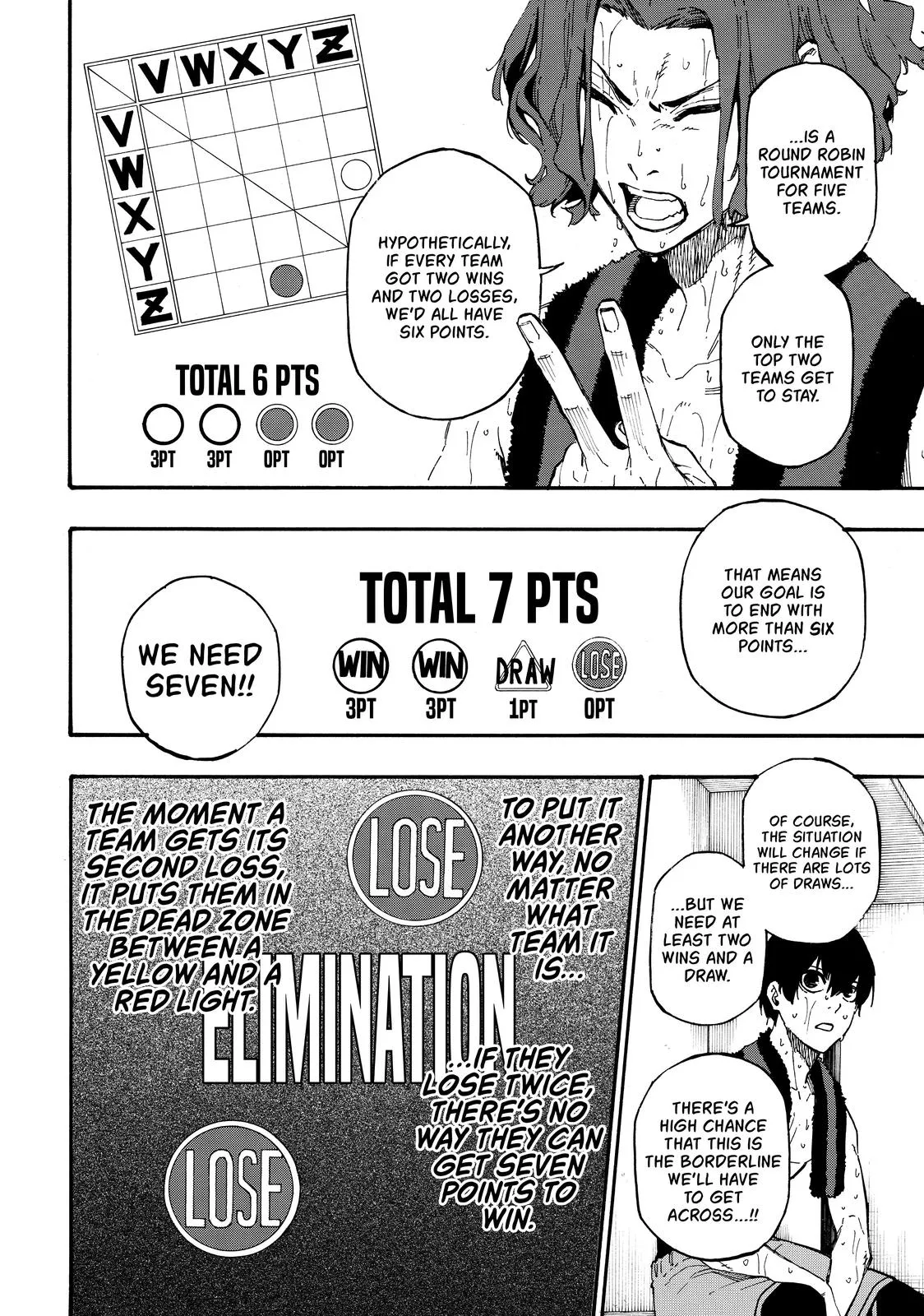
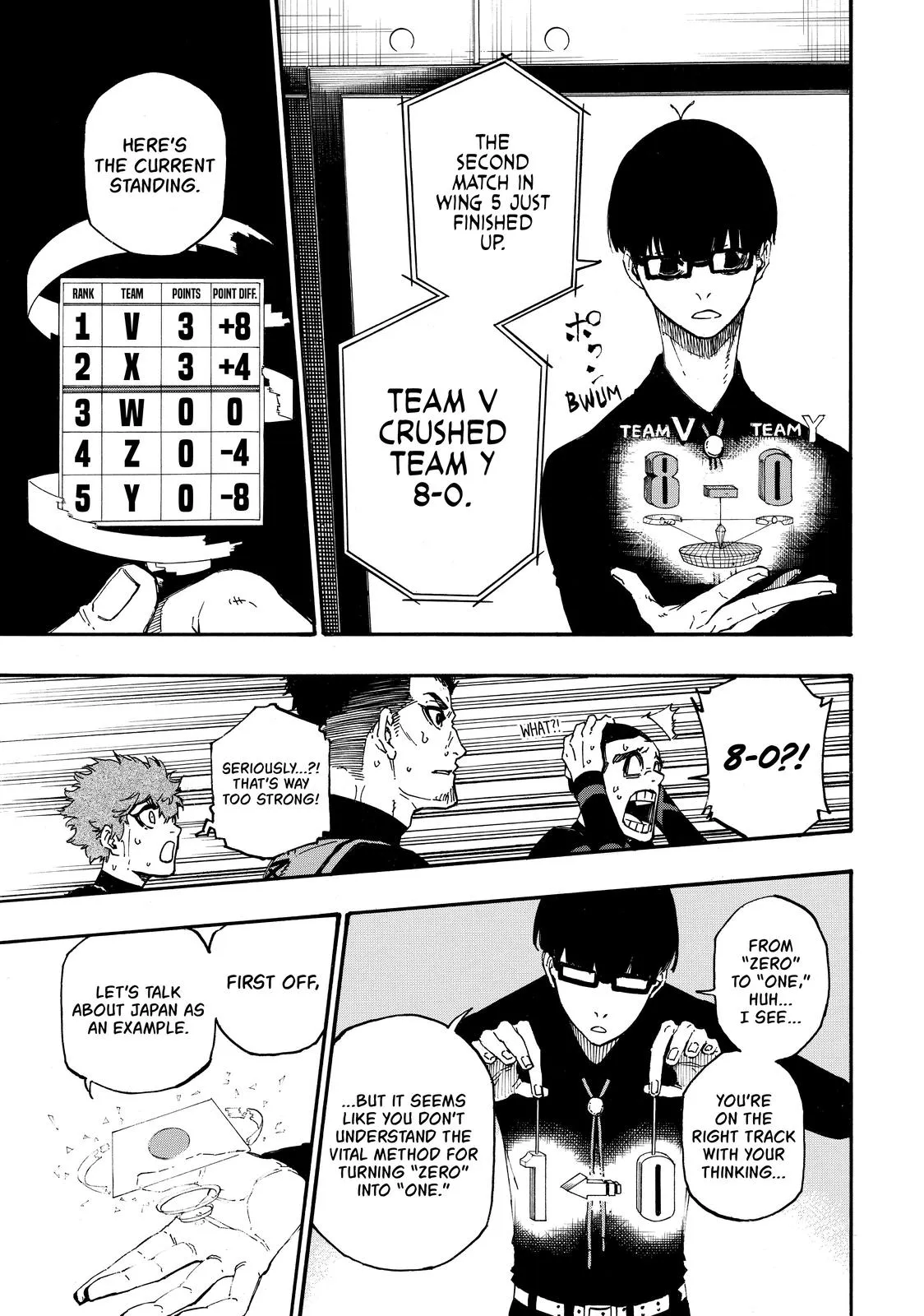
In the midst of all the chaos, one character steps up and starts laying down the numbers, analyzing their situation. He explains the structure of the Blue Lock system:
“HYPOTHETICALLY, IF EVERY TEAM GOT TWO WINS AND TWO LOSSES, WE’D ALL HAVE SIX POINTS.”
The stakes become much clearer as he further explains that the goal is not just survival but to finish with more than six points. This means they need to win at least two matches and secure a draw to stay in the game.
“WE NEED SEVEN!!” the player insists, outlining the required points to stay competitive.
But even then, there’s the looming threat of elimination for any team that loses twice. “IF THEY LOSE TWICE, THERE’S NO WAY THEY CAN GET SEVEN POINTS TO WIN.”
This sets the stage for the players’ realization that their time is running out. They need to evolve quickly if they want to avoid the dreaded elimination.
The Revelation: The Role of Ego in the System
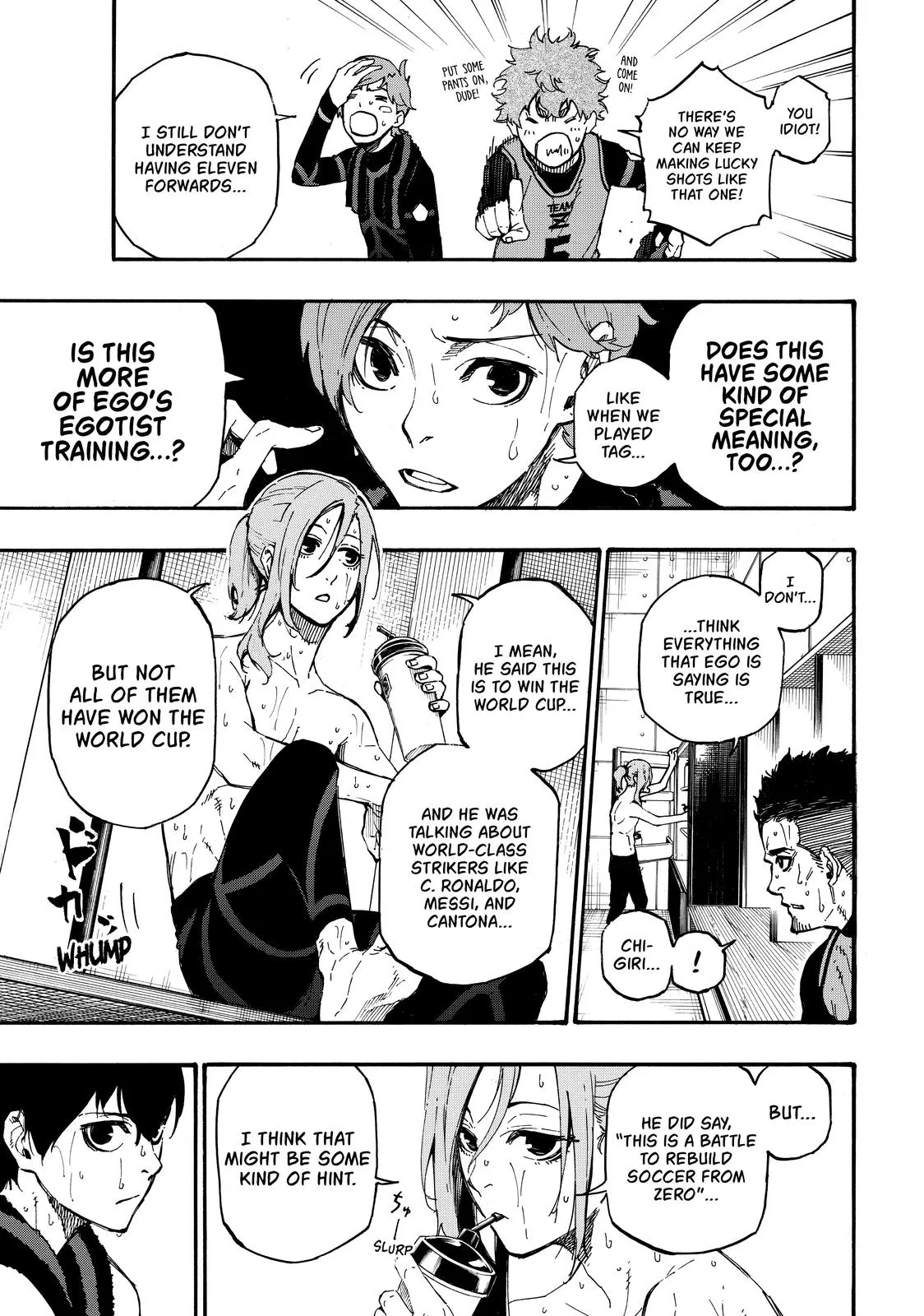
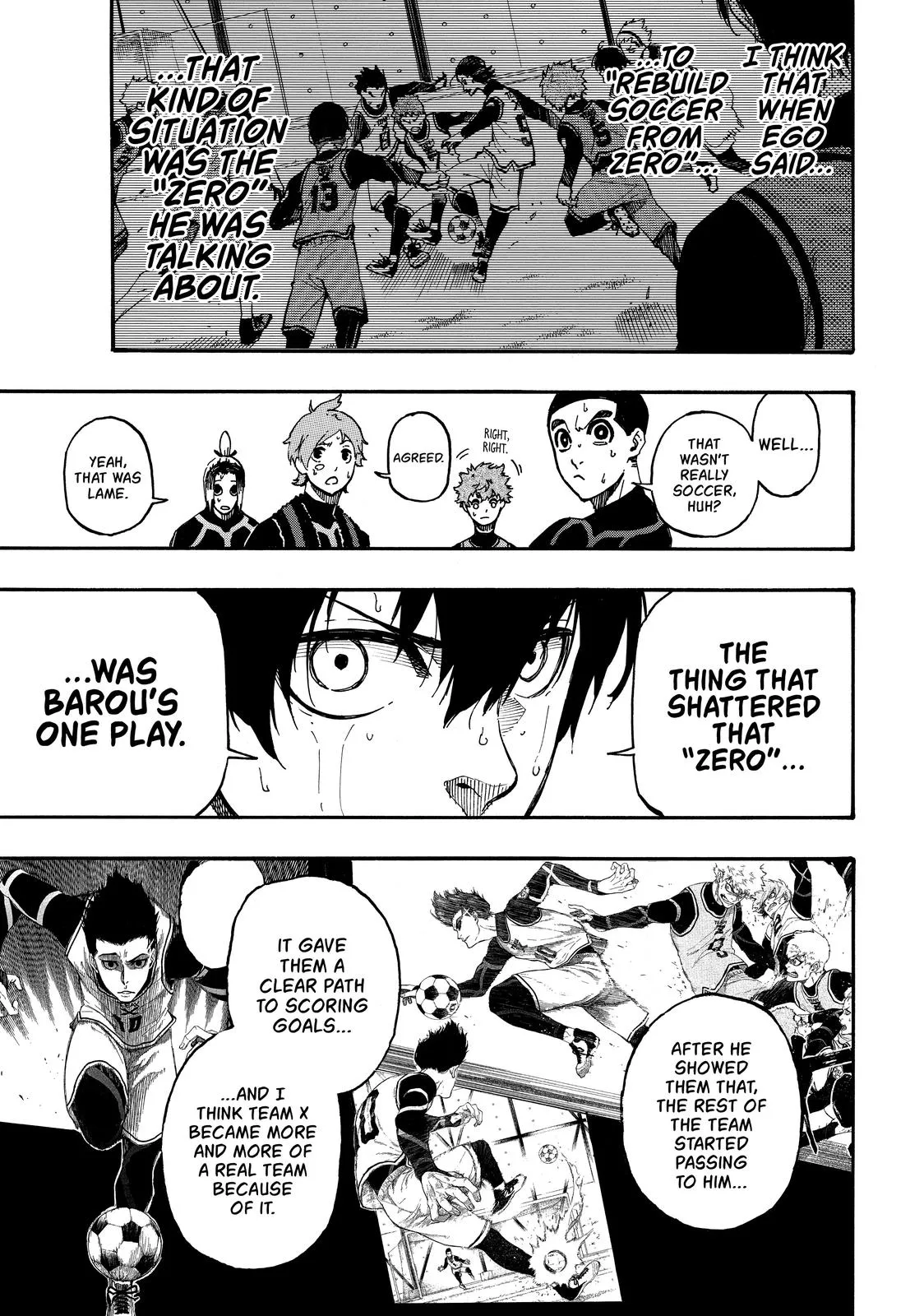
A pivotal moment occurs when one of the players makes a crucial connection between the internal struggles of the team and the philosophy of their trainer, Ego. Ego’s words begin to take on greater significance. “THIS IS A BATTLE TO REBUILD SOCCER FROM ZERO.”
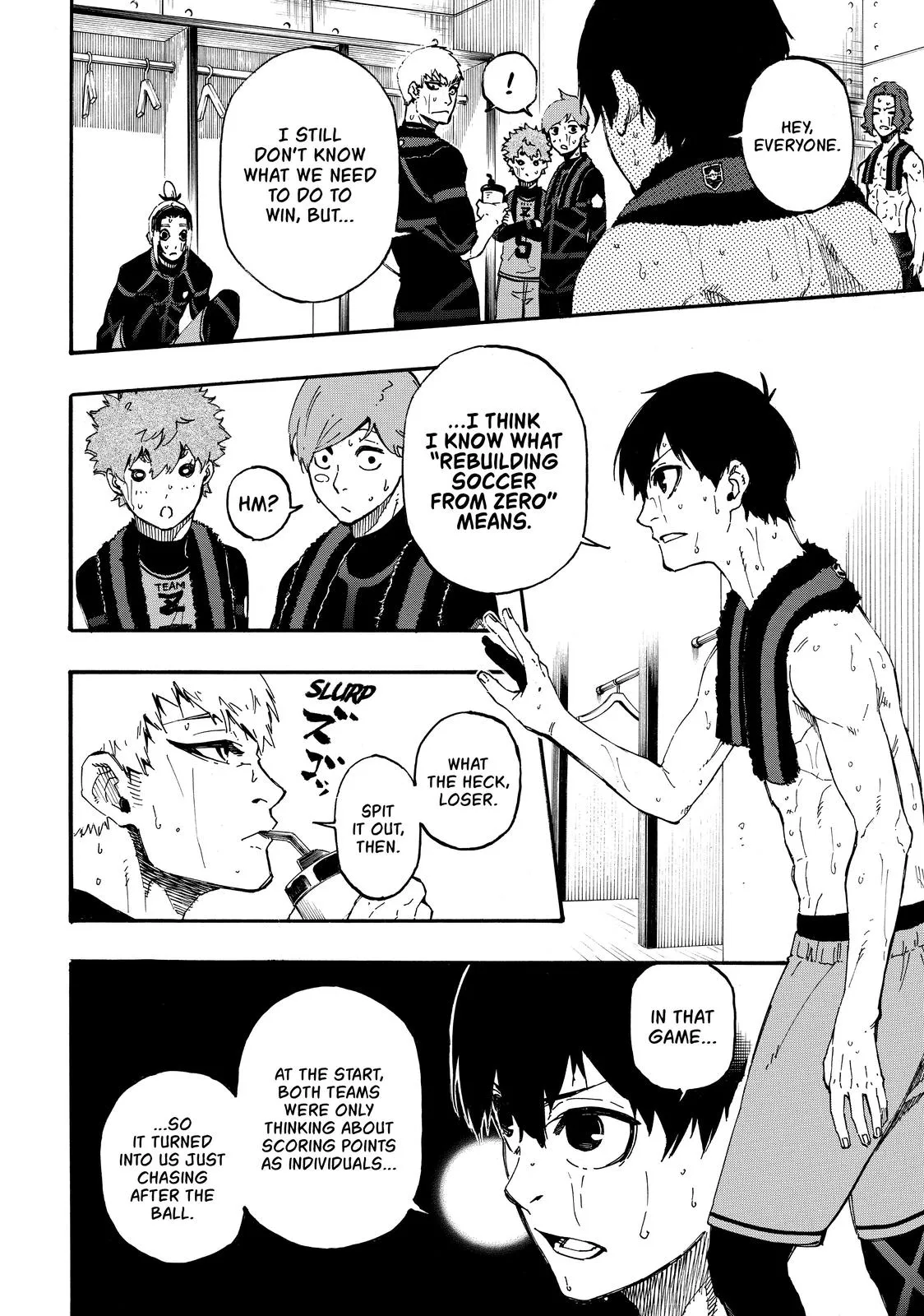
“THAT KIND OF SITUATION WAS THE ‘ZERO’ HE WAS TALKING ABOUT,” a character observes, acknowledging that the chaos in the game itself mirrors the idea of “zero.” This idea is transformative, revealing that the team is not just playing for themselves — they are playing to reconstruct the very essence of soccer.
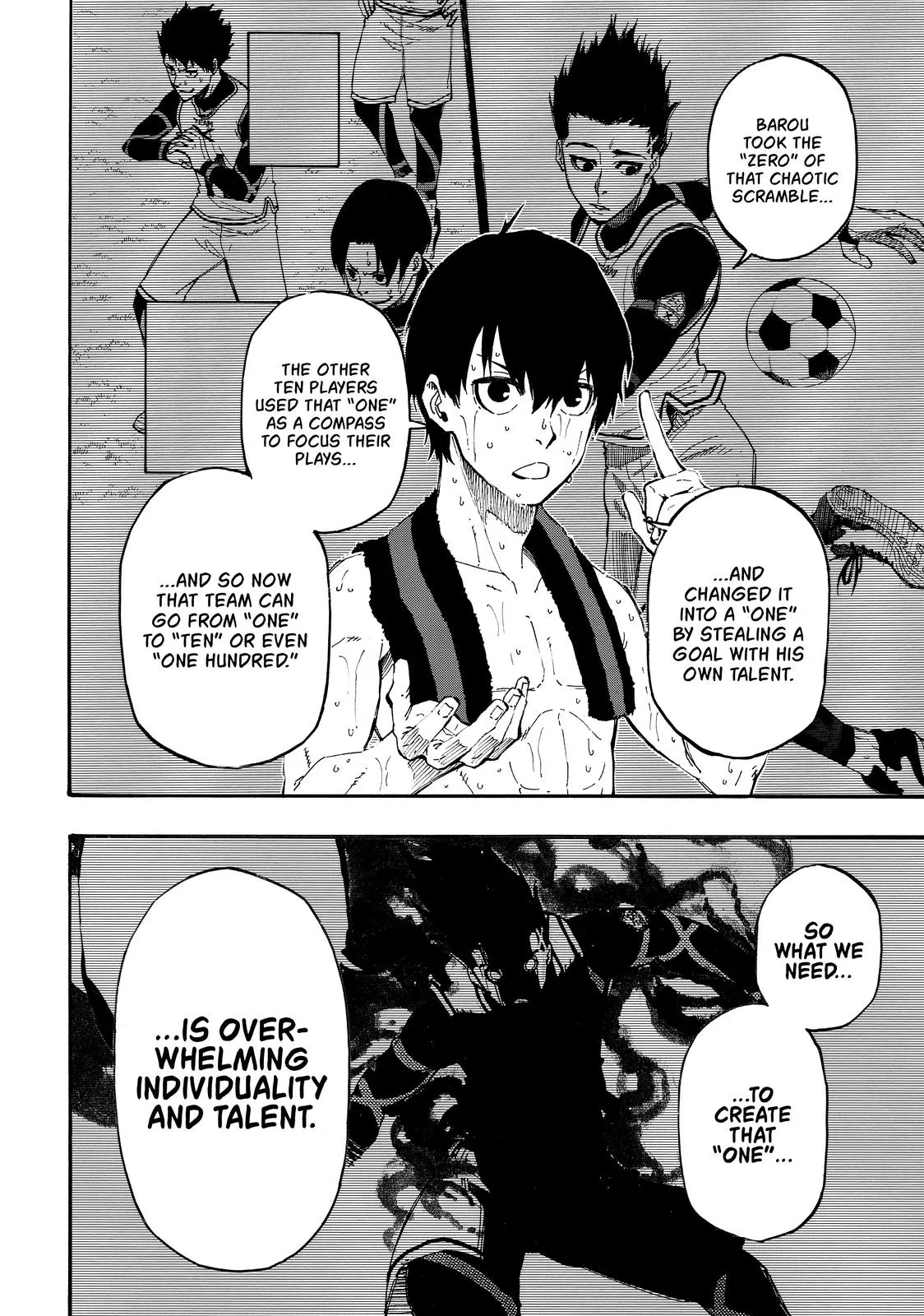
This leads to a critical realization: the players need to turn “ZERO” INTO “ONE.”
“THE THING THAT SHATTERED THAT ‘ZERO’… WAS BAROU’S ONE PLAY.”
Barou’s play becomes the catalyst for this change, shifting the game from chaotic, individualistic efforts to a more team-oriented approach. “AFTER HE SHOWED THEM THAT, THE REST OF THE TEAM STARTED PASSING TO HIM…”
Barou, through his remarkable goal, transformed the situation and the team itself, helping everyone find focus and direction.
The Path Forward: Breaking Free from Positions
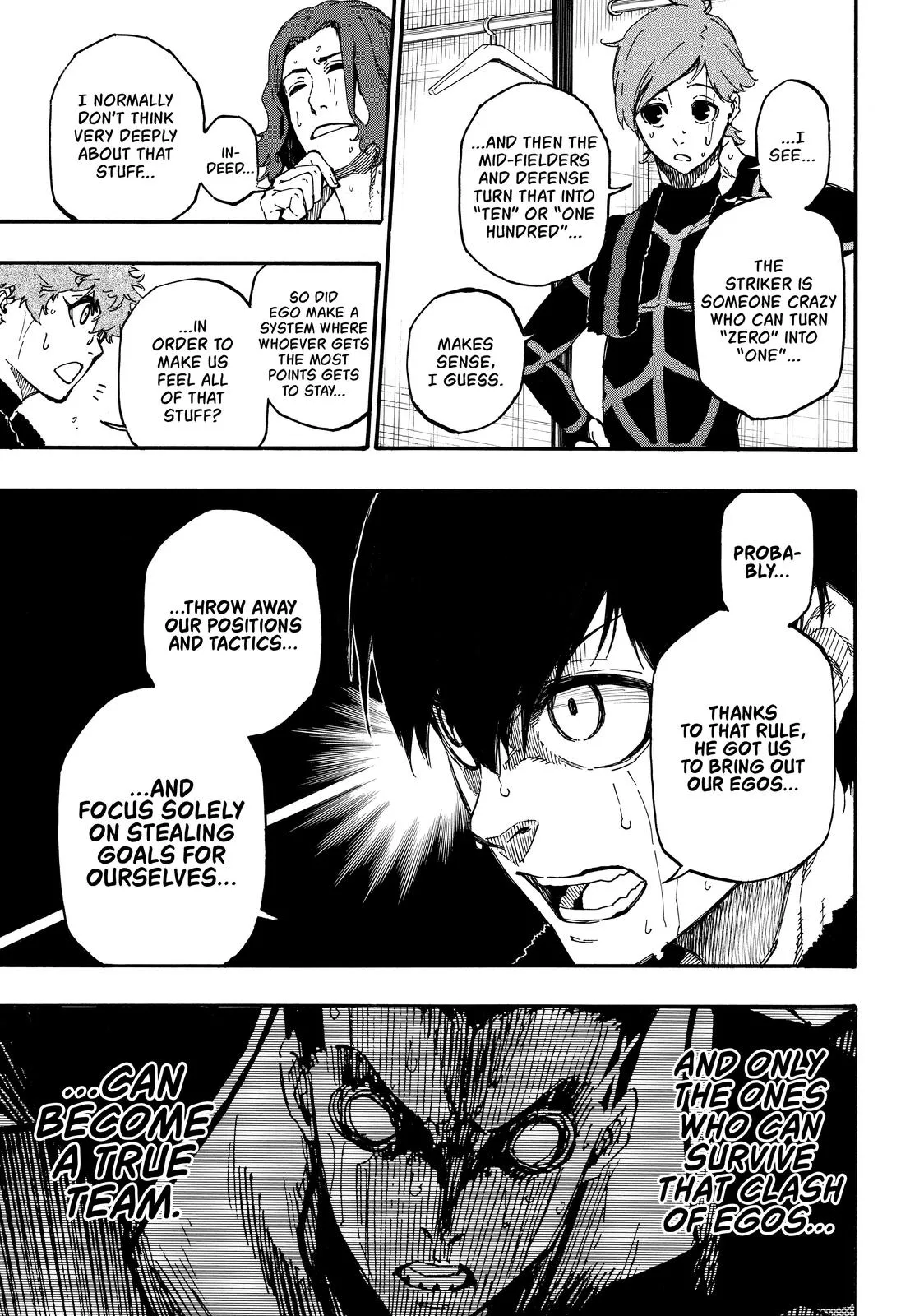
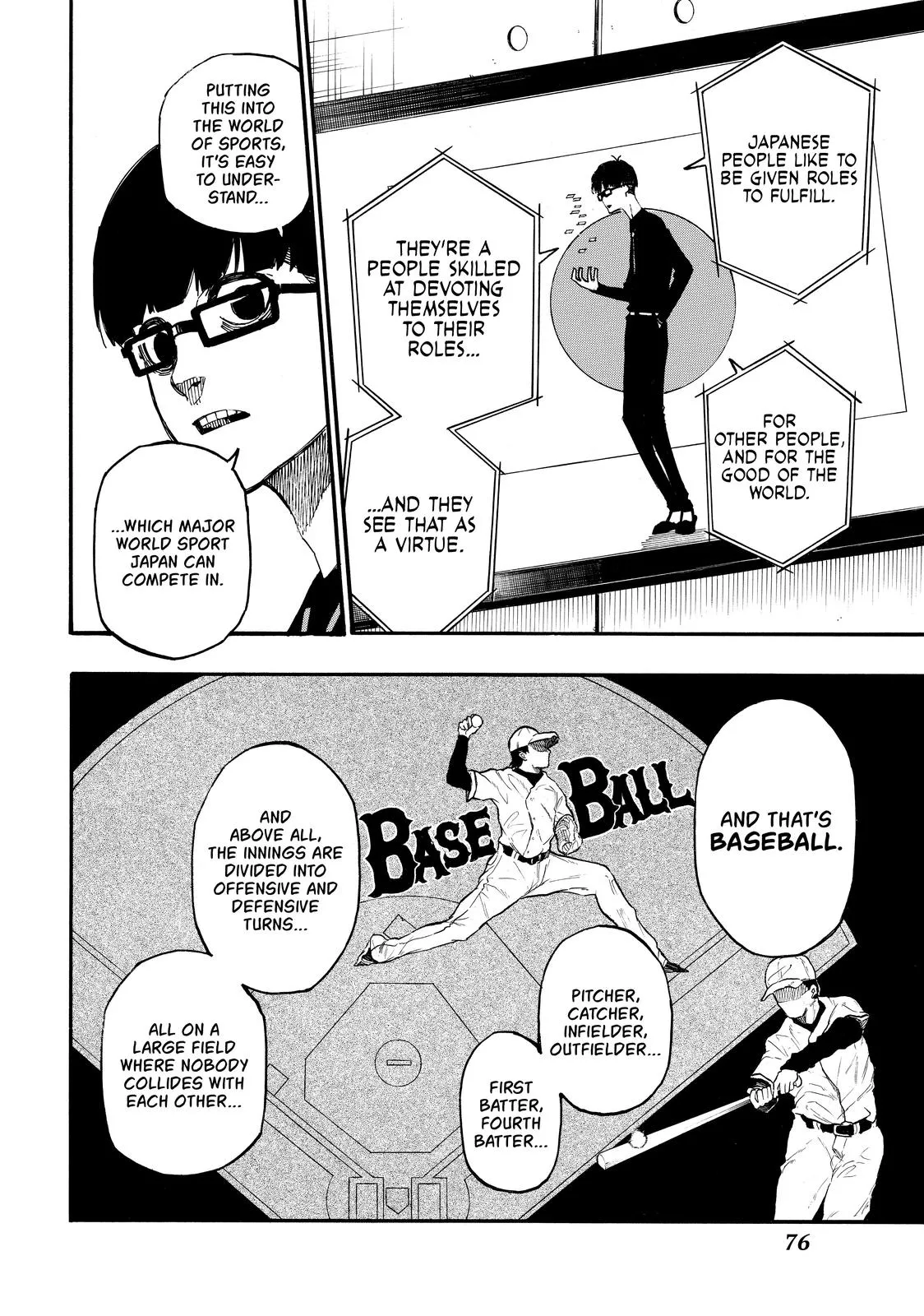
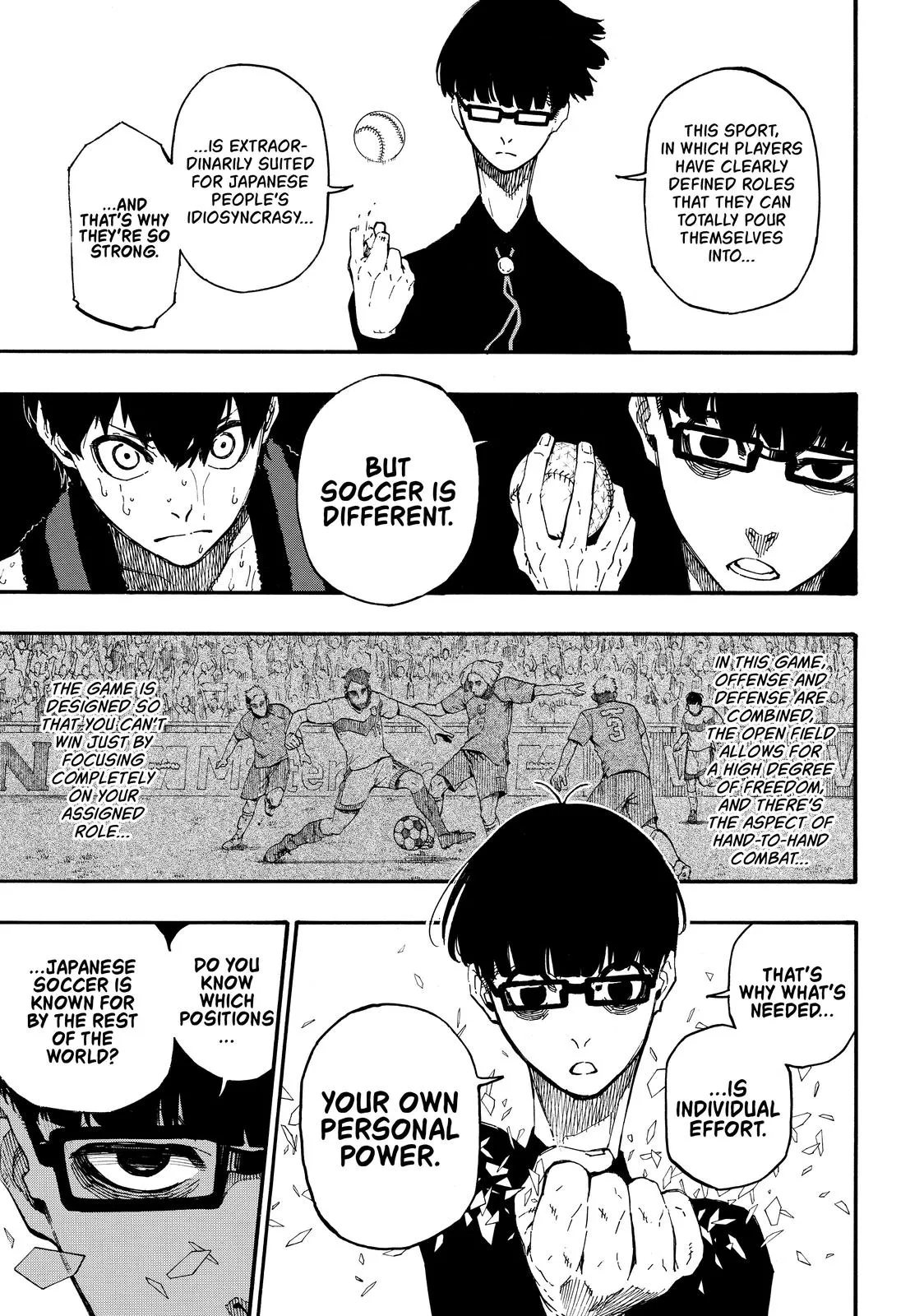
This brings the team to the next stage: understanding that soccer, as a game, is not about positions. The goal is not to fit into a predefined role but to create and own your personal strengths as a player.
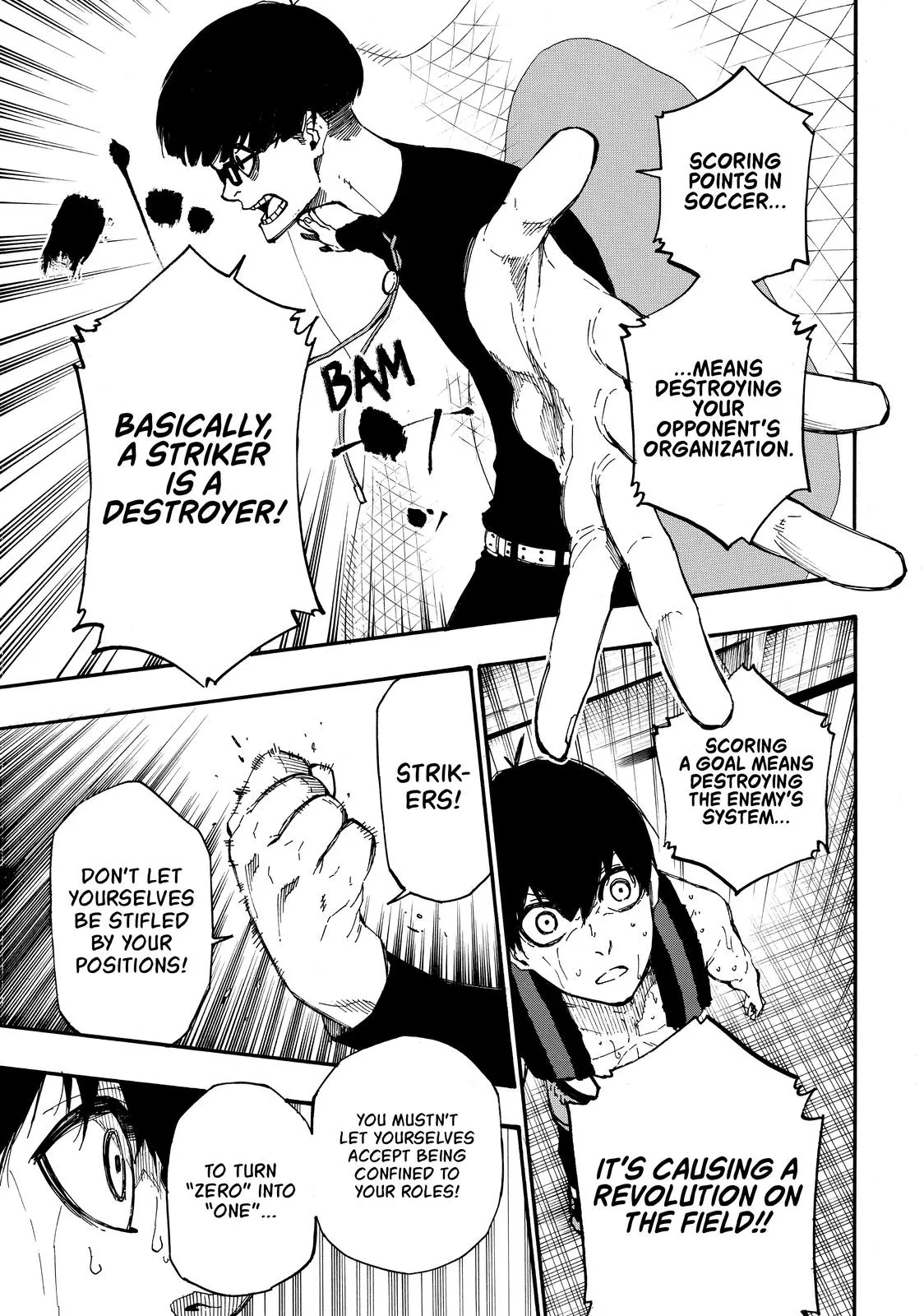
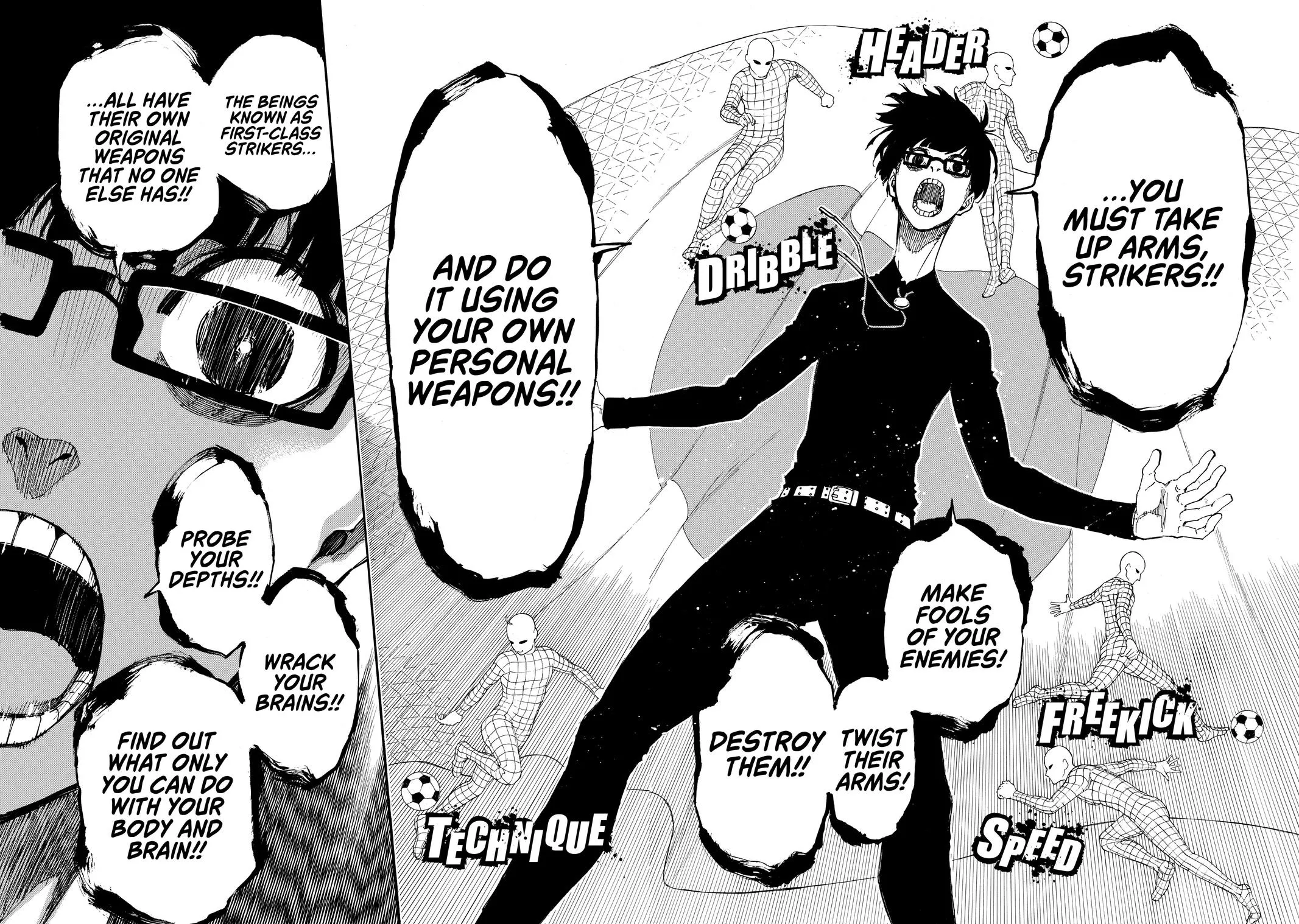
“TO CREATE THAT ‘ONE’… AND ONLY THE ONES WHO CAN SURVIVE THAT CLASH OF EGOS…” Ego’s message becomes clear — to succeed, each player must find their own unique weapon. The game is not about defense or offense but about how individual talents can be used to disrupt the entire structure of the opponent’s game. “SCORING A GOAL MEANS DESTROYING THE ENEMY’S SYSTEM…”
In this realization, each player sees the need to focus on their own personal abilities to turn the “ZERO” into “ONE.”
Final Thoughts: Understanding the Revolution
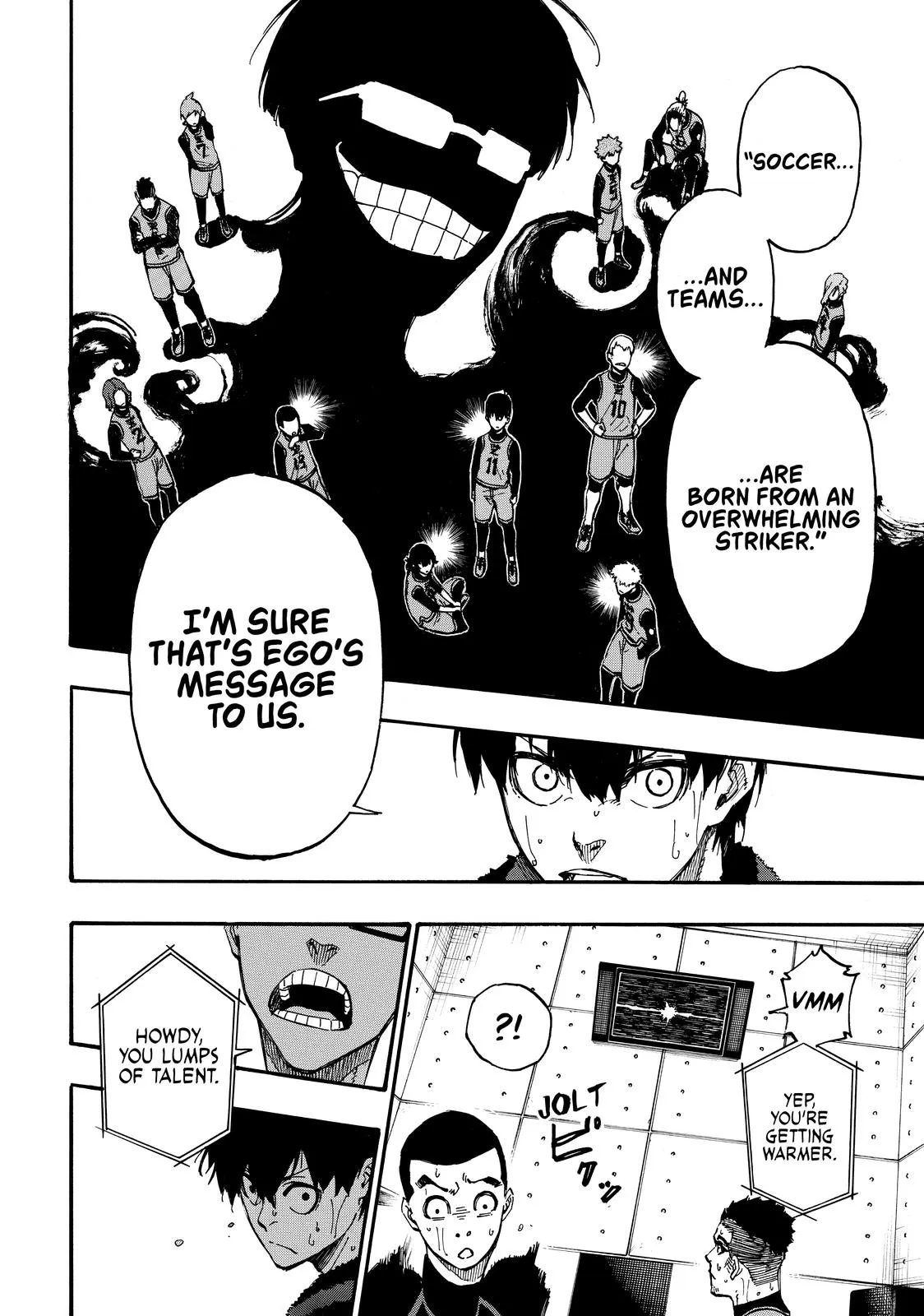
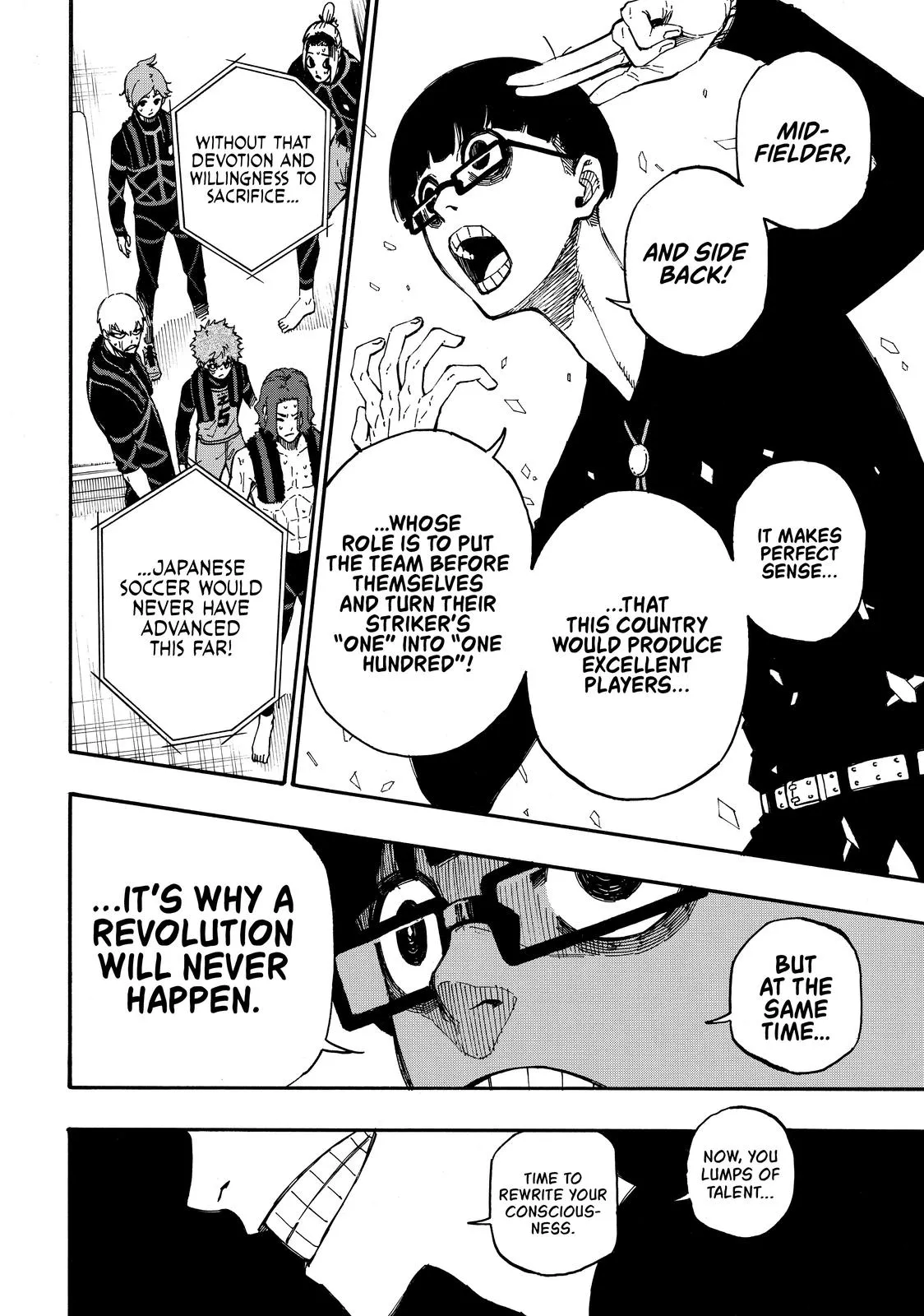
The chapter ends with a powerful moment of realization. The players now see that soccer is a battlefield where personal skills matter more than any assigned role. “A STRIKER IS A DESTROYER!”
“YOU MUSTN’T LET YOURSELVES ACCEPT BEING CONFINED TO YOUR ROLES.”
They now understand that the true test is individuality, not conformity to a role. Ego’s philosophy forces them to rethink everything they know about soccer.
“IT’S CAUSING A REVOLUTION ON THE FIELD!!”
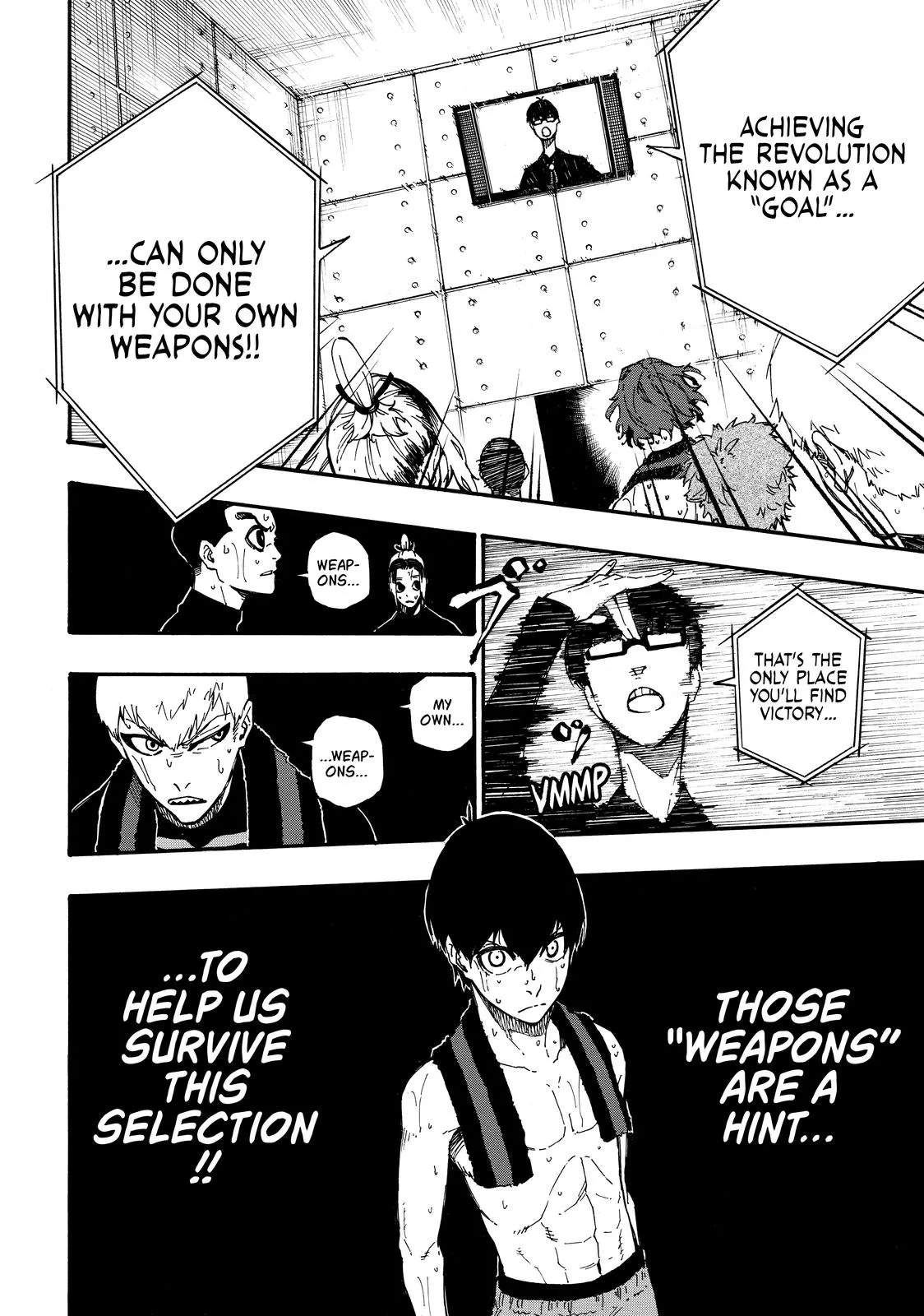
This leads to the understanding that “ACHIEVING THE REVOLUTION KNOWN AS A ‘GOAL’… CAN ONLY BE DONE WITH YOUR OWN WEAPONS!!”
The team, once fragmented by personal egos, is now united by the knowledge that they must wield their individual weapons to survive and thrive in Blue Lock.
Conclusion:
Chapter 8 of Blue Lock is a journey of internal conflict, self-discovery, and growth. The players evolve from a group focused solely on individual success to one that begins to understand the deeper philosophy behind the competition. Ego’s teachings about “zero” turning into “one” resonate deeply with each player, marking a critical turning point for the entire team. The battle is no longer just about scoring but about reshaping the game itself. → Continue to Chapter 9 to see what happens next.