BLUE LOCK CHAPTER 70: DANCING BOY
BLUE LOCK CHAPTER 70 – A DETAILED BREAKDOWN:
DANCING BOY
Chapter 70 turns away from the team chaos and enters the heart of Meguru Bachira. This chapter is not about a match, a score, or a direct battle. It is about loneliness, belief, and the strange joy that only Bachira can feel when he plays soccer. Through his childhood, his mother, and the mysterious “Monster” inside him, Blue Lock Chapter 70: Dancing Boy reveals why Bachira plays the way he does, and why being understood means so much to him.
“TRUST THE MONSTER IN YOUR HEART…”
This chapter matters because it explains Bachira’s soul.
Not just his dribbling.
Not just his smile.
His entire reason for chasing soccer.
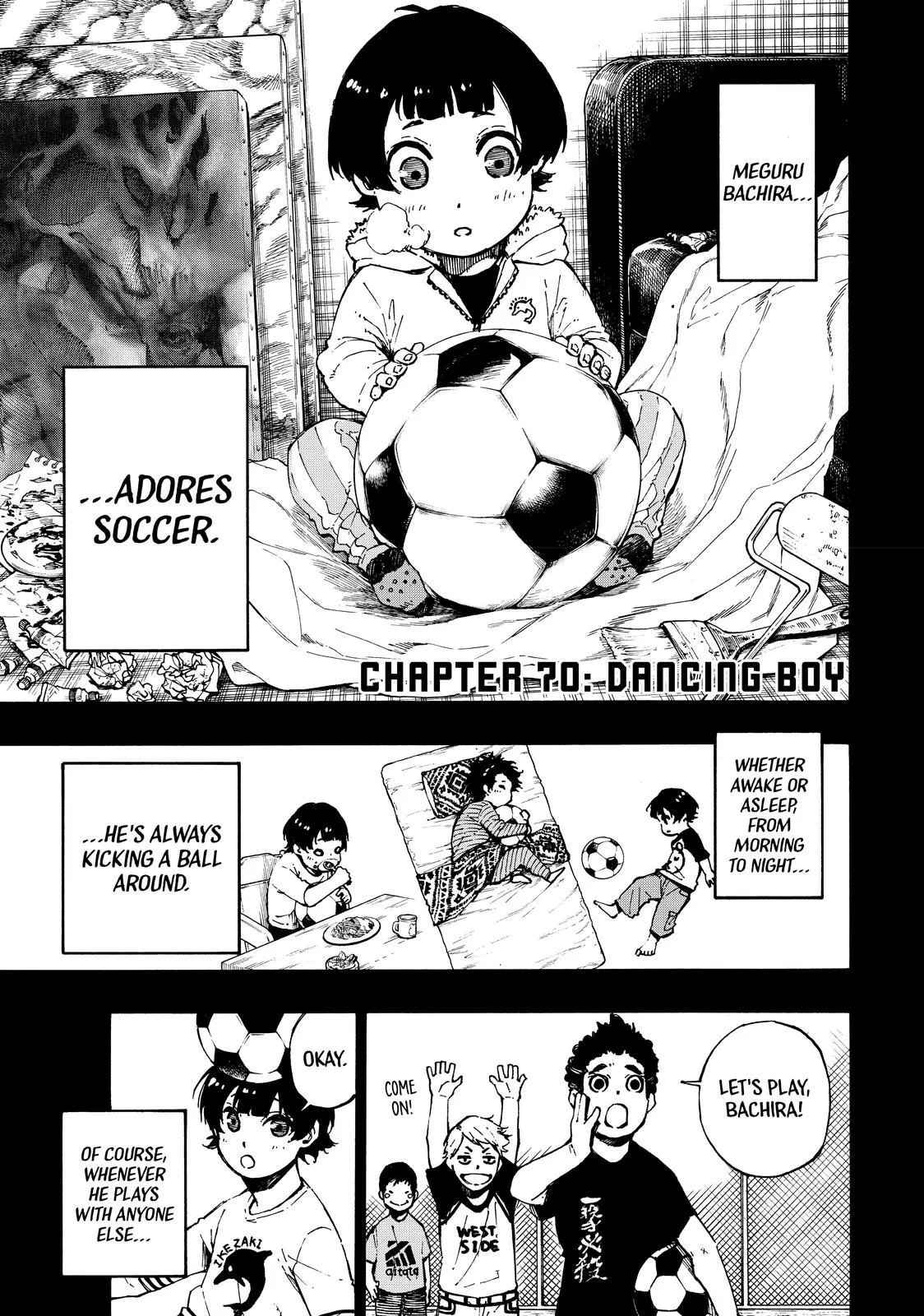
Meguru Bachira Adores Soccer
The chapter begins with a simple truth.
“Meguru Bachira…”
“…ADORES SOCCER.”
From morning to night, awake or asleep, Bachira is always connected to the ball.
Soccer is not just a hobby for him. It is his world. His language. His favorite place to exist.
“Whether awake or asleep, from morning to night…”
“…he’s always kicking a ball around.”
This moment matters because it establishes Bachira’s love before anything else.
Before people call him strange.
Before loneliness enters.
Before the “Monster” becomes his companion.
At the beginning, there is only pure joy.
The Boy Who Was Always the Best
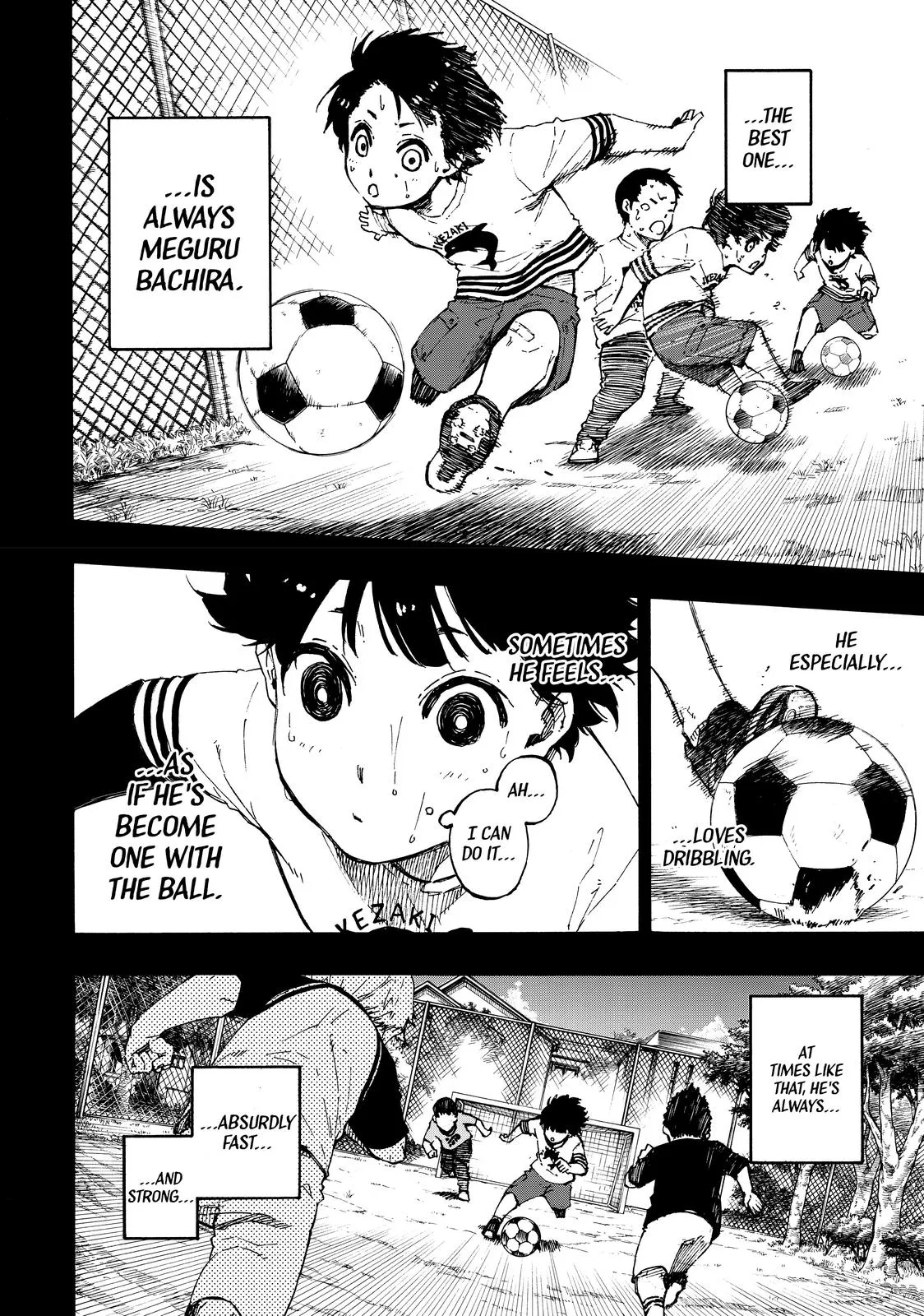
Whenever Bachira plays with others, one thing becomes clear.
“…the best one…”
“…is always Meguru Bachira.”
He feels something special when he plays. At times, it is almost like the ball becomes part of him.
“Ah… I can do it…”
“…as if he’s become one with the ball.”
This matters because Bachira’s talent is shown as something natural and emotional.
He does not simply control the ball.
He dances with it.
The chapter says he especially loves dribbling, and during those moments, he becomes absurdly fast and strong.
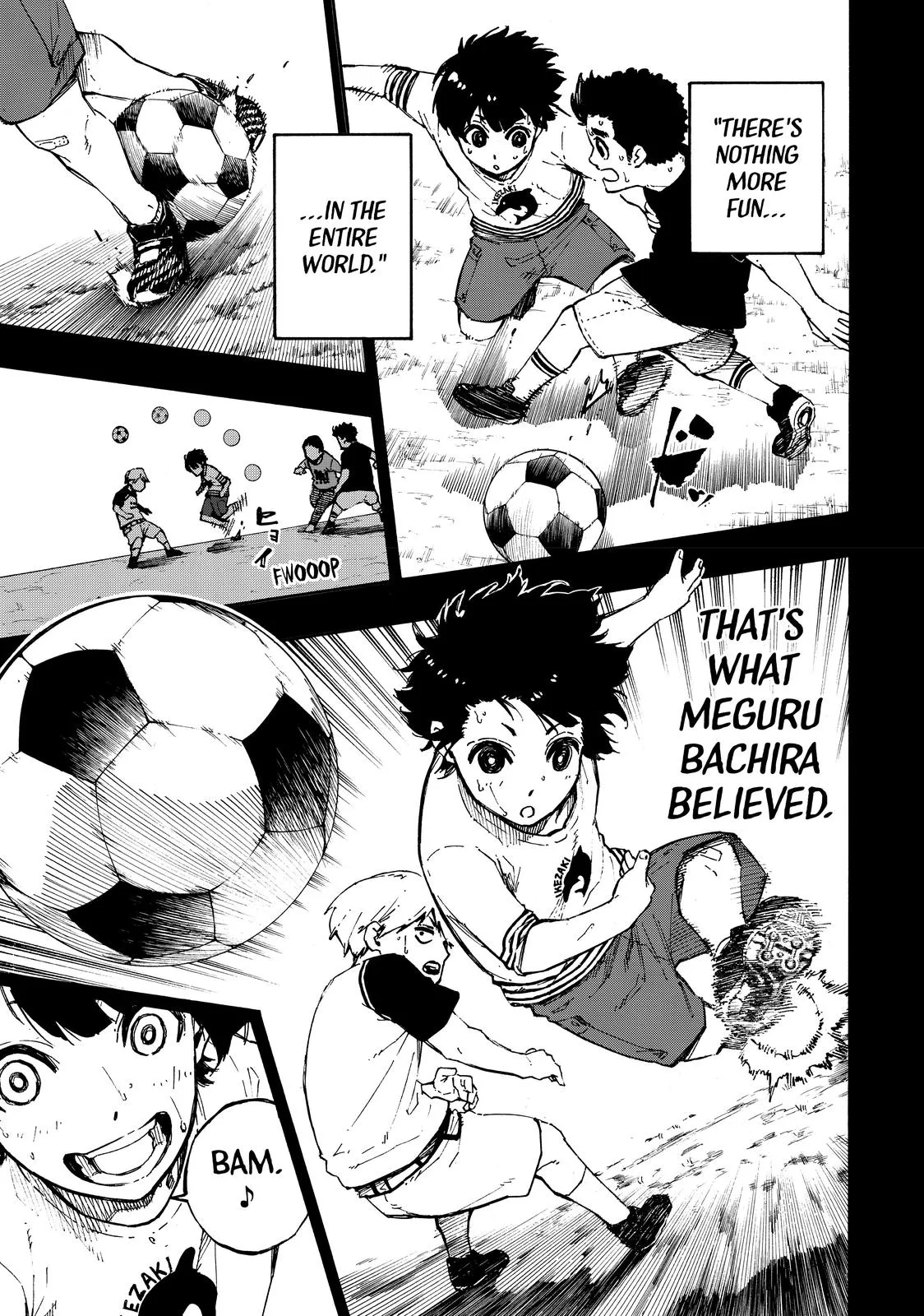
“There’s nothing more fun…”
“…in the entire world.”
That belief becomes the center of his life.
To Bachira, soccer is the greatest feeling there is.
When Fun Becomes Isolation
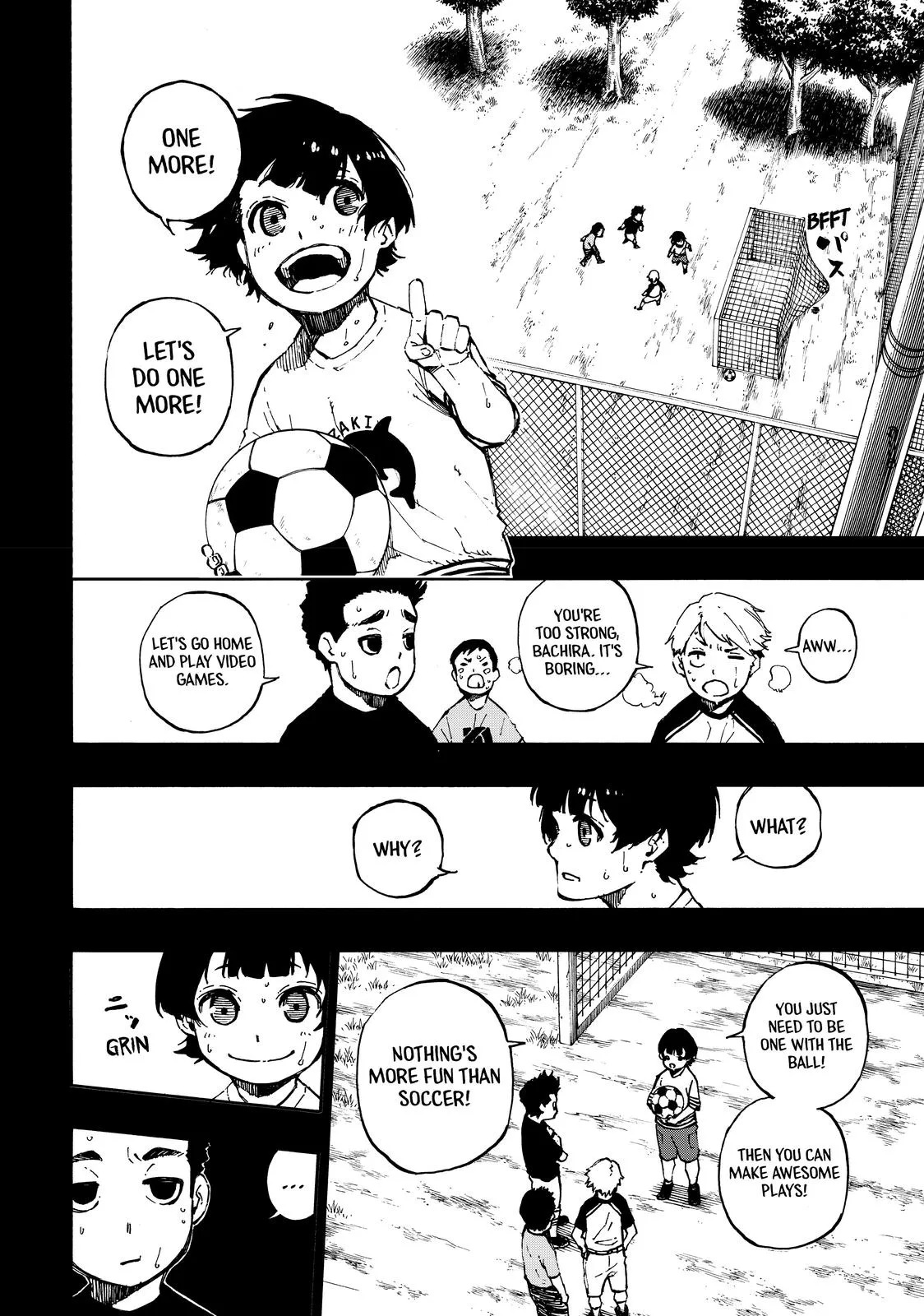
Bachira wants to keep playing.
Again and again.
“ONE MORE!”
“Let’s do one more!”
But the other kids do not share his excitement.
To them, Bachira is too strong. The game becomes boring. They would rather go home and play video games.
“You’re too strong, Bachira. It’s boring…”
“Let’s go home and play video games.”
This moment matters because it is Bachira’s first emotional wound in the chapter.
The thing he loves most does not connect him to others.
It separates him.
He cannot understand why they do not feel the same joy.
“Nothing’s more fun than soccer!”
“You just need to be one with the ball!”
To Bachira, the answer is obvious.
To everyone else, he sounds strange.
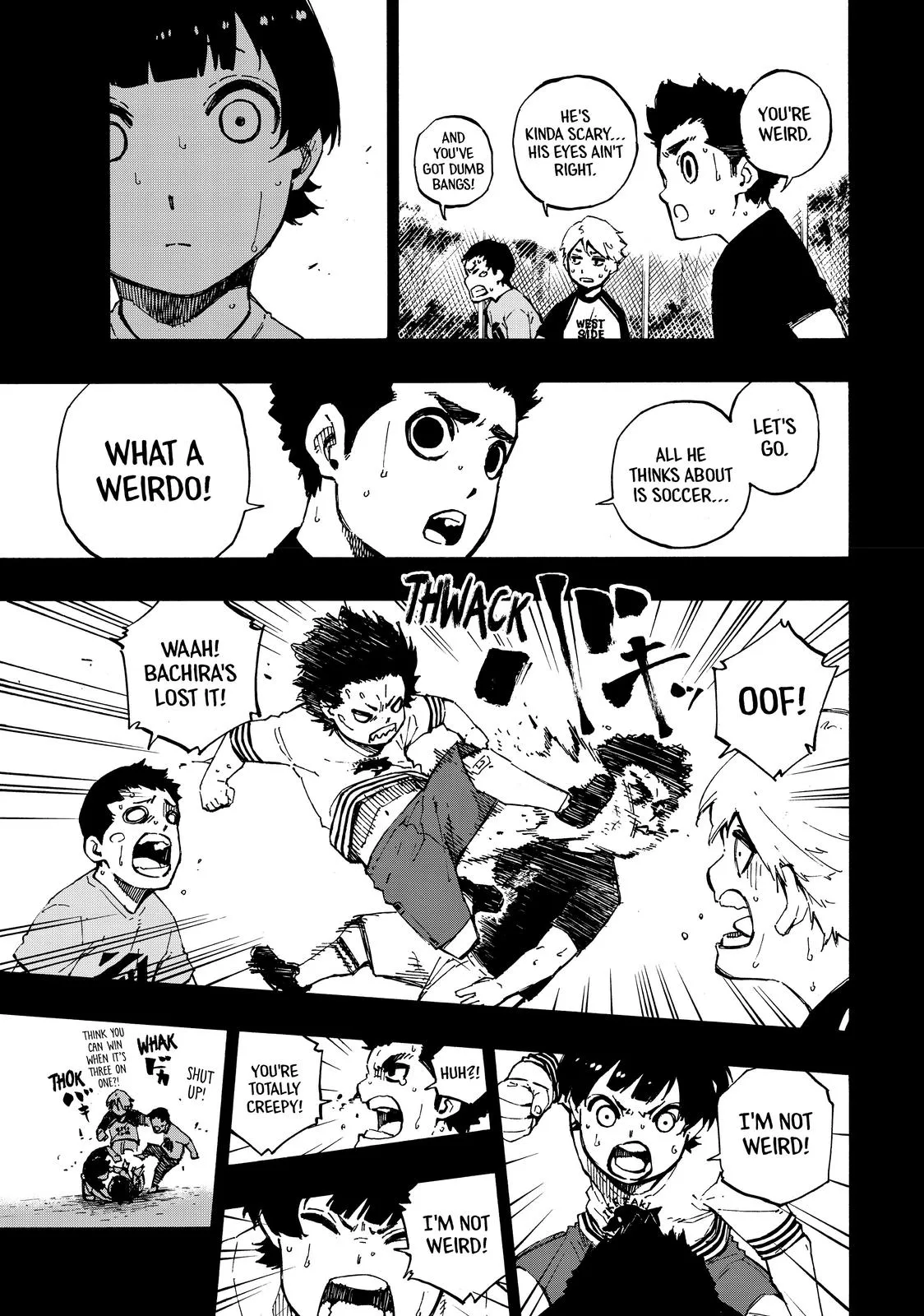
“You’re Weird”: The World Rejects Bachira
The other kids begin to mock him.
“You’re weird.”
“He’s kinda scary…”
“His eyes ain’t right.”
They do not just reject his soccer.
They reject him.
They call his bangs dumb. They call him creepy. They say all he thinks about is soccer.
“What a weirdo!”
“All he thinks about is soccer…”
This moment matters because it shows the cost of being different.
Bachira’s joy is pure, but the world around him cannot understand it.
He fights back, angry and hurt.
“I’m not weird!”
“I’m not weird!”
That repeated cry is important.
It is not just a child defending himself.
It is Bachira trying to protect the part of him that loves soccer more than anything.
Bachira’s Mother: The First Person Who Understands Him
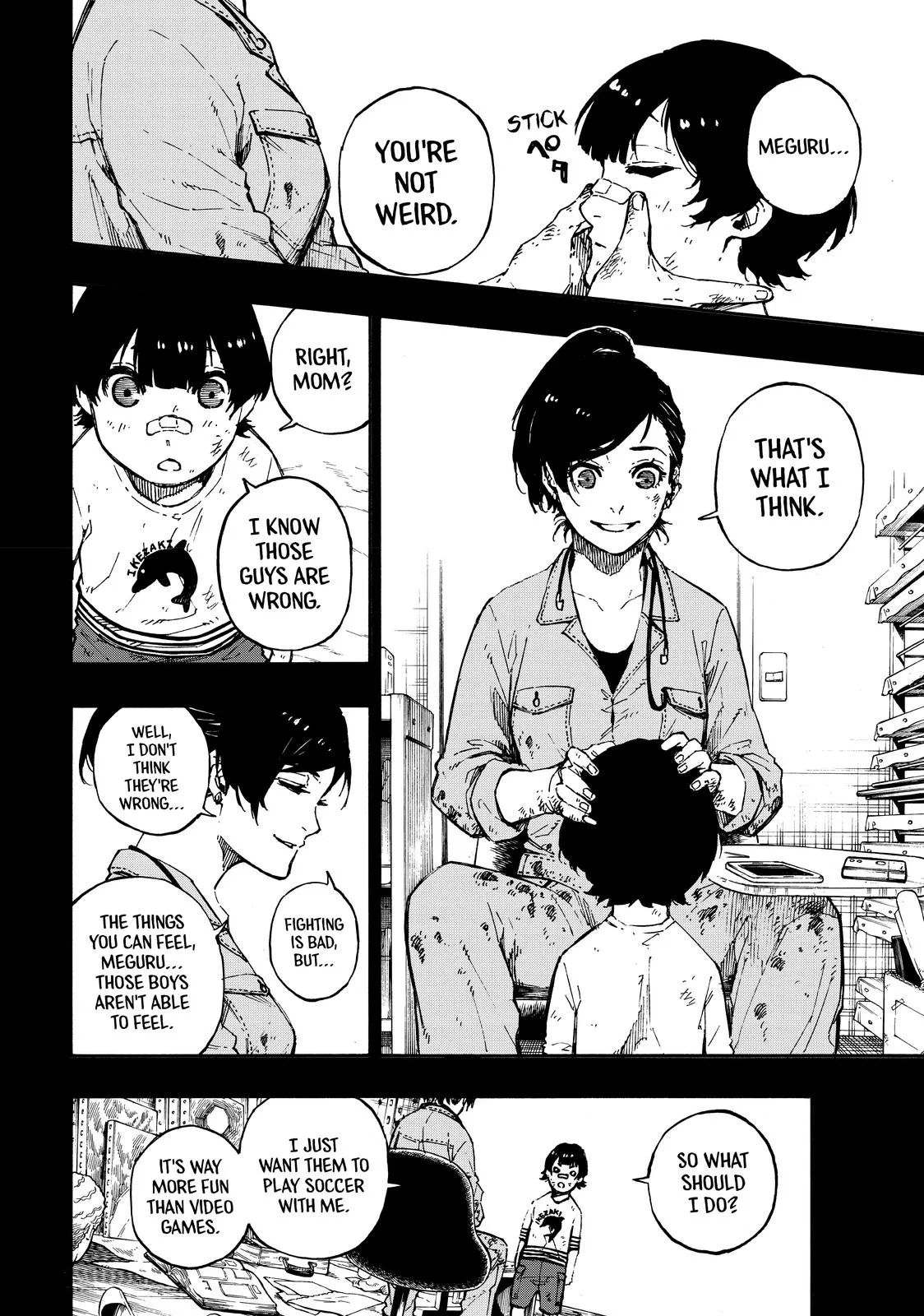
After the fight, Bachira speaks with his mother.
He asks her if he is weird.
“You’re not weird.”
“Right, Mom?”
Her answer is gentle, but not simple.
“That’s what I think.”
“I know those guys are wrong.”
But then she adds something important.
“Well, I don’t think they’re wrong…”
“Fighting is bad, but…”
This moment matters because his mother does not just comfort him blindly.
She explains that Bachira can feel things others cannot.
“The things you can feel, Meguru…”
“…those boys aren’t able to feel.”
She gives him a way to understand his loneliness.
He is not broken.
He is hearing something others cannot hear.
The Voice Inside the Heart
Bachira tells his mother he only wants them to play soccer with him.
“It’s way more fun than video games.”
“I just want them to play soccer with me.”
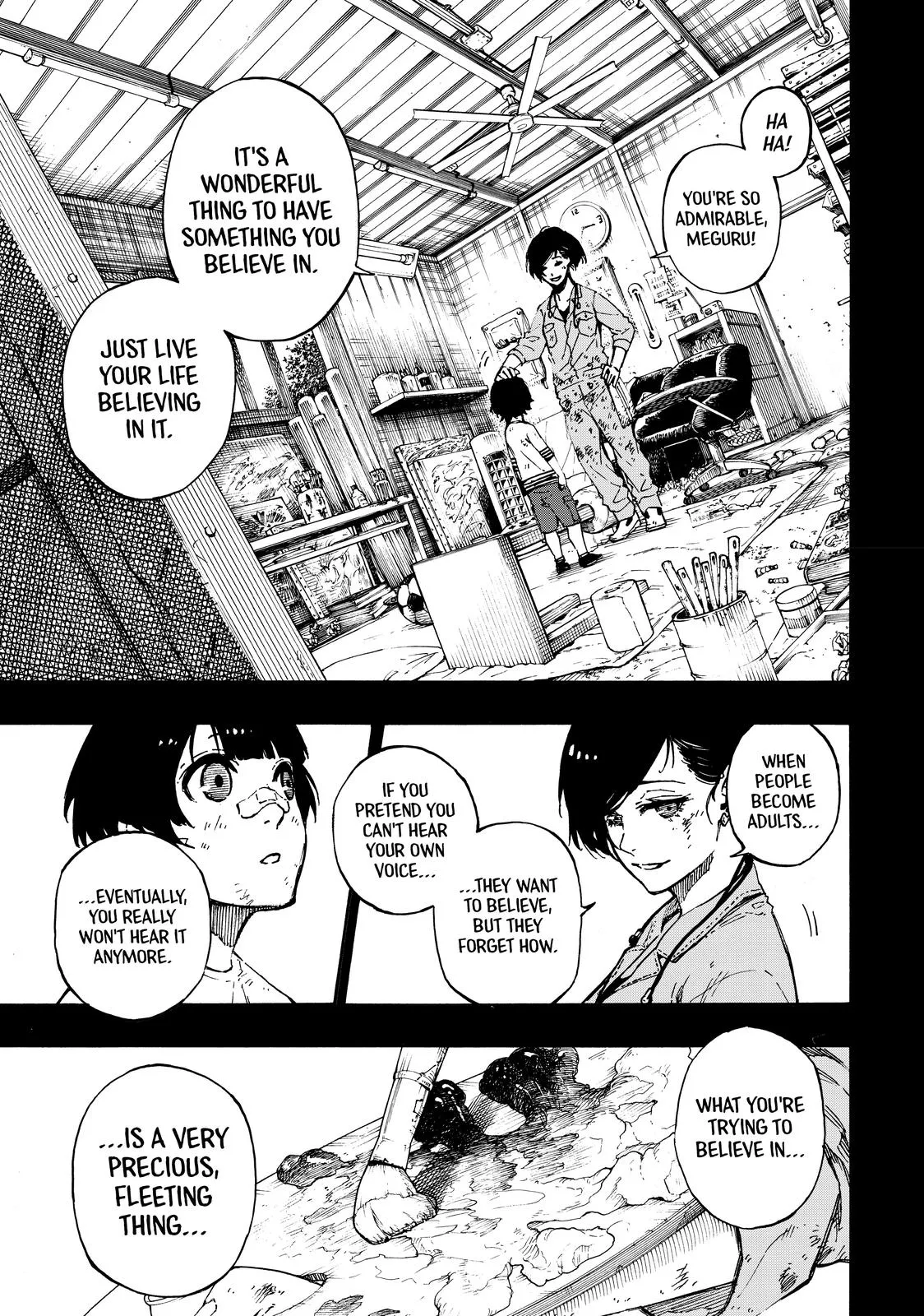
His mother calls that admirable.
She tells him it is wonderful to have something he believes in.
“Just live your life believing in it.”
This moment matters because it becomes the emotional foundation of Bachira’s life.
His mother warns him that adults often forget how to believe.
“When people become adults…”
“…they want to believe, but they forget how.”
Then she says something beautiful and frightening.
“If you pretend you can’t hear your own voice…”
“…eventually, you really won’t hear it anymore.”
This is one of the most important ideas in the chapter.
Bachira must not silence himself just because others do not understand him.
He must protect the voice inside him.
The Monster in Bachira’s Heart
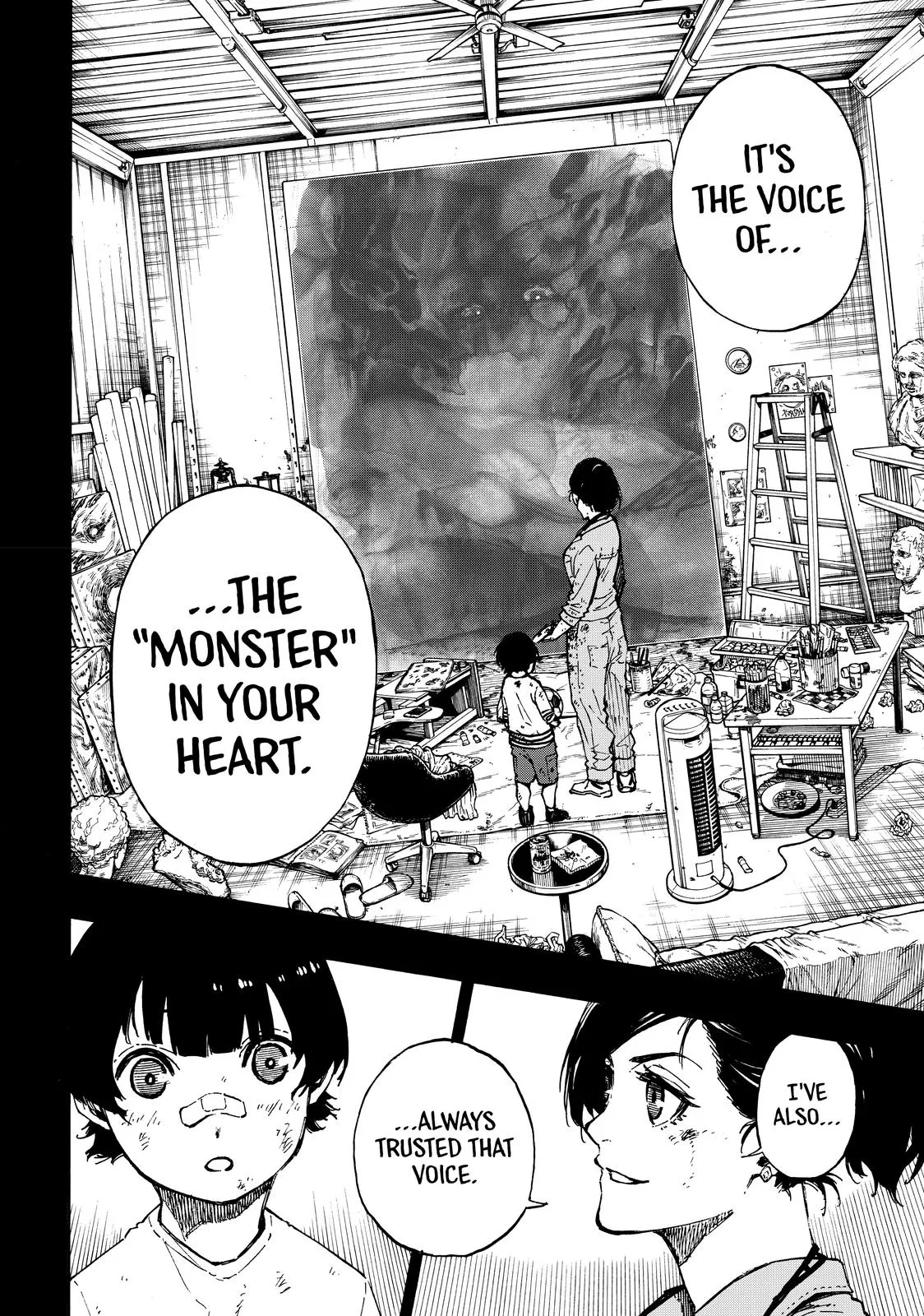
His mother gives that inner voice a name.
“It’s the voice of…”
“…the ‘Monster’ in your heart.”
This matters because the “Monster” is not introduced as something evil.
It is instinct.
It is belief.
It is the feeling that guides Bachira toward the kind of soccer only he can imagine.
His mother says she has also trusted that voice.
“I’ve also…”
“…always trusted that voice.”
That line connects mother and son.
Both of them carry something inside that others may not understand.
For Bachira’s mother, it appears through painting.
For Bachira, it appears through soccer.
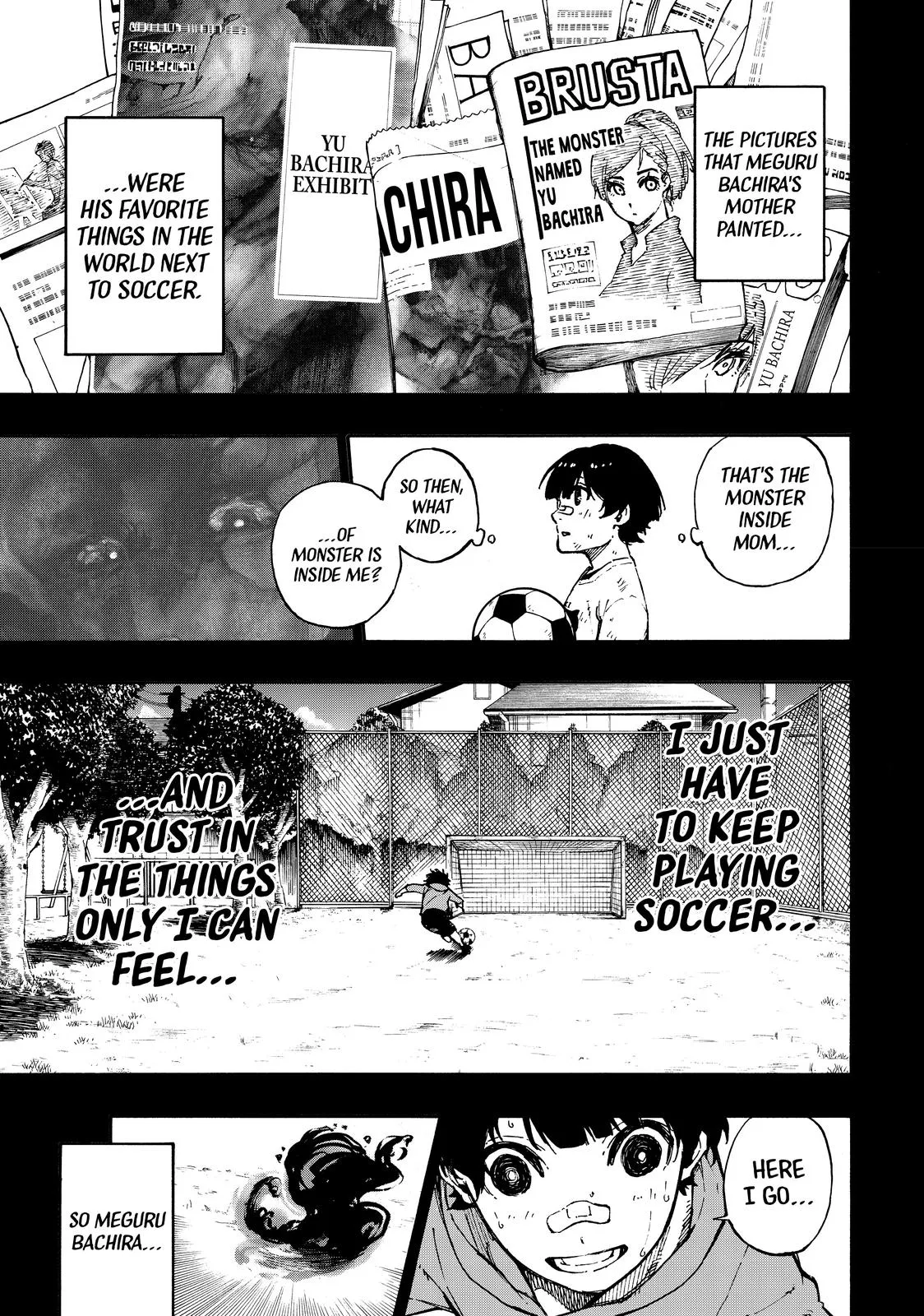
His Mother’s Paintings and the Monster Named Yu Bachira
The chapter shows that Bachira loves his mother’s paintings almost as much as soccer.
“The pictures that Meguru Bachira’s mother painted…”
“…were his favorite things in the world next to soccer.”
Her exhibit is connected to the idea of a monster.
“The Monster Named Yu Bachira”
Bachira looks at her art and understands something.
“That’s the monster inside Mom…”
This moment matters because it gives Bachira proof that the monster can create beauty.
His mother’s monster becomes paintings.
So he wonders:
“So then, what kind…”
“…of monster is inside me?”
This question becomes the beginning of his personal soccer.
He decides to keep playing and trust what only he can feel.
Bachira Starts Playing With His Monster
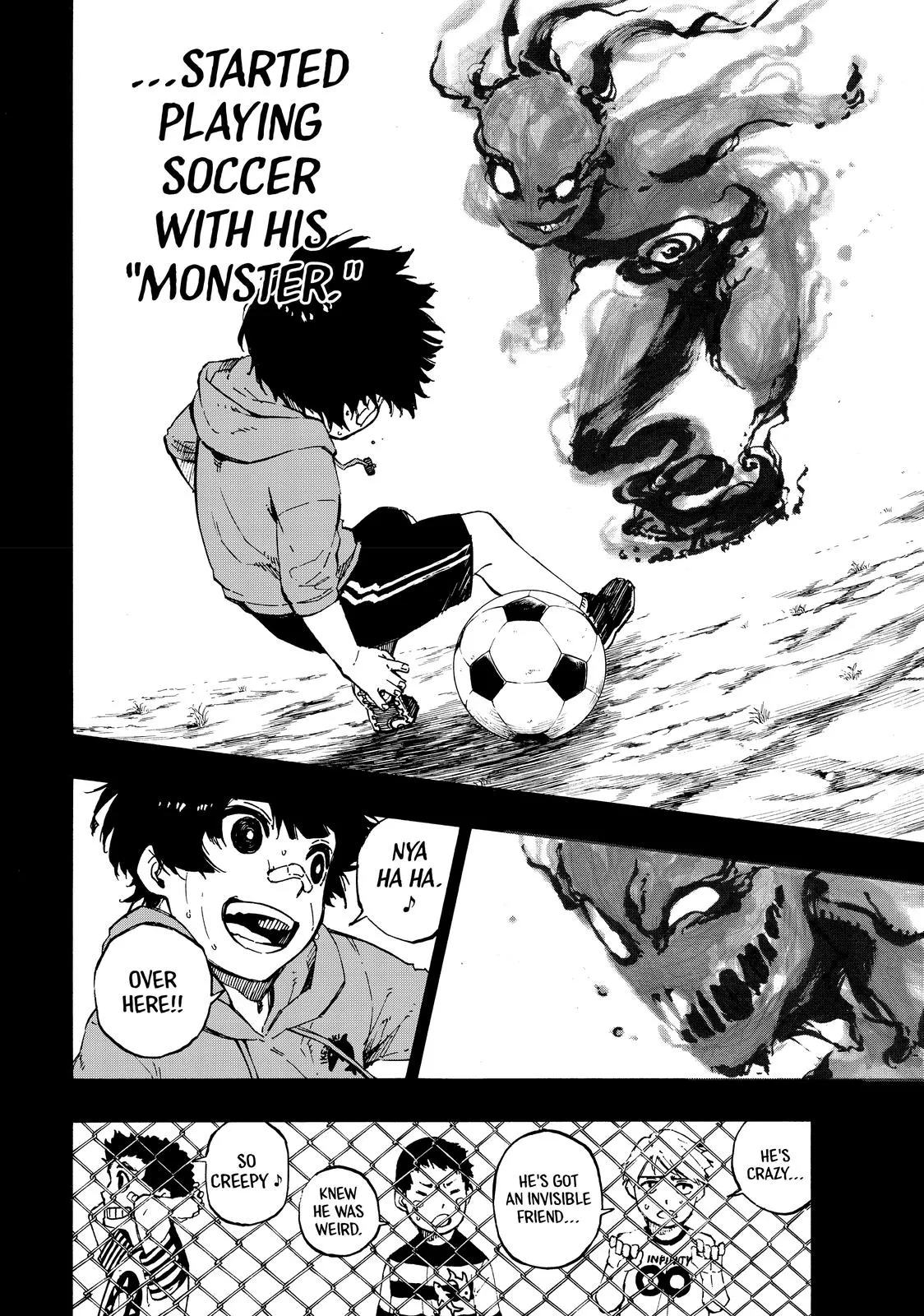
From there, Bachira begins playing soccer with his “Monster.”
“Here I go…”
“Over here!!”
To him, this is joy.
To others, it looks disturbing.
“So creepy.”
“Knew he was weird.”
“He’s got an invisible friend…”
“He’s crazy…”
This moment matters because it shows the tragedy of Bachira’s gift.
The “Monster” helps him play freely, but it also makes him even harder for others to understand.
He is no longer only alone because he is better.
He is alone because his soccer belongs to a world others cannot see.
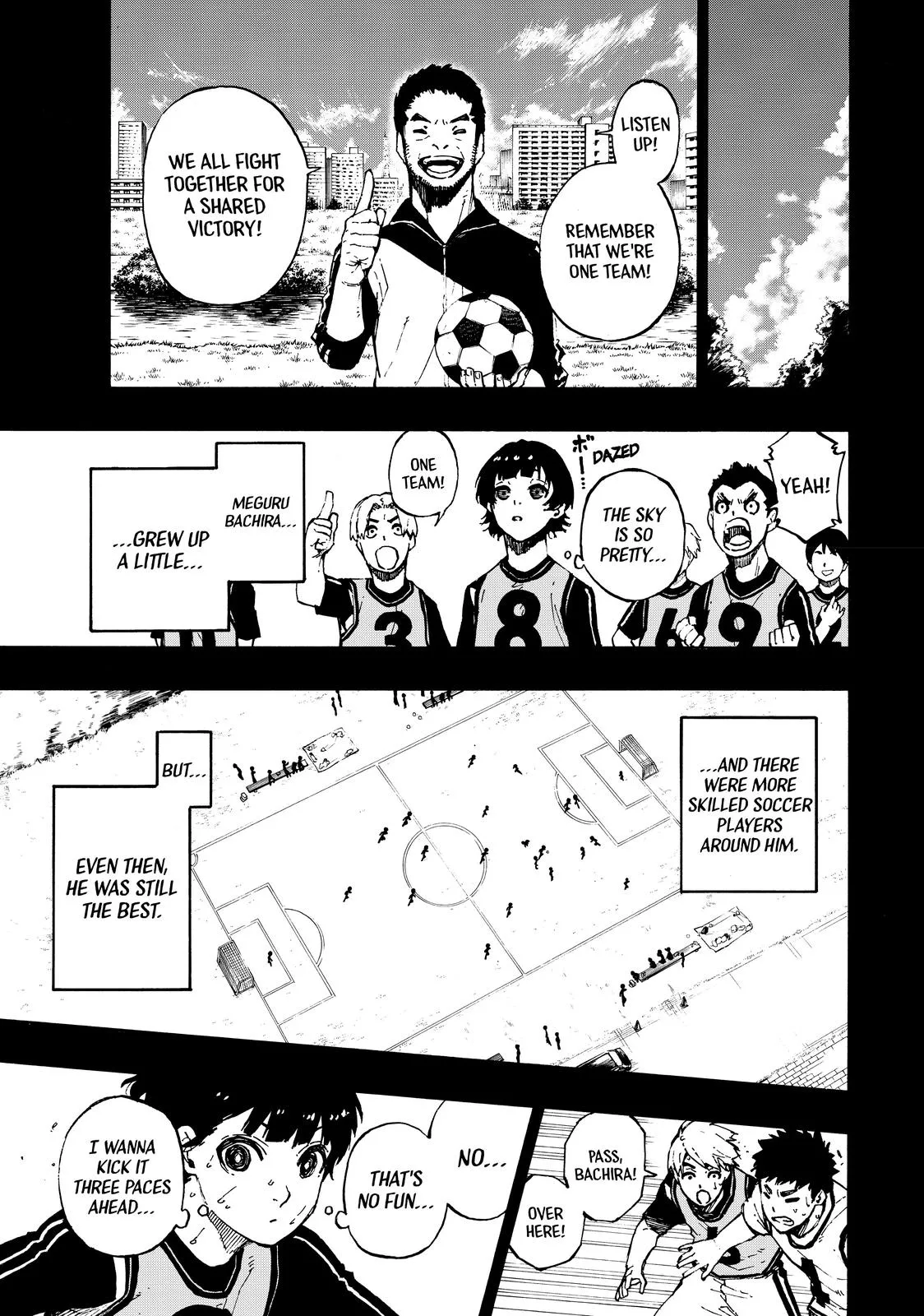
Growing Up, Still Ahead of Everyone
As Bachira grows older, he meets more skilled players.
But even then, he remains the best.
“Meguru Bachira…”
“…grew up a little…”
“…and there were more skilled soccer players around him.”
The players around him talk about teamwork.
“Remember that we’re one team!”
“We all fight together for a shared victory!”
But Bachira’s mind drifts elsewhere.
“The sky is so pretty…”
This matters because the chapter shows that Bachira is not built for ordinary team structure.
He hears instructions, but his instincts pull him toward a different rhythm.
When teammates ask for passes, he does not always want to send the ball where they expect.
“No…”
“I wanna kick it three paces ahead…”
“That’s no fun…”
He is not trying to ruin the play.
He is trying to follow the Monster’s vision.
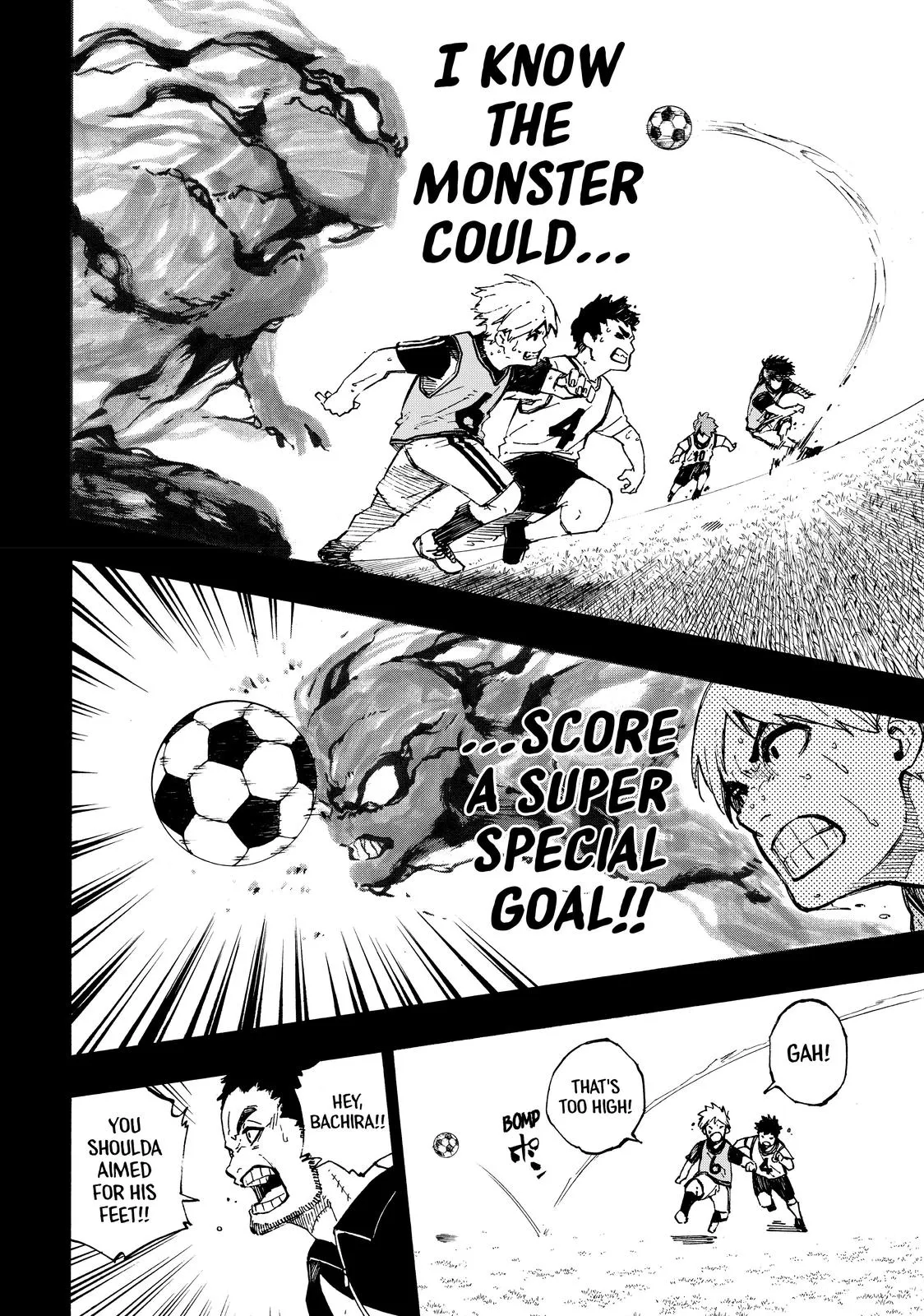
The Pass Nobody Understands
Bachira believes the Monster could score something special.
“I know the monster could…”
“…score a super special goal!!”
So he sends the ball high.
But his teammate cannot reach it.
“That’s too high!”
“Hey, Bachira!! You shoulda aimed for his feet!!”
This moment matters because it shows the gap between Bachira’s imagination and everyone else’s ability.
Bachira is not making a normal pass.
He is passing to the kind of player he dreams exists.
Someone who can understand the fun.
Someone who can move like the Monster.
But the people around him cannot reach that world yet.
Bachira Searches for People Who Feel the Same Fun
Bachira begins to believe there must be others like him.
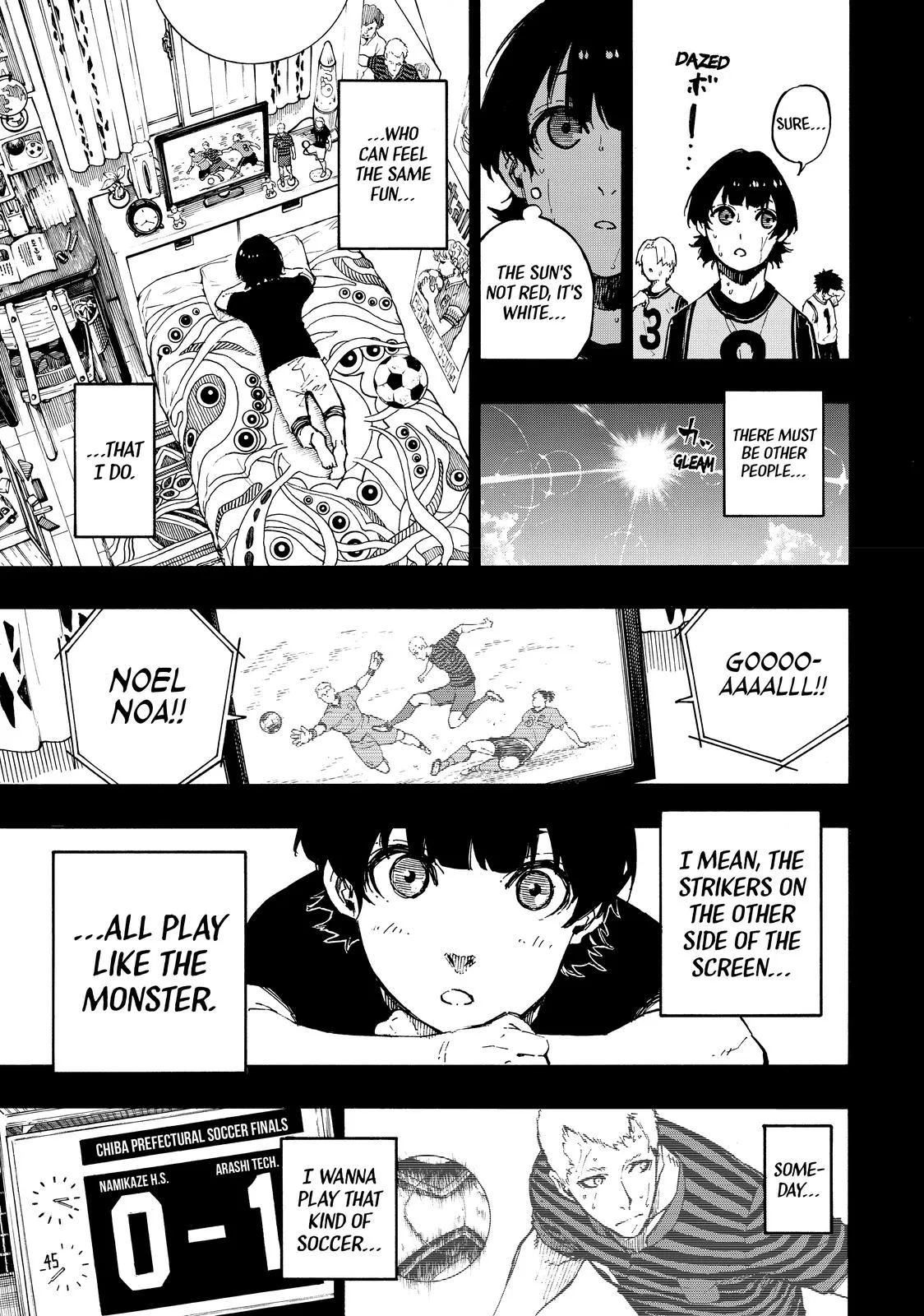
“There must be other people…”
“…who can feel the same fun…”
“…that I do.”
He sees strikers on the screen and feels that they play like the Monster.
“NOEL NOA!!”
“GOOOO-AAAALL!!”
This moment matters because it keeps Bachira from fully drowning in loneliness.
The screen becomes proof.
Somewhere out there, players exist who can turn soccer into the same wild, impossible joy he feels.
Bachira dreams of meeting them.
“Someday…”
“I wanna play that kind of soccer…”
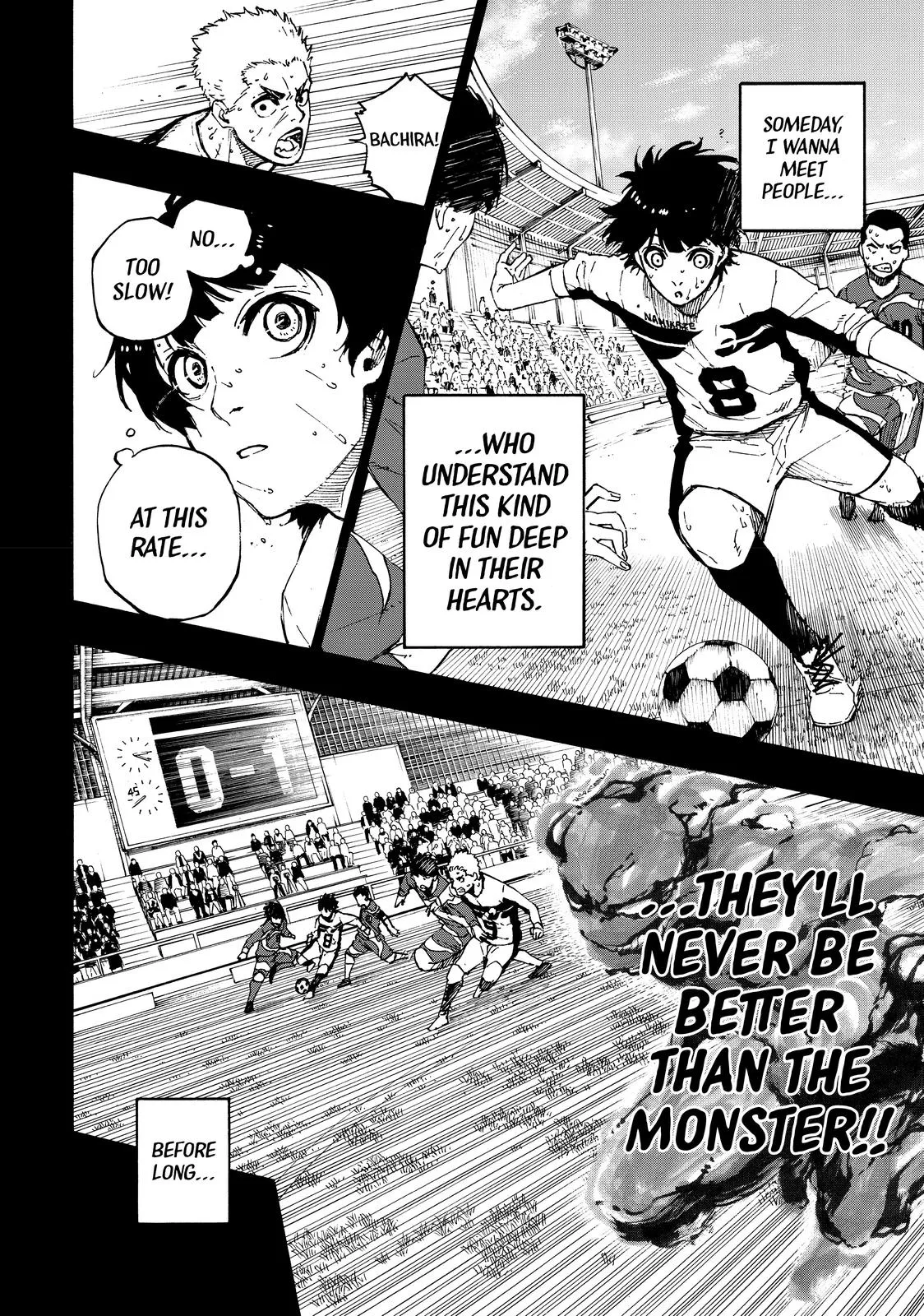
And even more than that:
“Someday, I wanna meet people…”
“…who understand this kind of fun deep in their hearts.”
This is the emotional core of the chapter.
Bachira is not only chasing victory.
He is chasing understanding.
The World Stops Hearing the Monster
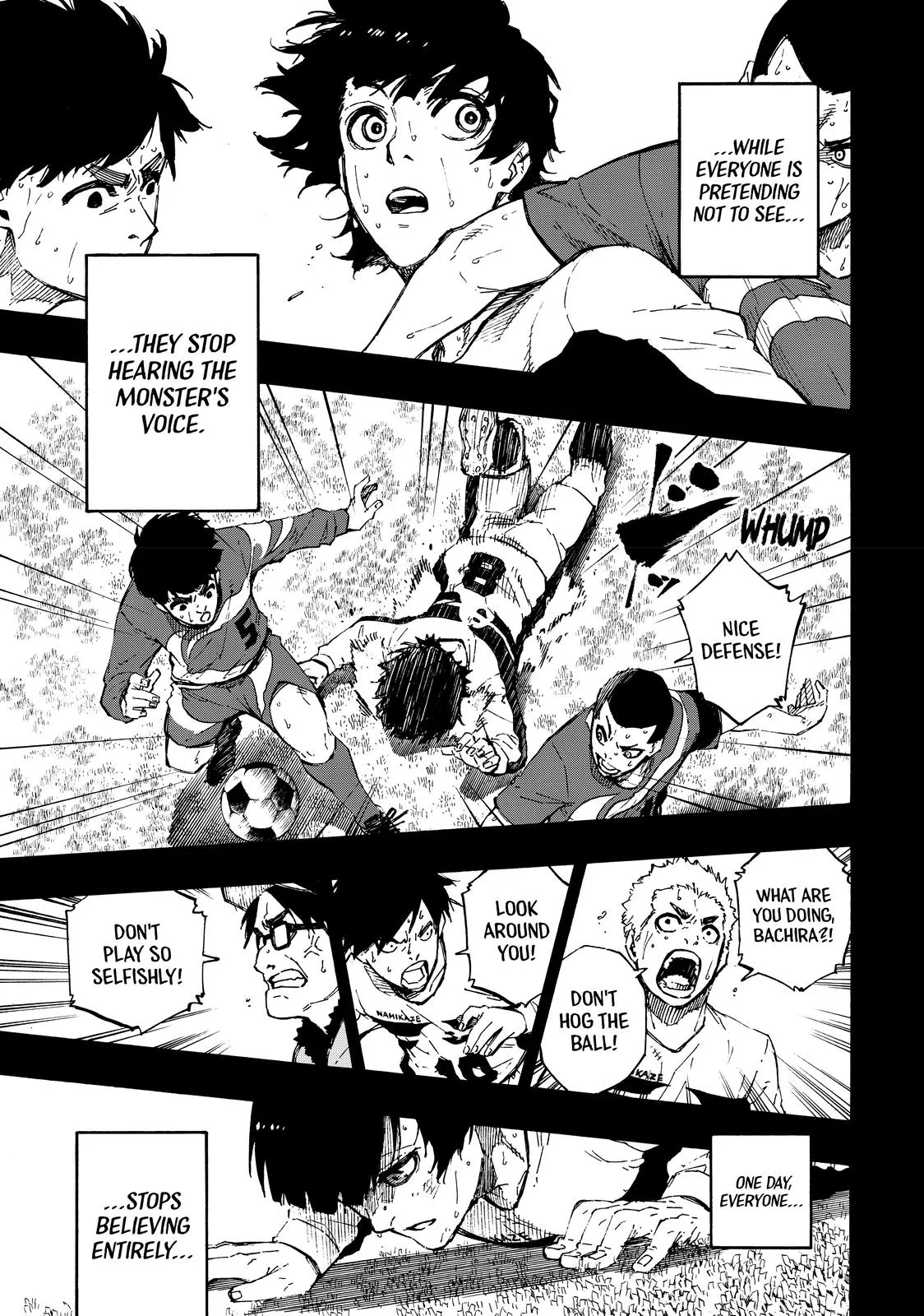
As time passes, Bachira notices something painful.
“…while everyone is pretending not to see…”
“…they stop hearing the monster’s voice.”
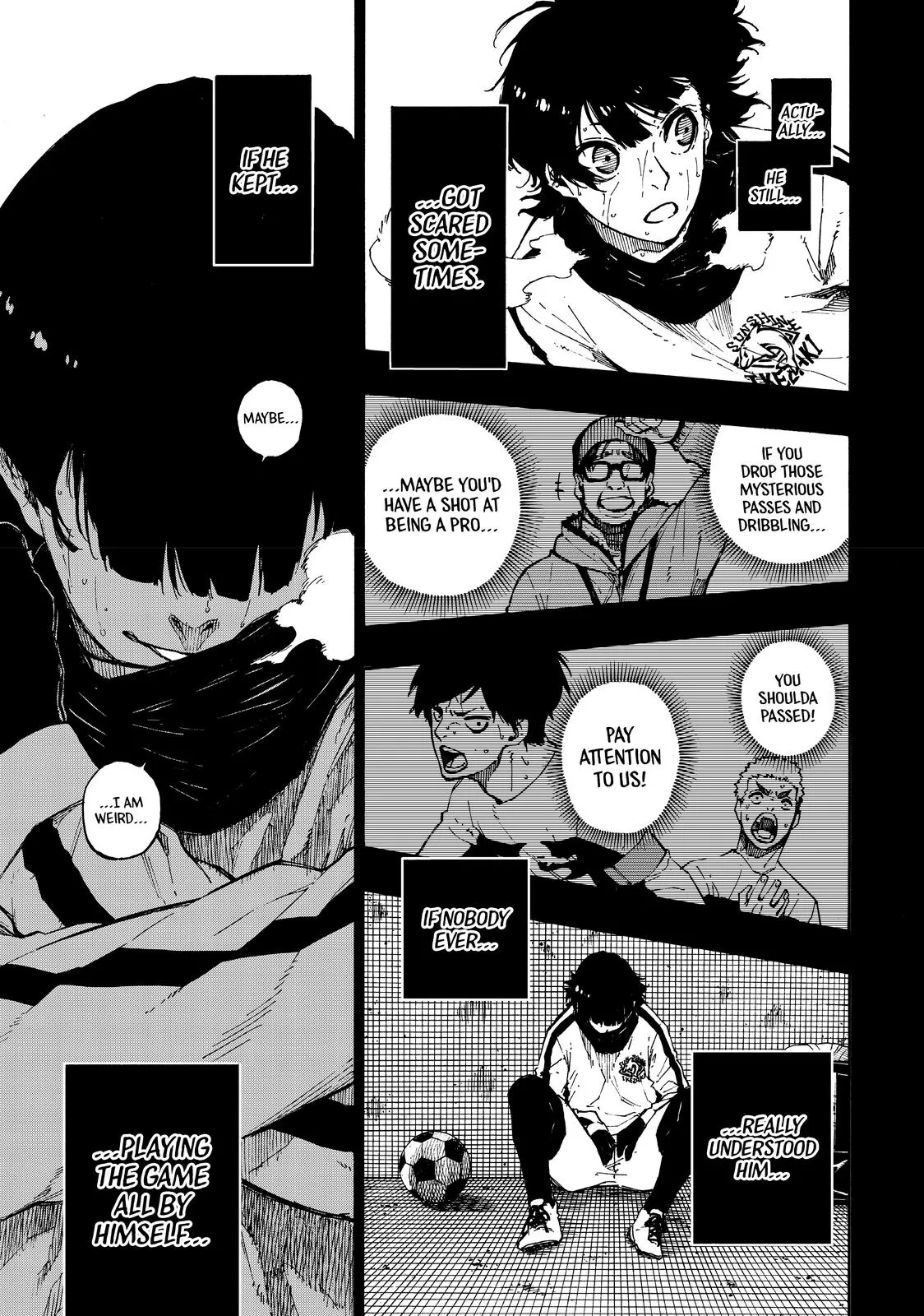
The players around him begin to choose safe, ordinary soccer.
They defend. They complain. They tell him not to hog the ball. They tell him to pass.
“Don’t play so selfishly!”
“Look around you!”
“You shoulda passed!”
This moment matters because it shows the difference between Bachira and everyone else.
Others silence their inner voice to fit in.
Bachira keeps listening.
“One day, everyone…”
“…stops believing entirely…”
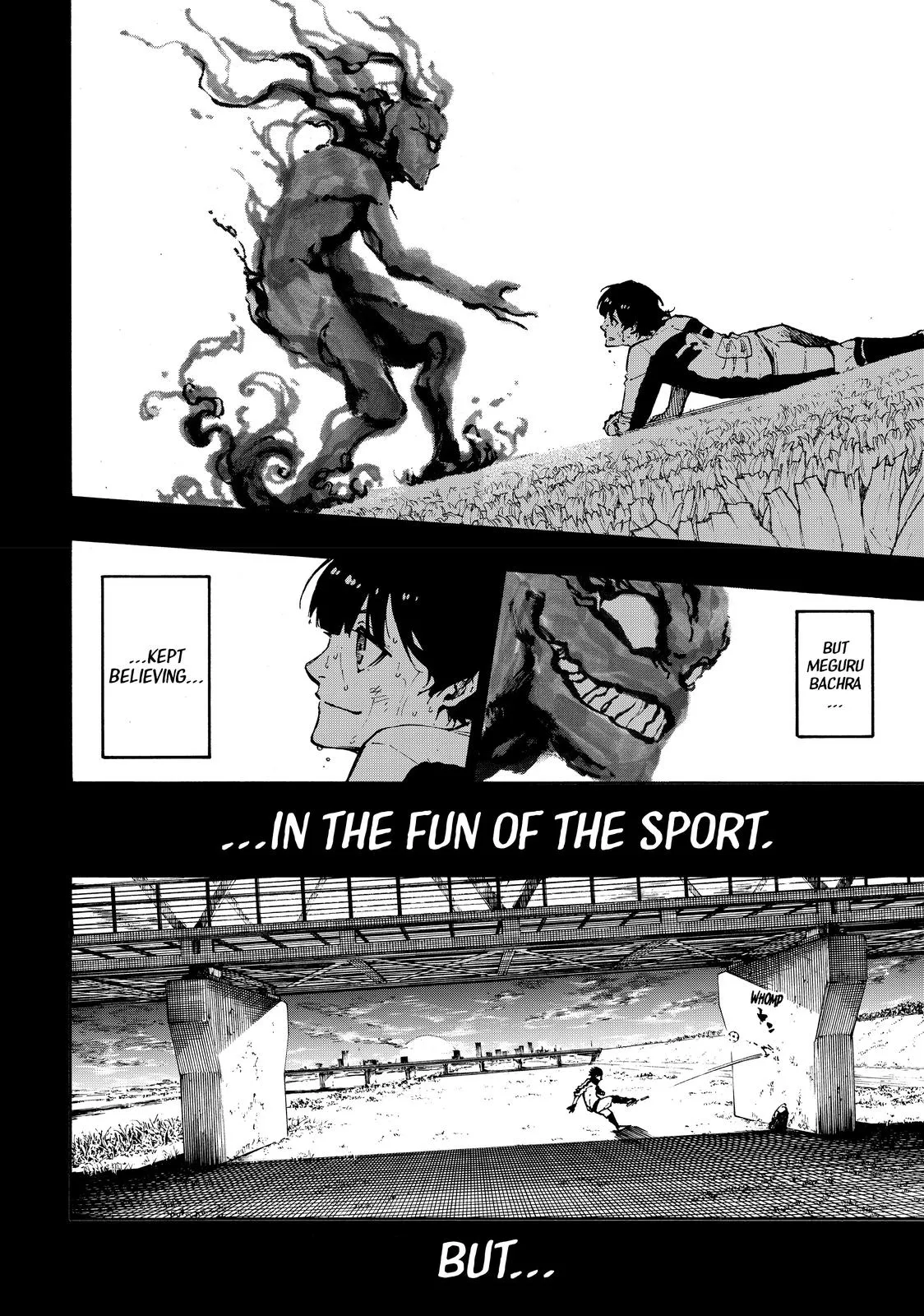
But not him.
Bachira Keeps Believing — But Fear Still Enters
The chapter makes one thing clear:
“But Meguru Bachira…”
“…kept believing…”
“…in the fun of the sport.”
But belief does not erase fear.
Bachira still gets scared.
He hears people tell him he might become a pro if he drops his strange passes and dribbling.
“Maybe…”
“…maybe you’d have a shot at being a pro…”
“…if you drop those mysterious passes and dribbling…”
This moment matters because it shows Bachira’s deepest wound.
Even when he believes, the world’s judgment still reaches him.
He starts to think the words he fought against as a child.
“…I am weird…”
That line hurts because it means the rejection has entered his own mind.
The loneliness becomes unbearable.
“If nobody ever…”
“…really understood him…”
“…playing the game all by himself…”
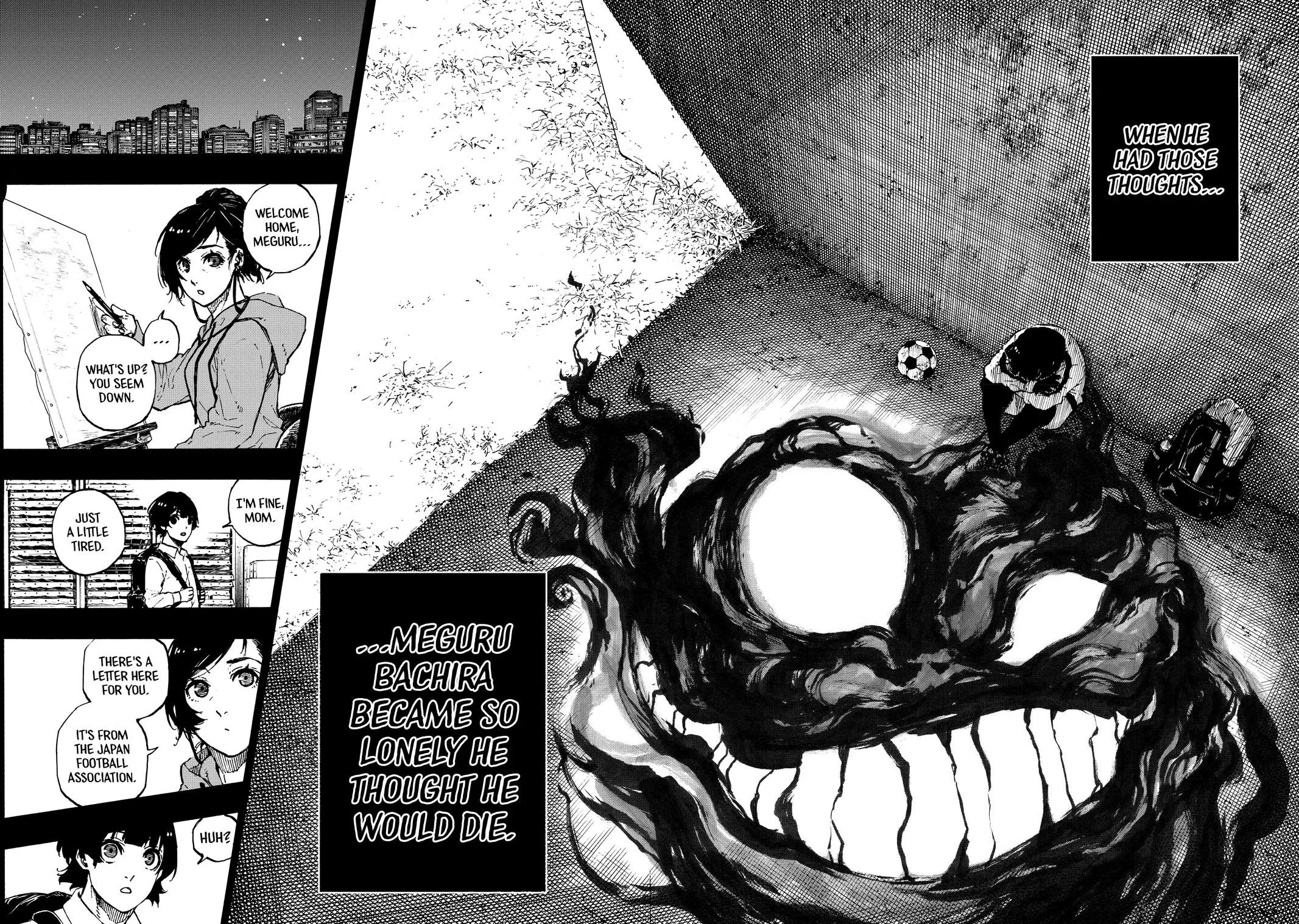
Bachira becomes so lonely he feels like he might die.
The Letter From the Japan Football Association
When Bachira comes home, his mother notices something is wrong.
“Welcome home, Meguru…”
“What’s up? You seem down.”
Bachira hides it.
“I’m fine, Mom.”
“Just a little tired.”
Then the chapter gives him a turning point.
A letter has arrived.
“There’s a letter here for you.”
“It’s from the Japan Football Association.”
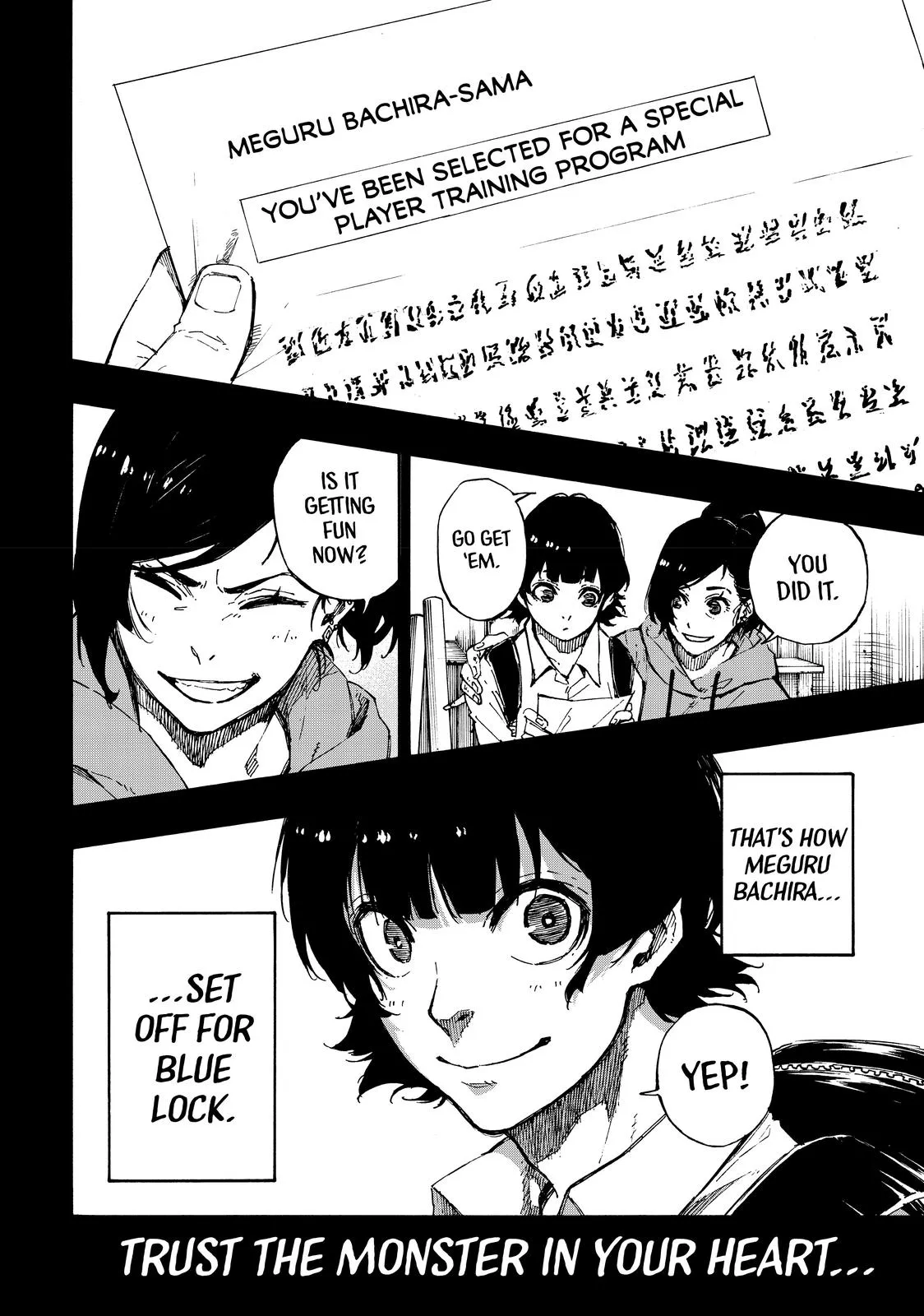
The letter says he has been selected for a special player training program.
“Meguru Bachira-sama”
“You’ve been selected for a Special Player Training Program”
This moment matters because it is the doorway out of isolation.
Bachira is not suddenly healed.
But now he has a chance to go somewhere new.
A place where maybe, finally, someone might understand the Monster.
Bachira Sets Off for Blue Lock
His mother supports him.
“Is it getting fun now?”
“Go get ’em.”
“You did it.”
Bachira answers with simple brightness.
“Yep!”
And that is how the chapter closes.
“That’s how Meguru Bachira…”
“…set off for Blue Lock.”
This matters because Blue Lock becomes more than a training program in this chapter.
For Bachira, it is a place of hope.
A place where the Monster inside his heart might finally meet others who can dance with it.
Final Thoughts
This Chapter is a beautiful and painful look into Meguru Bachira’s past.
It shows a child who loves soccer so much that the world cannot understand him.
It shows a mother who protects his belief by naming the voice inside him.
It shows the birth of the “Monster.”
And most importantly, it shows why Bachira’s soccer is filled with both joy and loneliness.
He does not simply want to win.
He wants to find someone who understands the fun deep in their heart.
That is why this chapter matters.
Because behind Bachira’s smile is a boy who kept believing, even when everyone called him weird.
“TRUST THE MONSTER IN YOUR HEART…”
Continue to Chapter 71 →