BLUE LOCK CHAPTER 67: POWER OF DESPAIR

BLUE LOCK CHAPTER 67 – A DETAILED BREAKDOWN:
POWER OF DESPAIR
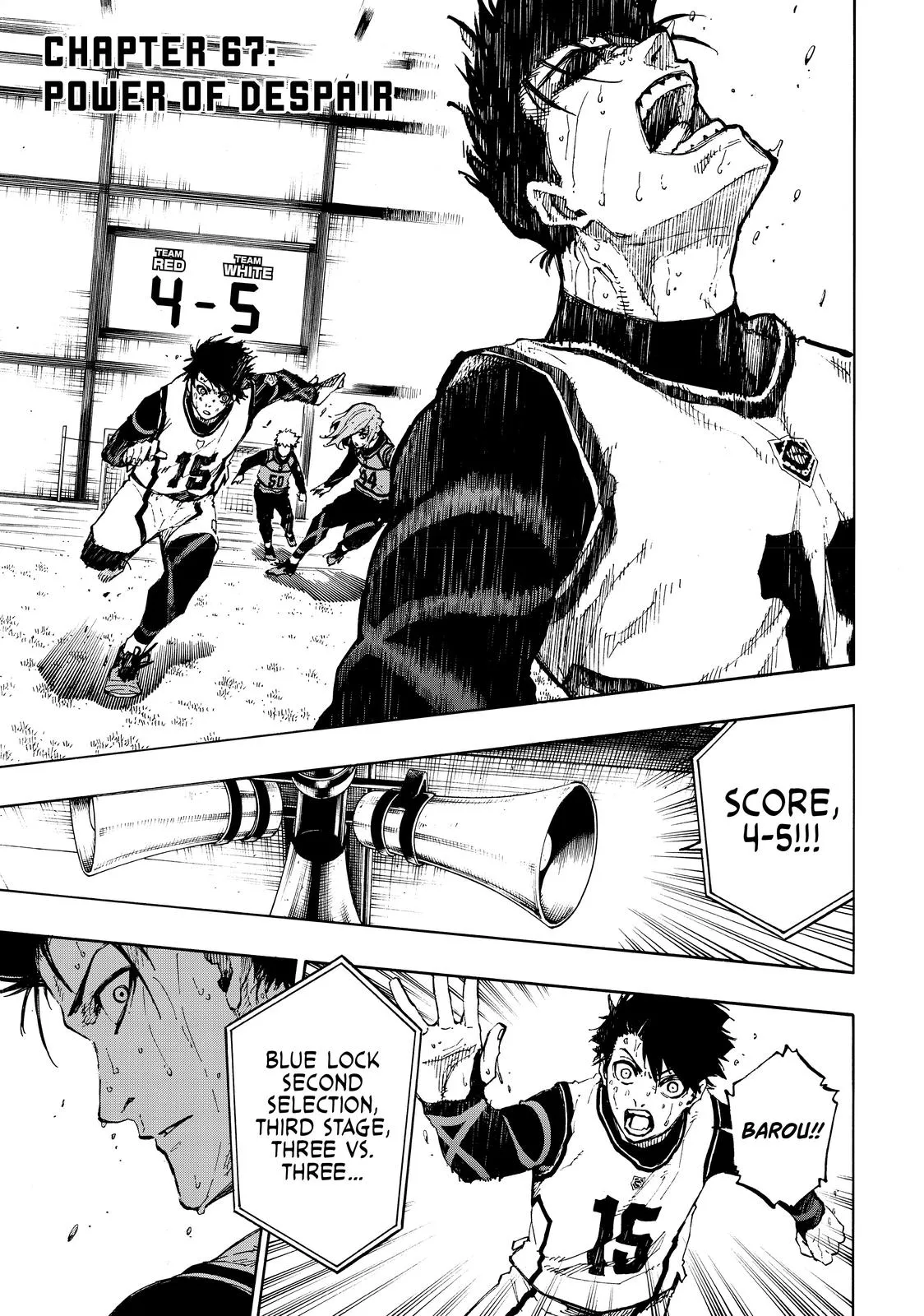
The Chapter opens immediately after Barou’s explosive goal. The score is now Team Red 4 – Team White 5, and the match is finished. What started as a desperate three-on-three battle ends with Team White standing victorious — but this chapter is not only about winning. It is about what defeat does to people, what despair reveals, and what kind of player survives when their dream reaches a crossroads.
“Winners: Team White!!”
That announcement matters because it confirms the result.
Isagi, Nagi, and Barou have won — but the emotional damage of the match is still fresh.
Team White Wins the Match
The chapter begins with Isagi reacting to Barou’s goal.
The score is official:
Team Red 4 – Team White 5.
This is the end of the Second Selection, Third Stage, Three vs. Three match.
“Score, 4-5!!!”
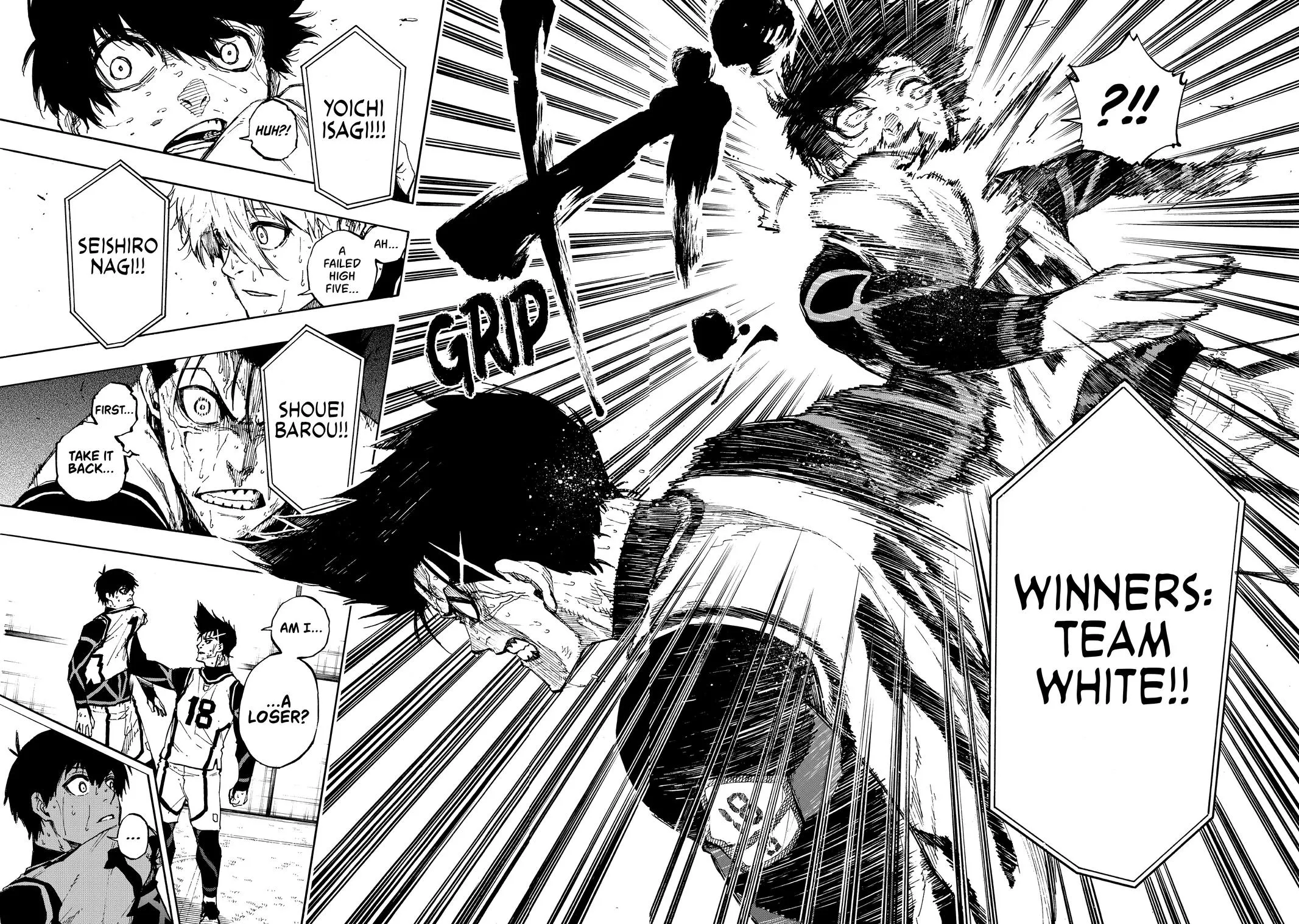
Then the announcement comes.
“Winners: Team White!!”
This moment matters because Barou’s awakening did not just create a goal.
It decided the entire match.
Team White wins because Barou refused to pass, refused to collapse, and found a new way to control the field.
Barou Grabs Isagi
The victory celebration starts awkwardly.
Isagi calls out Barou’s name.
Nagi tries to celebrate too, but even the high five fails.
Then Barou grabs Isagi’s arm.
“First… Take it back…”
Barou asks the question that has been burning inside him.
“Am I… a loser?”
This moment matters because Barou is not asking casually.
He is confronting the identity crisis that started in the previous chapter.
He had been forced to feel defeat.
He had been pushed out of the hero’s role.
Now he wants the truth from the person who shook him most: Isagi.
Isagi Takes It Back
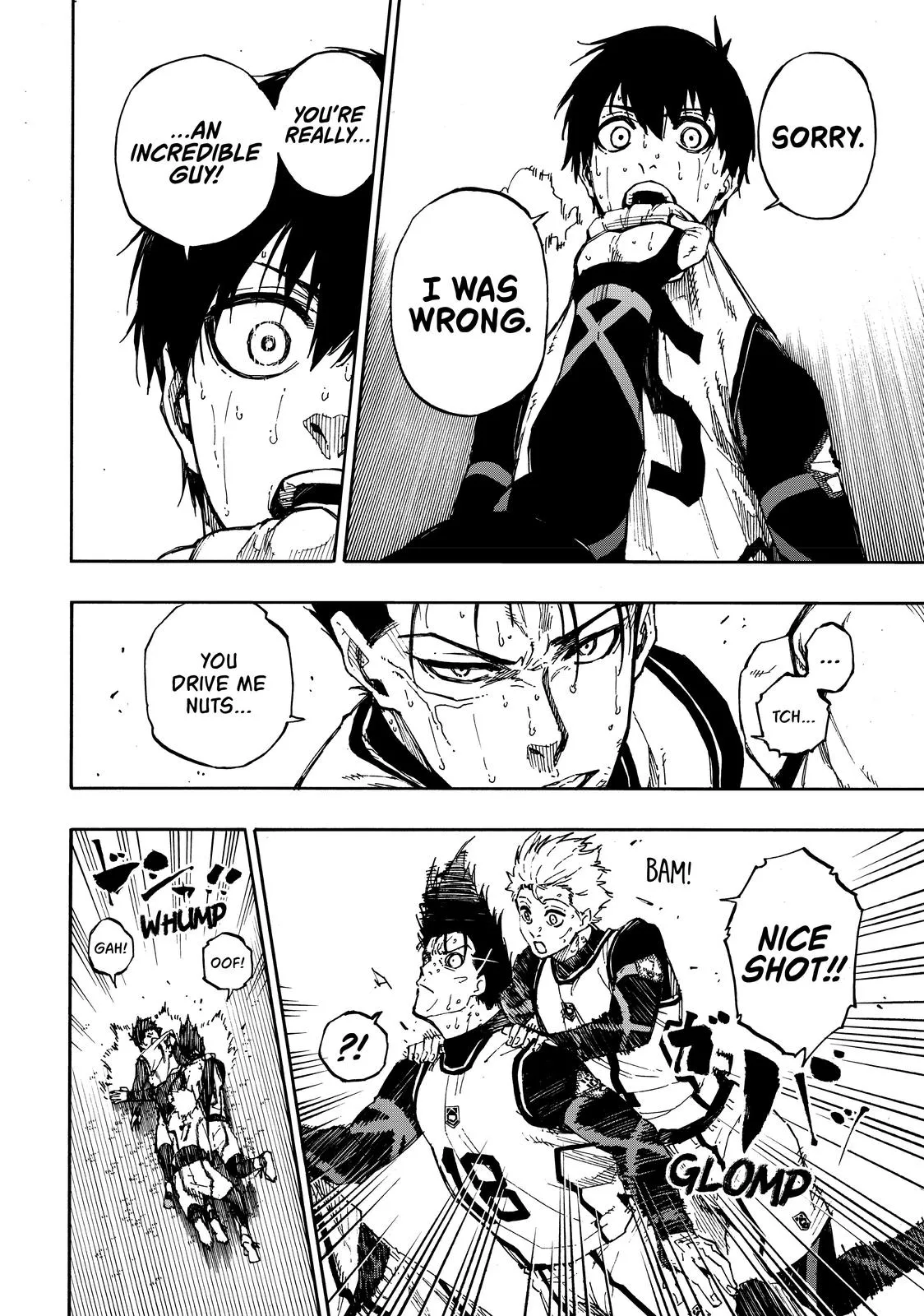
Barou admits something important.
“You’re really… an incredible guy!”
Isagi answers by apologizing.
“Sorry. I was wrong.”
That matters because the tension between them shifts.
Barou is still angry, still rough, still proud — but he has acknowledged Isagi’s strength.
He does not fully soften.
He still says Isagi drives him nuts.
But something has changed.
The king has been forced to recognize another player.
That recognition matters because it proves Barou’s awakening came from being challenged, not protected.
Nagi Crashes Into the Celebration
Nagi suddenly tackles Isagi in celebration.
“Nice shot!!”
He is excited, loud, and physical.
The win hits him with full force.
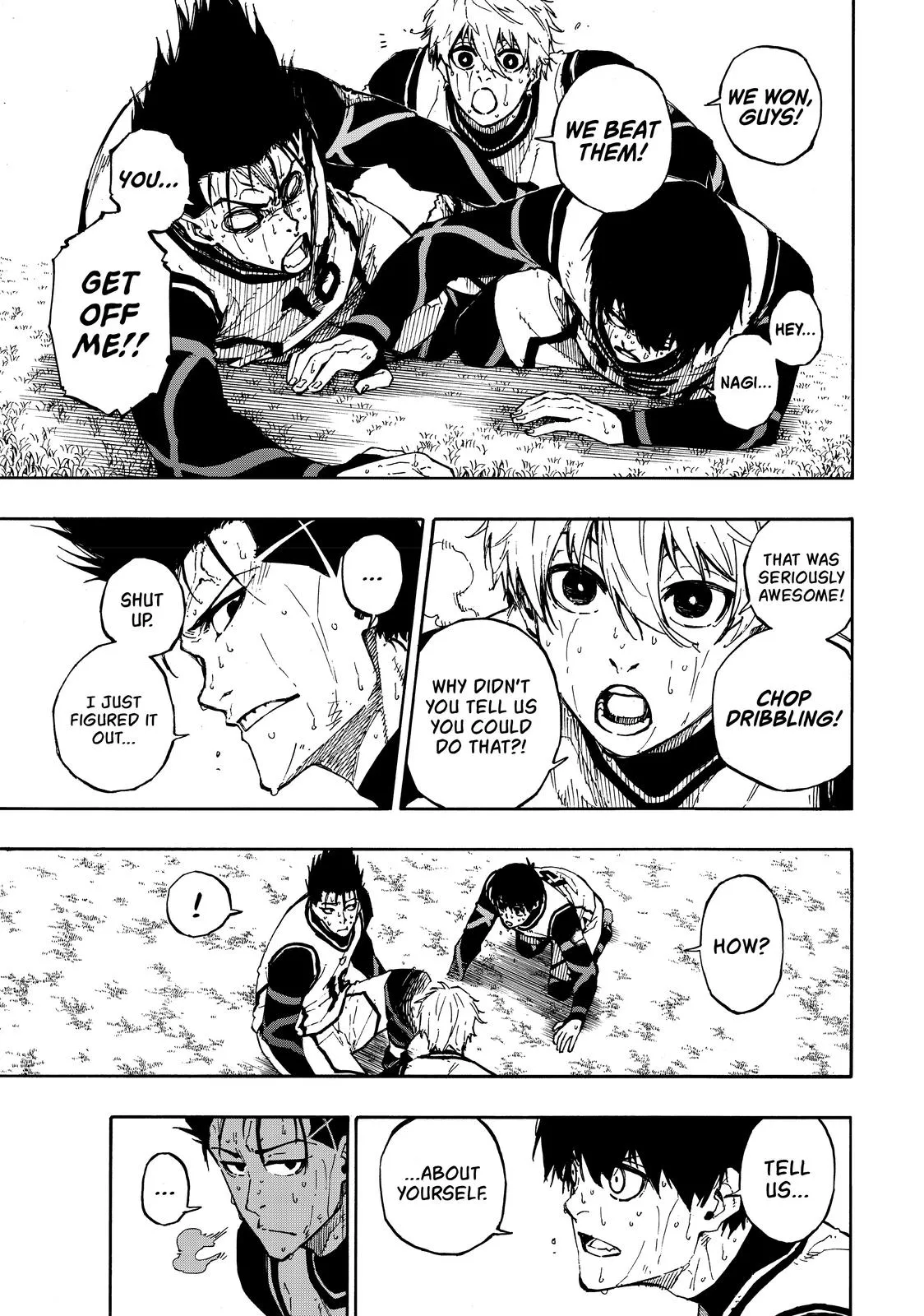
“We won, guys! We beat them!”
Barou immediately snaps at him to get off.
This moment matters because it breaks the heavy emotional tension.
After all the ego, despair, and pressure, Team White actually gets to feel the win.
But even in celebration, Barou stays Barou.
He does not become gentle.
He does not become easy.
He remains the same brutal presence, just changed by the match.
Nagi Wants to Know About Barou’s Weapon
Nagi focuses on Barou’s new move.
“That was seriously awesome!”
He asks about the chop dribbling.
Barou gives a blunt answer:
“I just figured it out…”
This matters because Barou’s weapon was born inside the match itself.
It was not introduced as something polished or planned.
It came from pressure.
From desperation.
From the refusal to become a side character.
Nagi wants to understand the technique.
Isagi wants something deeper.
“Tell us… about yourself.”
That question matters because the chapter moves from action into confession.
Barou Explains His View of the Field
Barou finally speaks honestly.
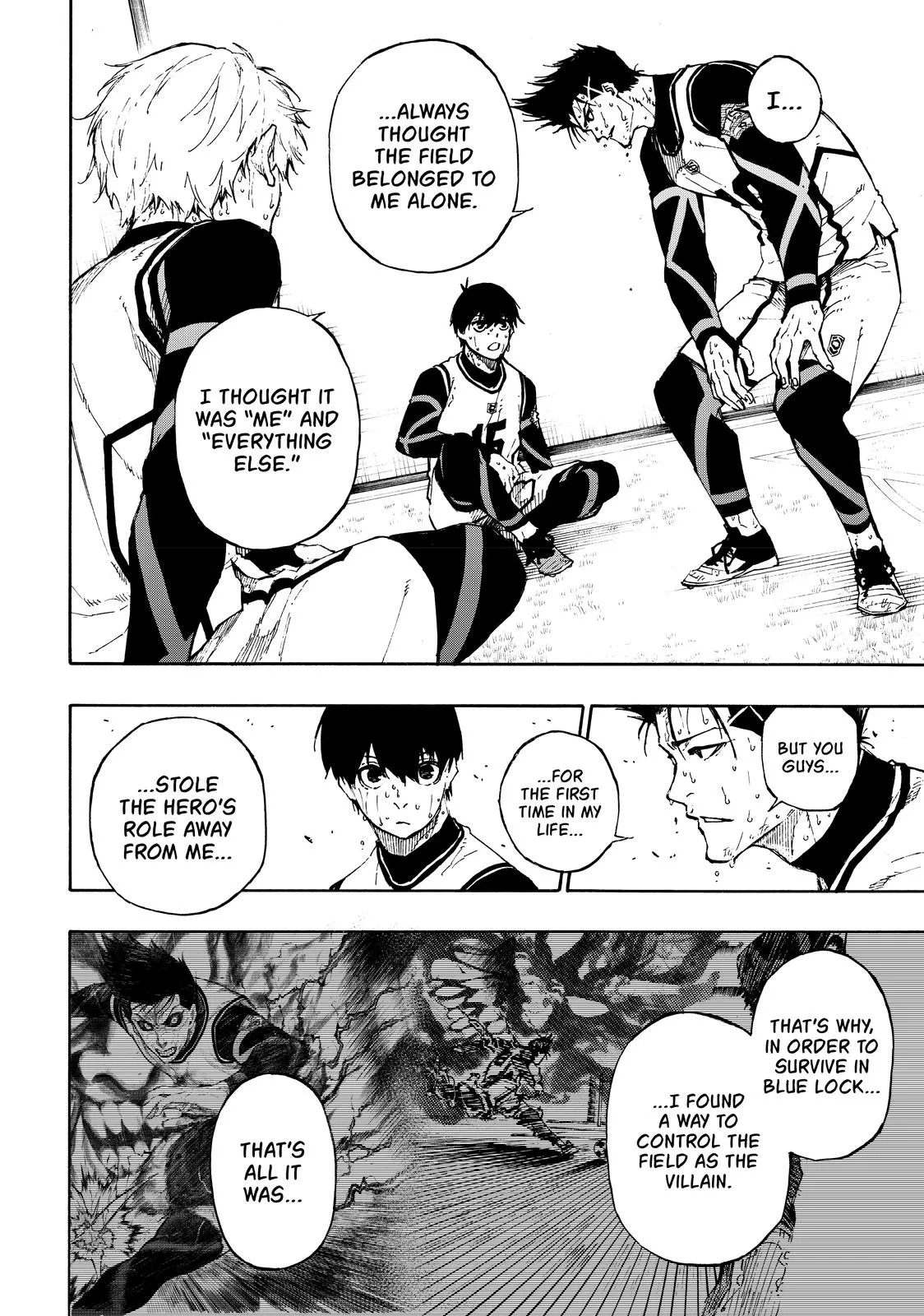
He says he always believed the field belonged to him alone.
To him, the world was divided into two things:
himself and everything else.
“I thought it was ‘me’ and ‘everything else.’”
This moment matters because it explains Barou’s entire ego.
He never saw the field as shared.
He saw it as his kingdom.
But Isagi, Nagi, and the others did something no one had done before.
They stole the hero’s role from him.
“Stole the hero’s role away from me…”
That is why he had to change.
Not to become kinder.
Not to become supportive.
To survive.
Barou Becomes the Villain
Barou says he found a way to control the field as the villain.
“I found a way to control the field as the villain.”
This matters because Barou does not abandon his ego.
He rebuilds it.
If he cannot dominate as the hero, he will dominate as the villain.
That is not a retreat.
It is a new strategy.
His chop dribble becomes the physical expression of that change.
He learned how to attack through the chaos created by stronger opponents.
He learned how to use the field differently.
And that new weapon was born from despair.
Kunigami Recognizes the Strength of the Opponents
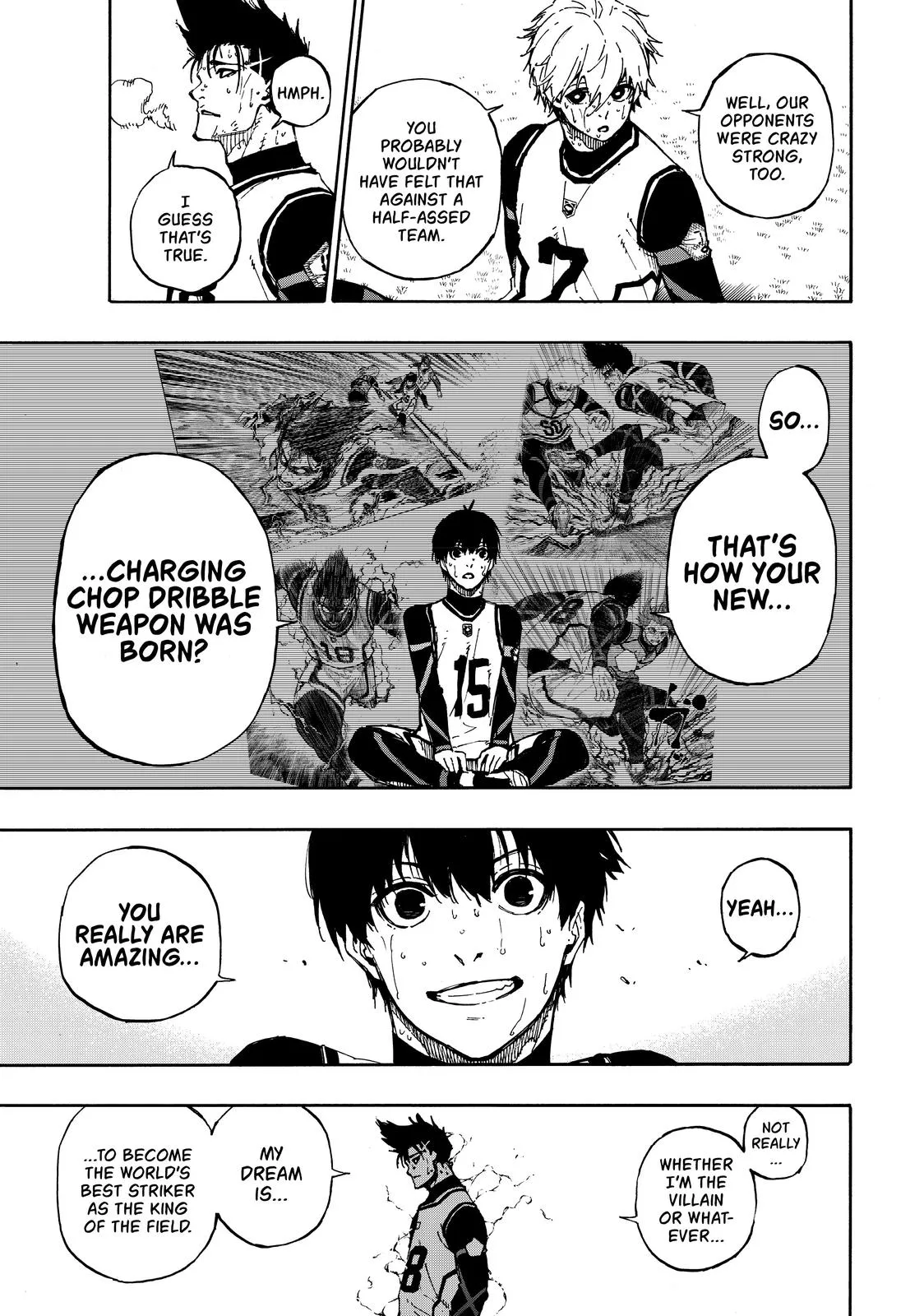
Kunigami points out that their opponents were strong too.
He says Barou probably would not have felt that kind of pressure against a weak team.
This matters because Barou’s evolution required real resistance.
A weaker match would not have forced him to break.
A weaker opponent would not have stolen the hero’s role from him.
The pressure created the weapon.
The despair created the path.
“So… that’s how your new… charging chop dribble weapon was born?”
Barou confirms it.
“Yeah…”
The moment matters because it links talent, pressure, and awakening together.
Barou did not awaken in comfort.
He awakened because the match cornered him.
Barou’s Dream Has Not Changed
Isagi calls Barou amazing.
Barou rejects the praise.
He says whether he is the villain or something else, his dream is still the same.
“To become the world’s best striker as the king of the field.”
This matters because Barou’s role changed, but his dream did not.
He is not abandoning the throne.
He is choosing a darker road toward it.
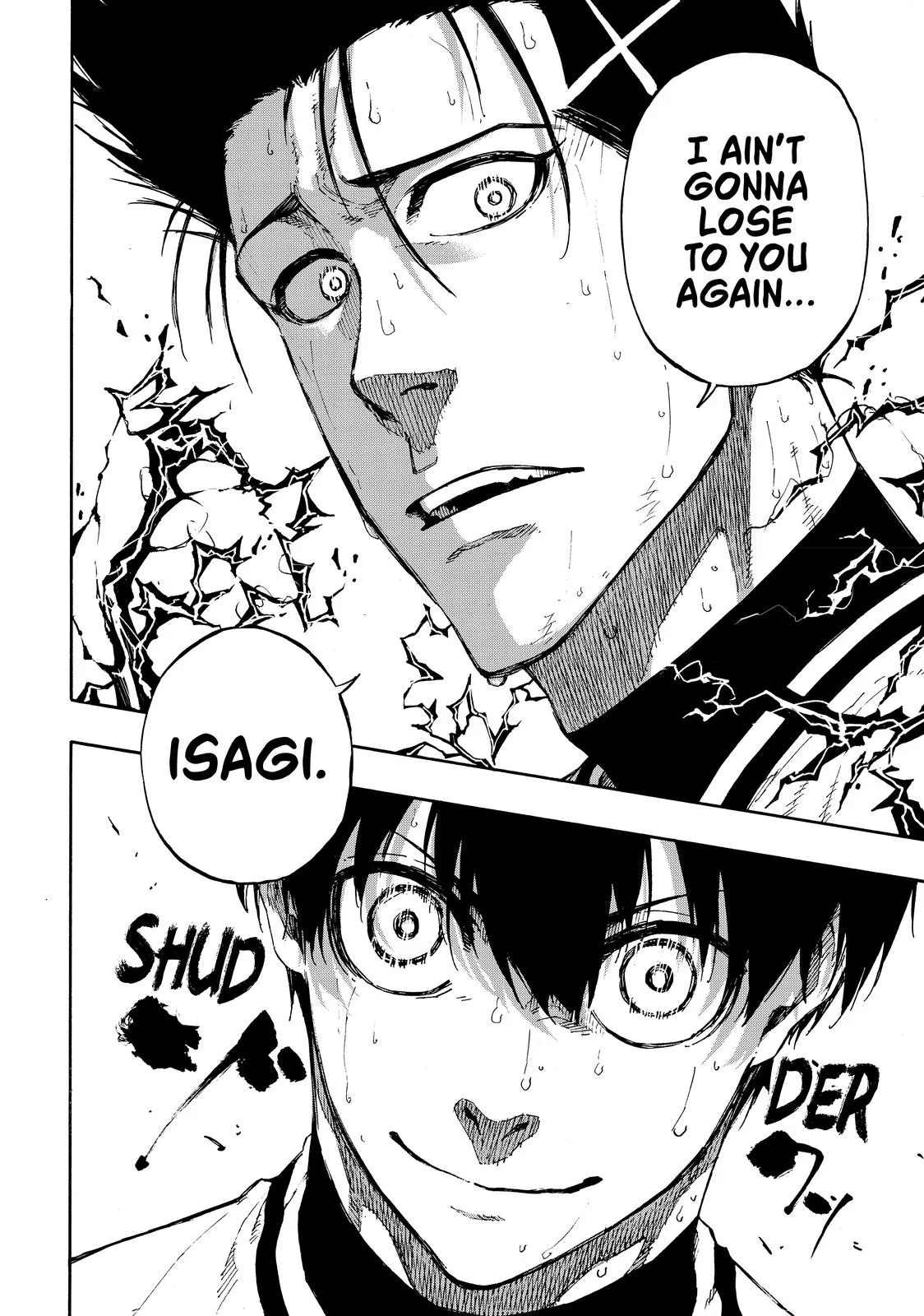
Then he looks directly at Isagi.
“I ain’t gonna lose to you again… Isagi.”
That line matters because he finally calls him by name.
Not “loser.”
Not an insult.
Isagi.
It is respect, but sharpened like a threat.
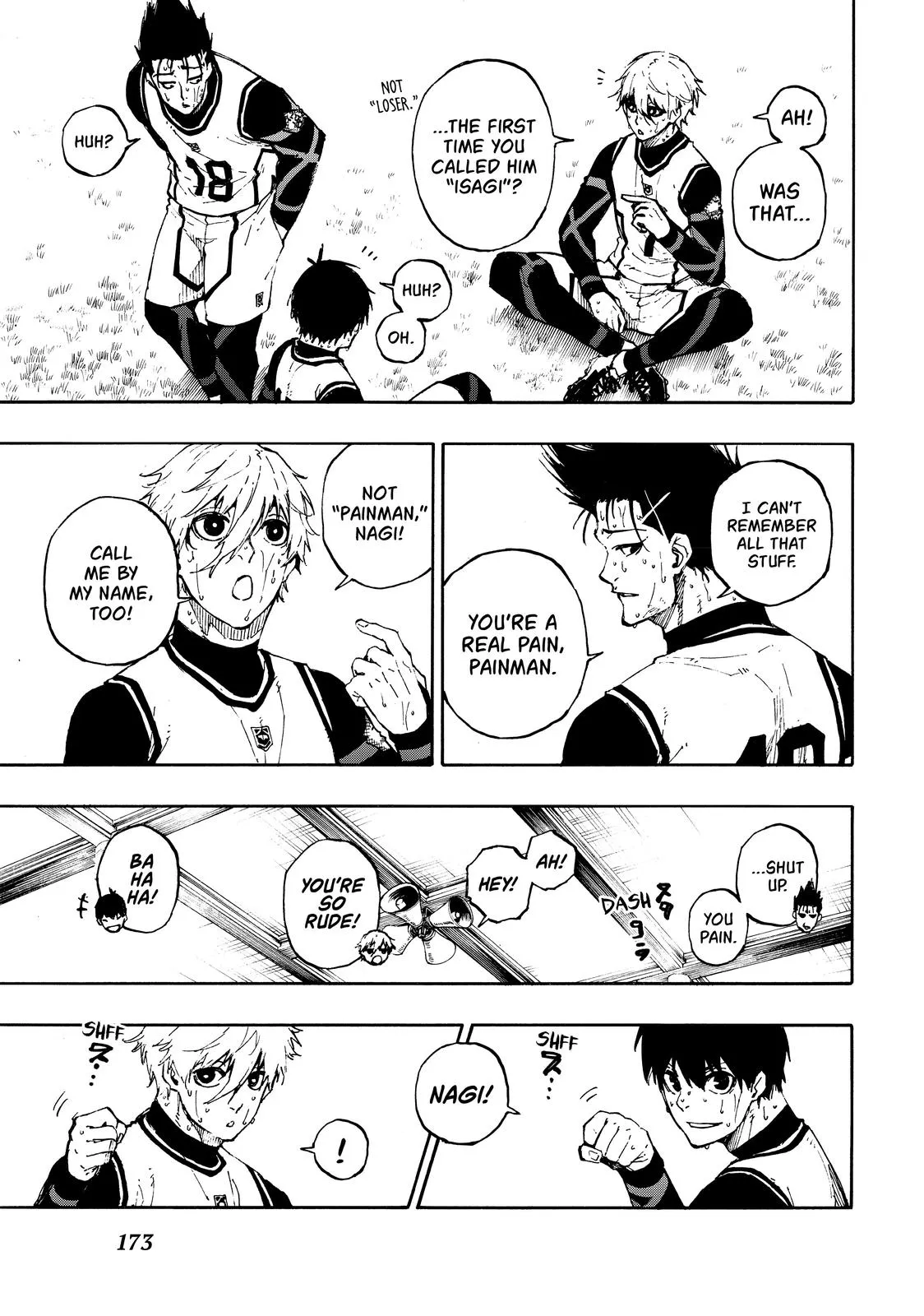
Nagi Notices the Name Change
Nagi catches the detail immediately.
“Was that… the first time you called him ‘Isagi’?”
This moment matters because it shows how much the match changed Barou.
He still acts rude.
He still refuses to remember names properly.
Kunigami wants Barou to stop calling him “Painman.”
Barou refuses.
“You’re a real pain, Painman.”
The scene turns lighter, but it still matters.
Barou has changed, but not completely.
He can respect Isagi and still stay arrogant.
He can evolve without becoming someone else.
That is the point.
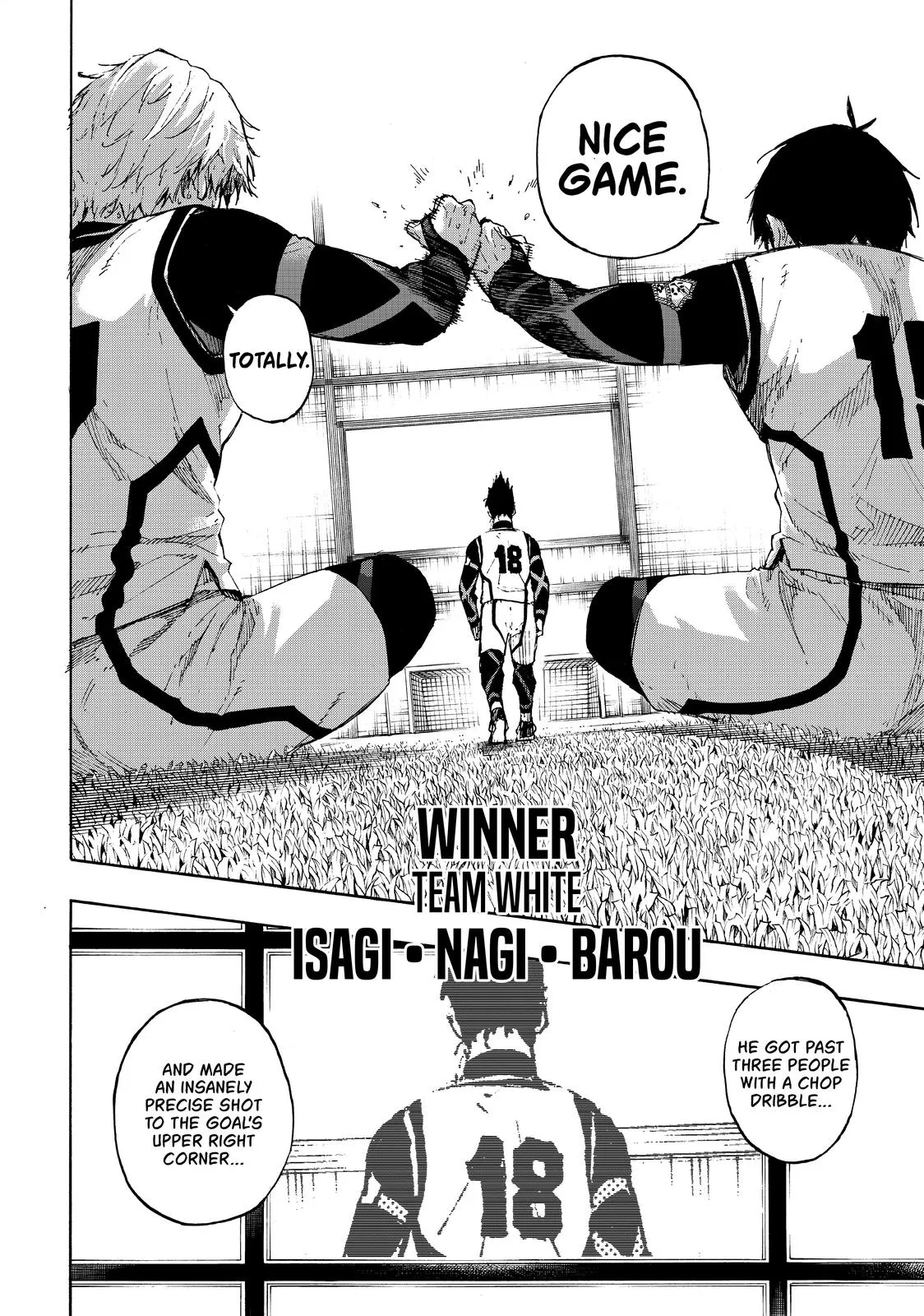
Team White Is Confirmed
Kunigami and Barou fist bump.
“Nice game.”
Barou answers simply.
“Totally.”
Then the result is shown clearly:
WINNER: TEAM WHITE
ISAGI · NAGI · BAROU
This matters because the victory is no longer just a scoreboard result.
It is the proof of a new combination.
Isagi, Nagi, and Barou won through conflict, not harmony.
Barou’s chop dribble got past three people.
His shot landed with insane precision in the upper right corner.
That final goal becomes the symbol of his rebirth.
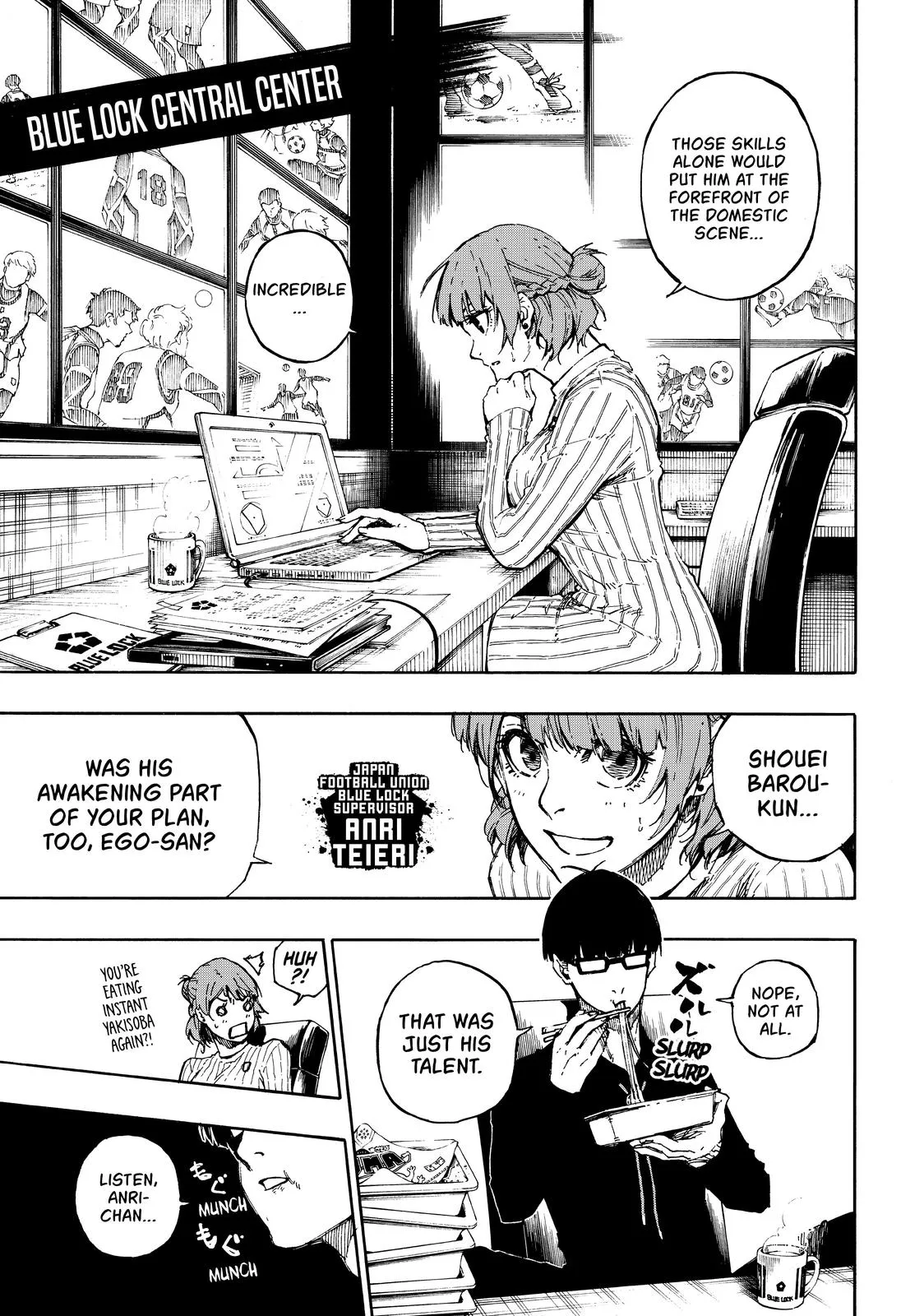
Blue Lock Central Center
The chapter then shifts away from the field.
At the Blue Lock Central Center, Anri reacts to Barou’s performance.
She calls his skills incredible.
“Those skills alone would put him at the forefront of the domestic scene…”
This matters because Barou’s awakening is not just impressive to the players.
It is impressive from the outside too.
Anri asks if Ego planned it.
Ego’s answer is blunt:
“Nope, not at all.”
That matters because Barou’s awakening was not engineered directly.
It was his own talent responding to the situation.
The match created the conditions.
Barou created the answer.
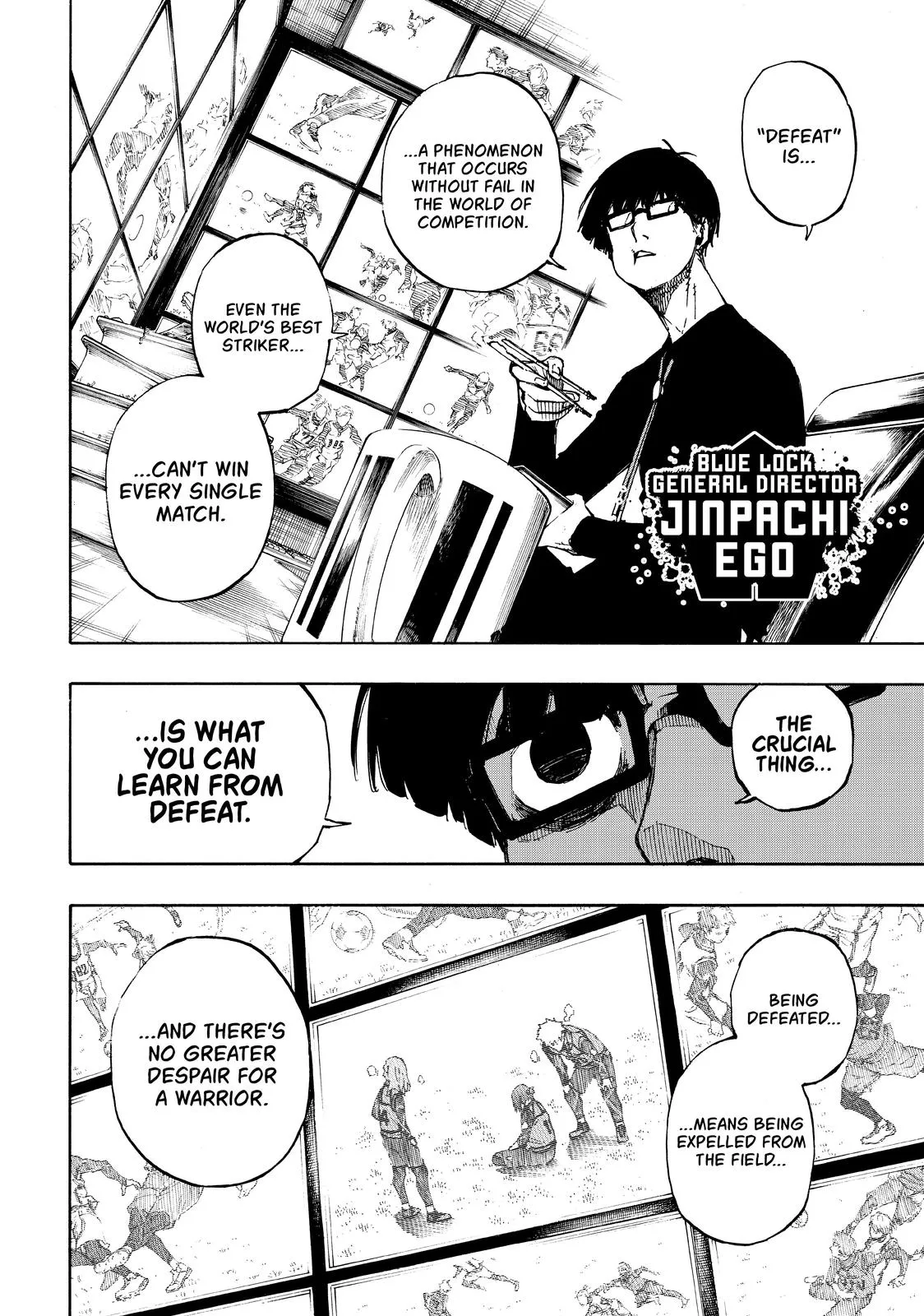
Ego Explains Defeat
Ego begins speaking about defeat.
He says defeat is unavoidable in competition.
Even the world’s best striker cannot win every match.
“The crucial thing… is what you can learn from defeat.”
This matters because the chapter shifts into its main philosophy.
Winning is not the only test.
Losing is also a test.
For Ego, defeat is not just a bad result.
It is being expelled from the field.
And for a warrior, there is no greater despair.
That statement matters because it explains why Barou’s moment was so powerful.
He did not run from that despair.
He felt it.
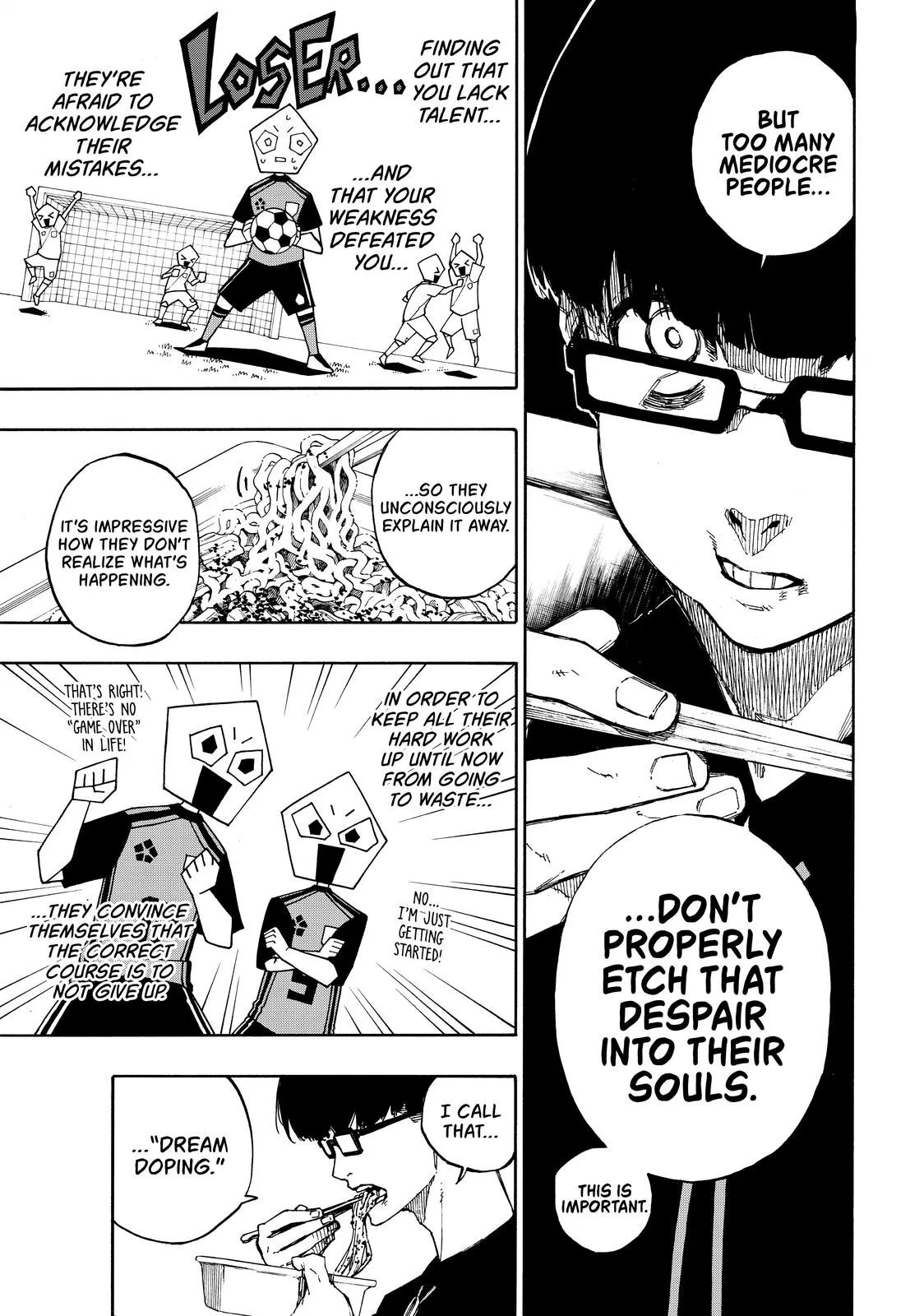
The Problem With Mediocre People
Ego says many mediocre people fail to carve despair into their souls.
They lose, but they do not truly face why they lost.
They explain it away.
They protect themselves from the truth.
“They unconsciously explain it away.”
This matters because Ego is attacking false resilience.
He is not praising people who simply say, “I won’t give up.”
To him, that can become an excuse.
A person may stop trying to make the dream real and instead become satisfied with merely chasing it.
That is where the chapter gets brutal.
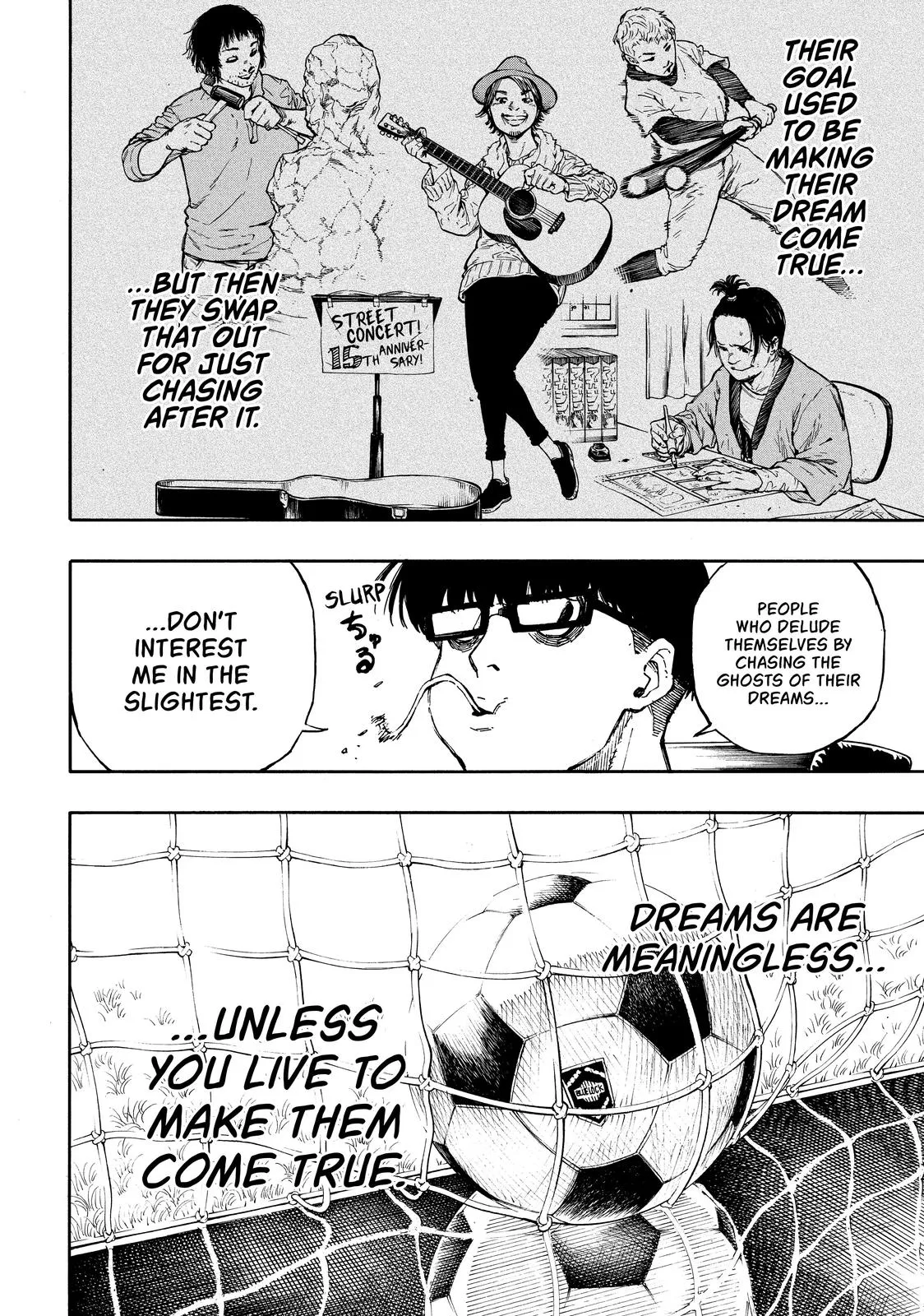
Dream Doping
Ego names this false comfort:
“Dream doping.”
This phrase matters because it separates real ambition from self-deception.
The goal used to be making the dream come true.
But after defeat, some people replace that goal with the act of chasing it forever.
They keep moving, but they are no longer moving toward reality.
They are chasing the ghost of the dream.
“Dreams are meaningless… unless you live to make them come true…”
This matters because it defines the standard Blue Lock demands.
A dream is not valuable just because it sounds beautiful.
It only matters if the person is willing to face despair and still fight toward making it real.
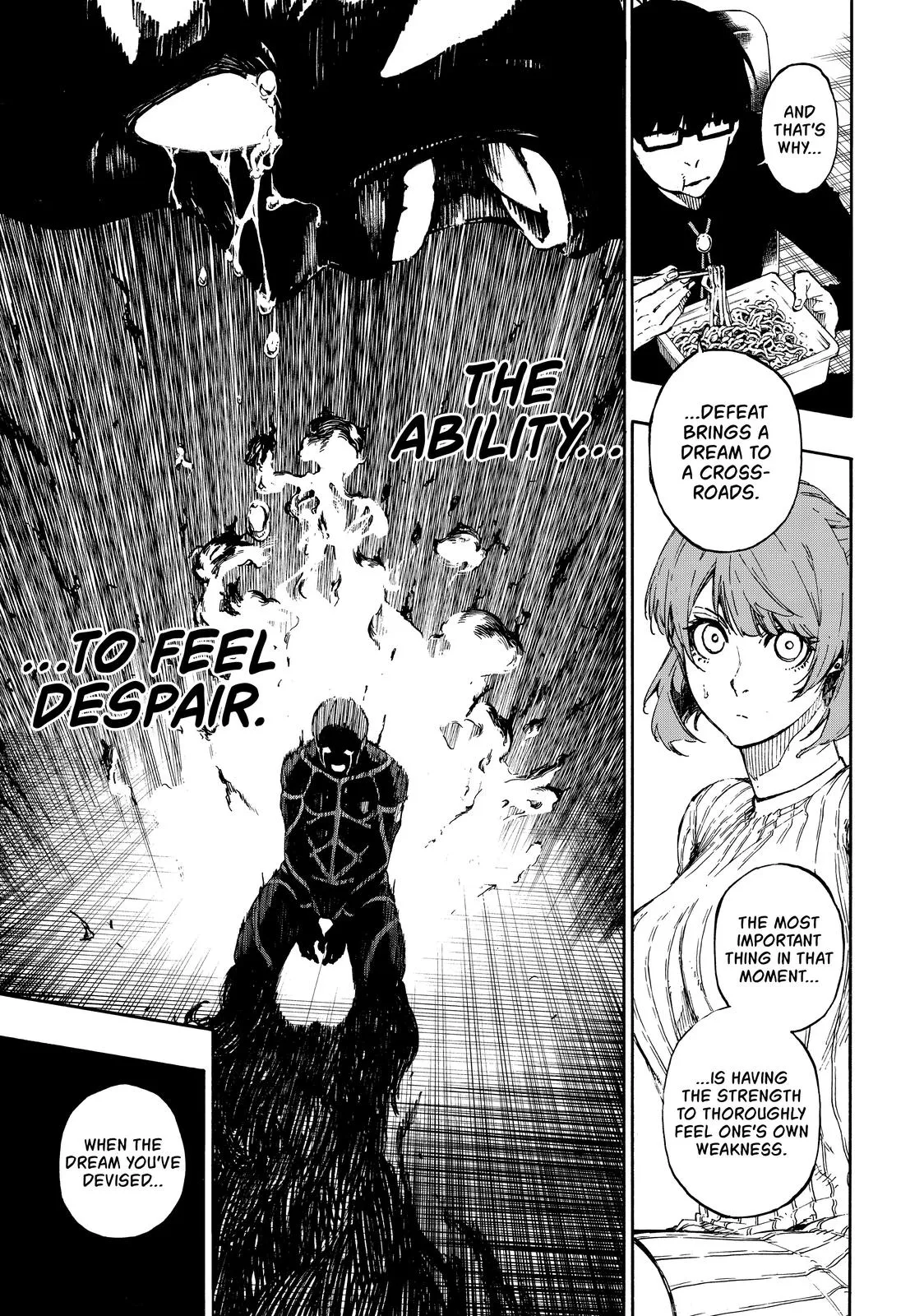
Defeat Brings a Dream to a Crossroads
Ego says defeat brings a dream to a crossroads.
This connects directly to Barou’s moment.
When Barou saw the future where he passed and became a supporting actor, his dream reached a turning point.
He could protect himself with an excuse.
Or he could face the ugly truth.
“The ability… to feel despair.”
This matters because despair is not treated as weakness here.
It becomes a weapon.
Only the person who fully feels their weakness can find a new possibility.
Only the person who admits the dream has become hard to see can discover a new route.
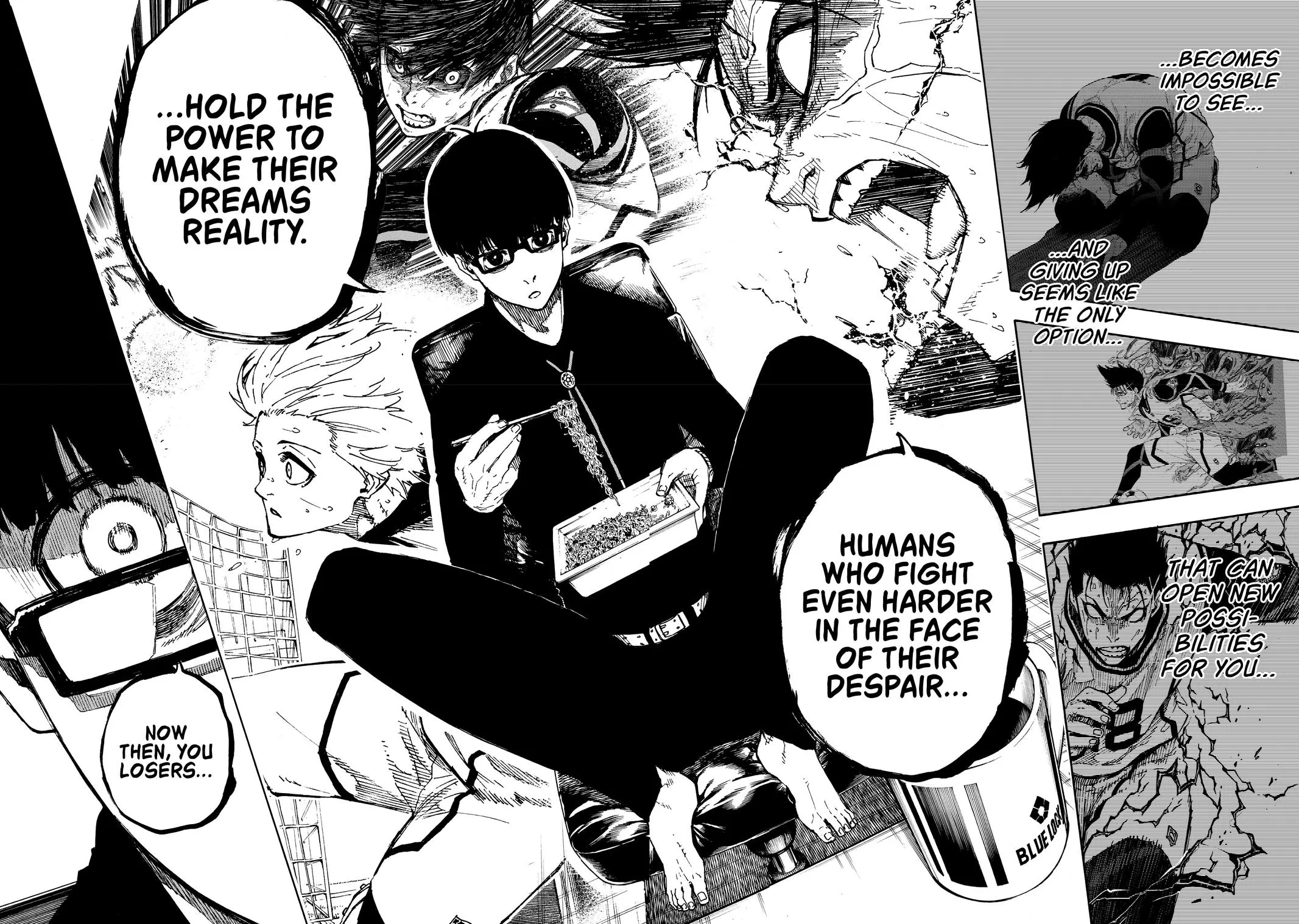
The Power of Despair
Ego says when giving up seems like the only option, new possibilities can open.
This is the meaning of the chapter title:
Power of Despair.
“Humans who fight even harder in the face of their despair… hold the power to make their dreams reality.”
This matters because Barou is the proof.
He was cornered.
He was nearly reduced to a supporting role.
But instead of escaping that despair, he turned it into a new weapon.
His villain path was not born from confidence.
It was born from being forced to confront weakness.
Reo and Kunigami Face Their Crossroads
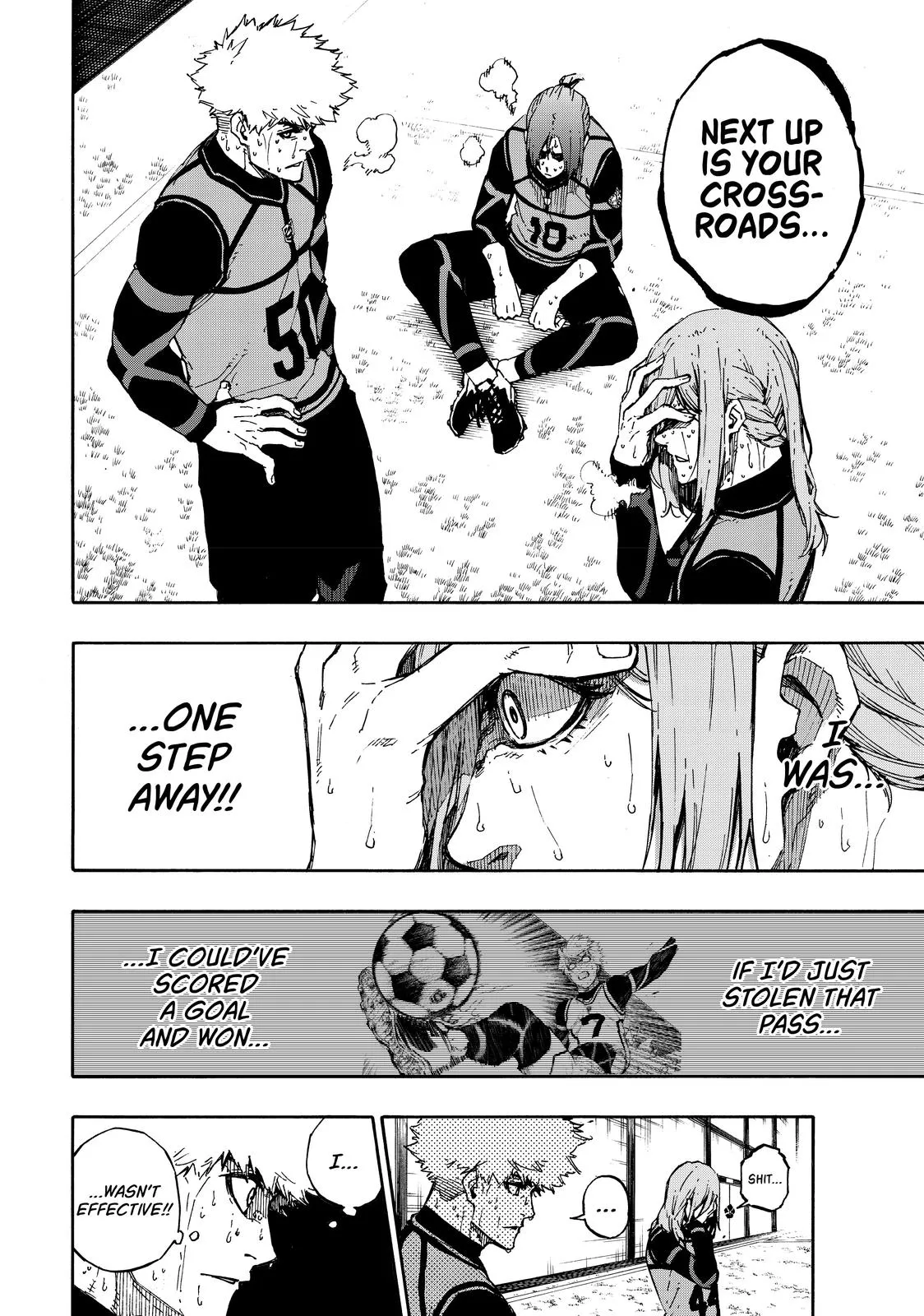
Ego then says the next crossroads belongs to the losers.
“Next up is your crossroads…”
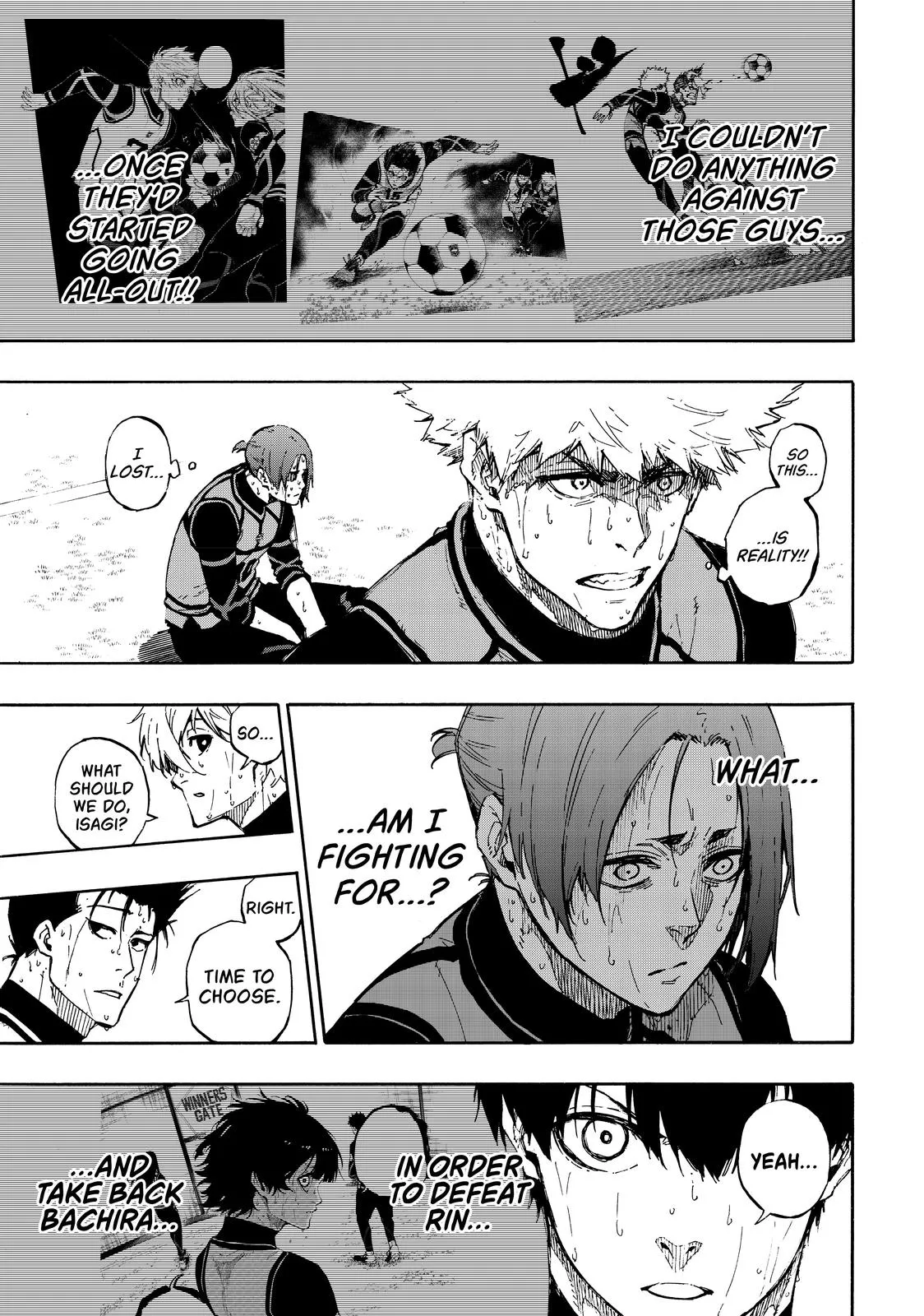
The scene returns to Reo and Kunigami.
Reo is collapsed on the ground.
He thinks he was one step away.
“If I’d just stolen that pass…”
Kunigami is shaken too.
“I… wasn’t effective!!”
This matters because the chapter does not let the defeated team disappear.
Their loss now becomes their test.
Just like Barou faced despair, Reo and Kunigami must now face their own.
Reo Accepts the Loss
Reo admits the truth.
“I lost…”
Kunigami also faces reality.
“So this… is reality!!”
This matters because Ego’s speech becomes immediate.
He was not speaking in theory.
Right now, Reo and Kunigami are standing at the exact crossroads he described.
They can explain the loss away.
They can protect themselves.
Or they can feel the despair properly and change.
The chapter leaves them in that painful moment.
The Winning Team Must Choose
Nagi turns to Isagi.
“So… What should we do, Isagi?”
Now Team White must make the next decision.
They have won the match, which means they must choose a player.
Isagi understands the purpose behind the choice.
They need someone to help them defeat Rin and take back Bachira.
“Time to choose.”
This matters because victory immediately becomes responsibility.
Winning the match was only one step.
Now they must decide who gives them the best chance to move forward.
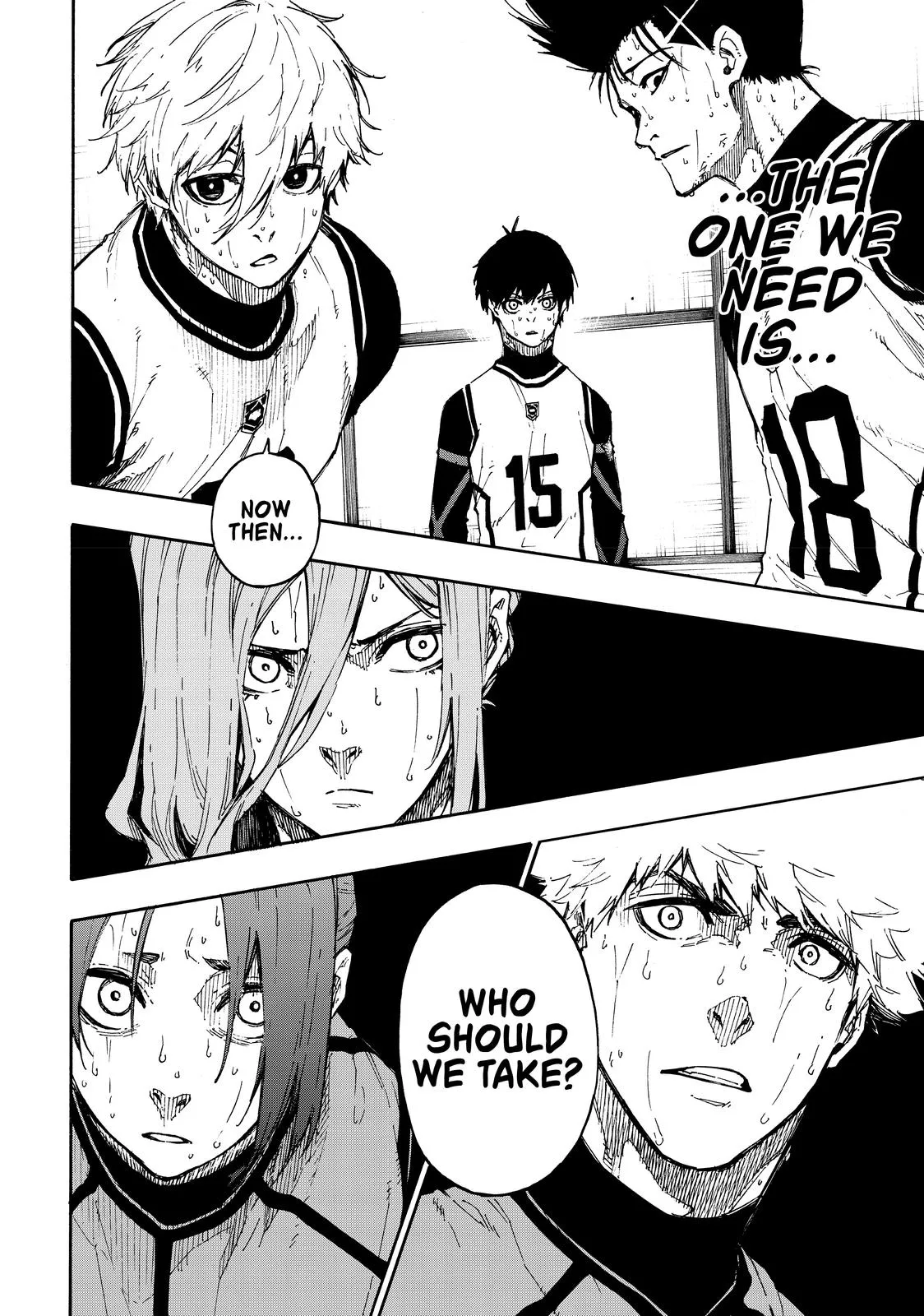
Who Will They Take?
The chapter ends with the selection hanging in the air.
Chigiri stares.
Nagi asks the question directly:
“Who should we take?”
This matters because the chapter closes on a new tension.
Team White has won.
Barou has awakened.
chigiri, Reo and Kunigami are crushed by defeat.
And now one player must be chosen.
The result of that choice will shape the next step of the Second Selection.
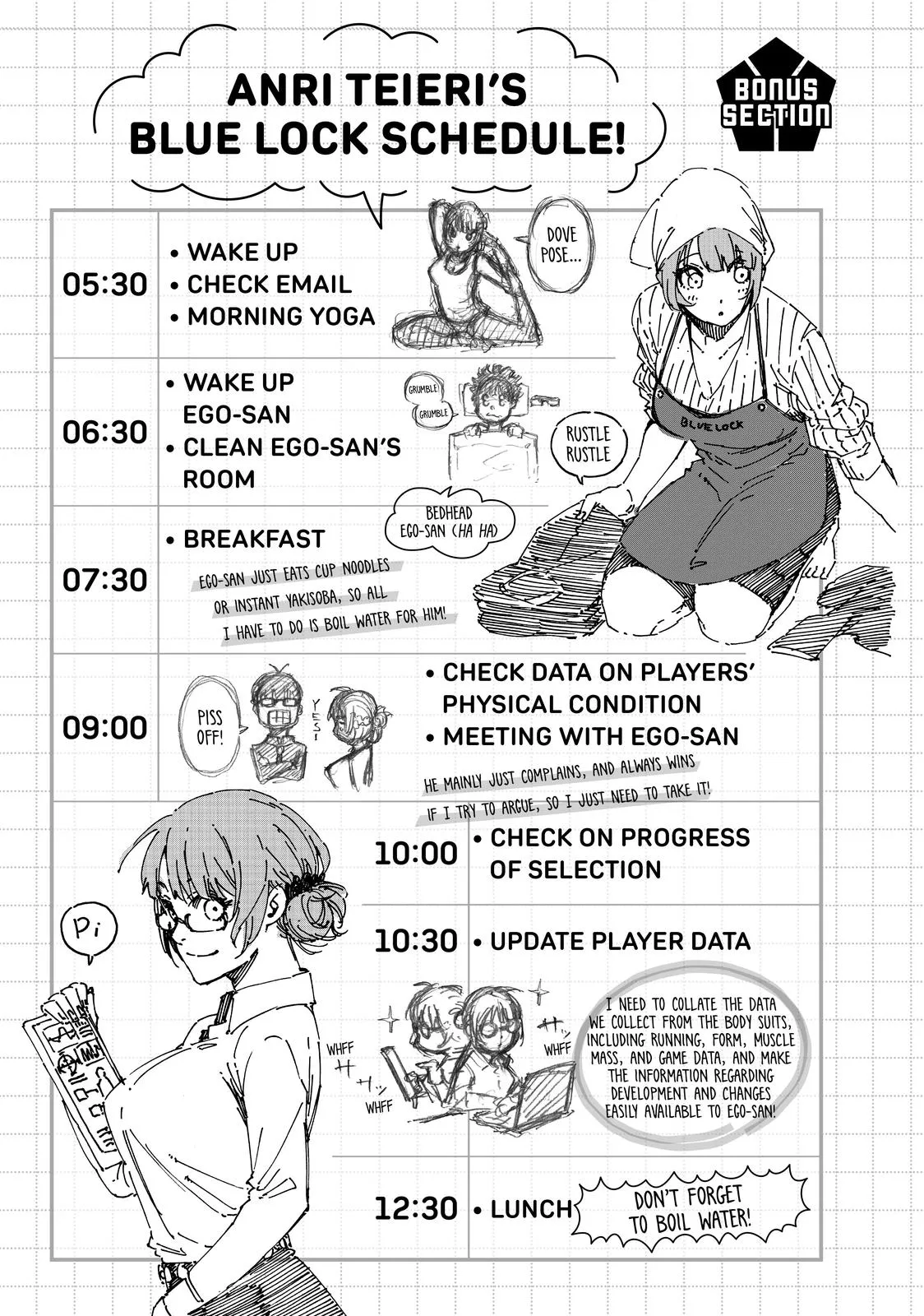
Bonus Section: Anri Teieri’s Blue Lock Schedule
The bonus section shifts the tone completely.
It shows Anri Teieri’s Blue Lock schedule, and it is packed from morning to night.
Her day starts at 05:30 with waking up, checking email, and morning yoga.
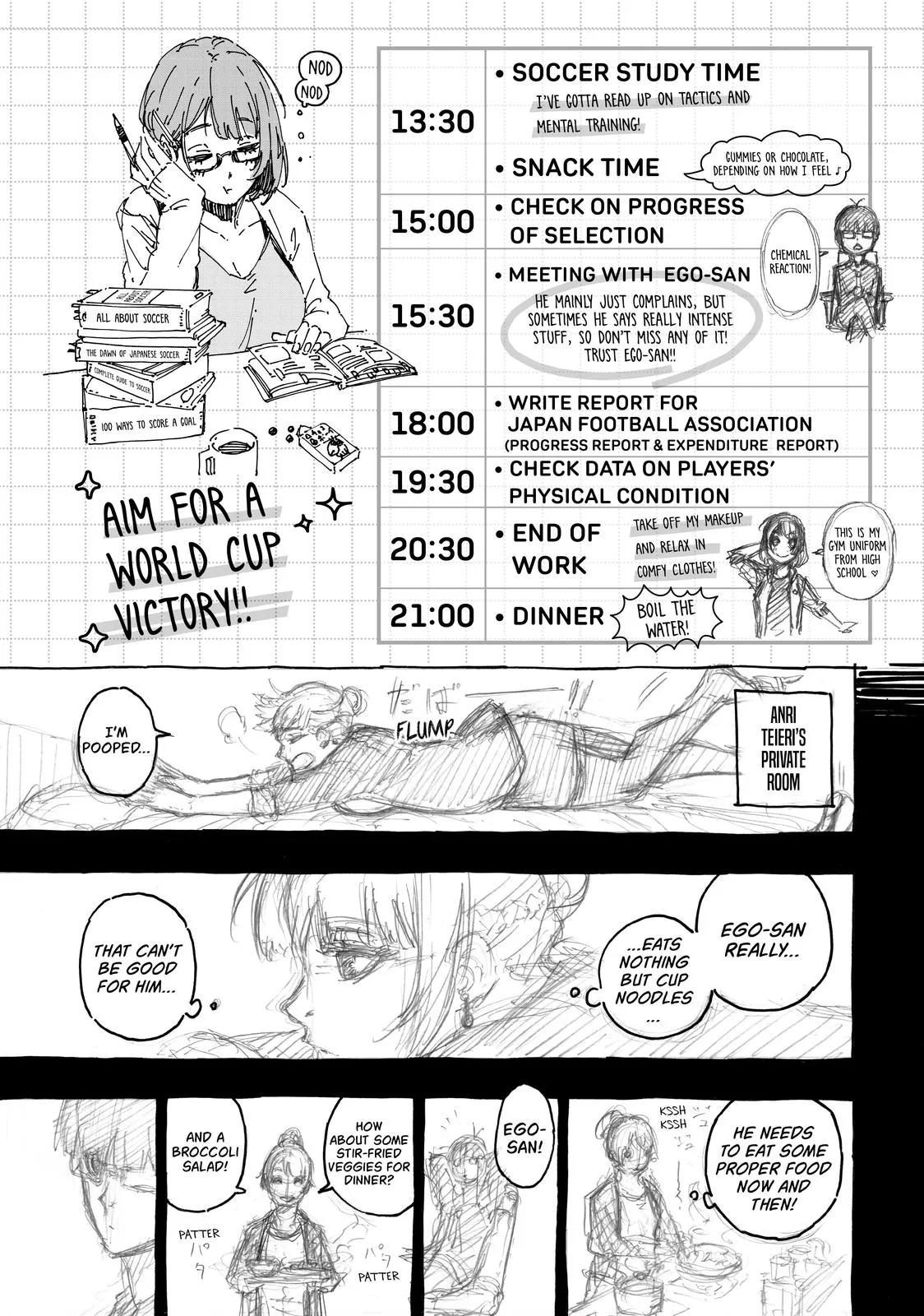
Then she wakes Ego, cleans his room, prepares breakfast, checks player data, attends meetings, tracks the Selection, updates physical condition data, studies soccer, writes reports, and keeps working into the evening.
This matters because it shows the hidden labor behind Blue Lock.
The players fight on the field, but Anri is constantly managing data, schedules, reports, and Ego’s difficult habits.
Anri’s Work Behind the Scenes
Anri’s schedule includes checking data from body suits.
That data covers things like running, form, muscle mass, game data, development, and changes.
This matters because Blue Lock is not just emotional chaos.
There is constant monitoring behind it.
Anri has to organize the information so Ego can use it.
She also studies tactics and mental training.
Her work is serious, even when the bonus presents it with humor.
Ego’s Cup Noodle Lifestyle
A running joke in the bonus is Ego’s food.
Anri repeatedly mentions boiling water because Ego keeps eating cup noodles or instant yakisoba.
Later, she worries that he needs proper food.
She prepares healthier options like stir-fried vegetables and broccoli salad.
This matters because it humanizes the intense Central Center scenes.
Ego speaks like a ruthless philosopher, but behind the scenes, Anri is dealing with his messy, unhealthy habits.
The contrast is funny and sharp.
Anri’s Patience Gets Tested
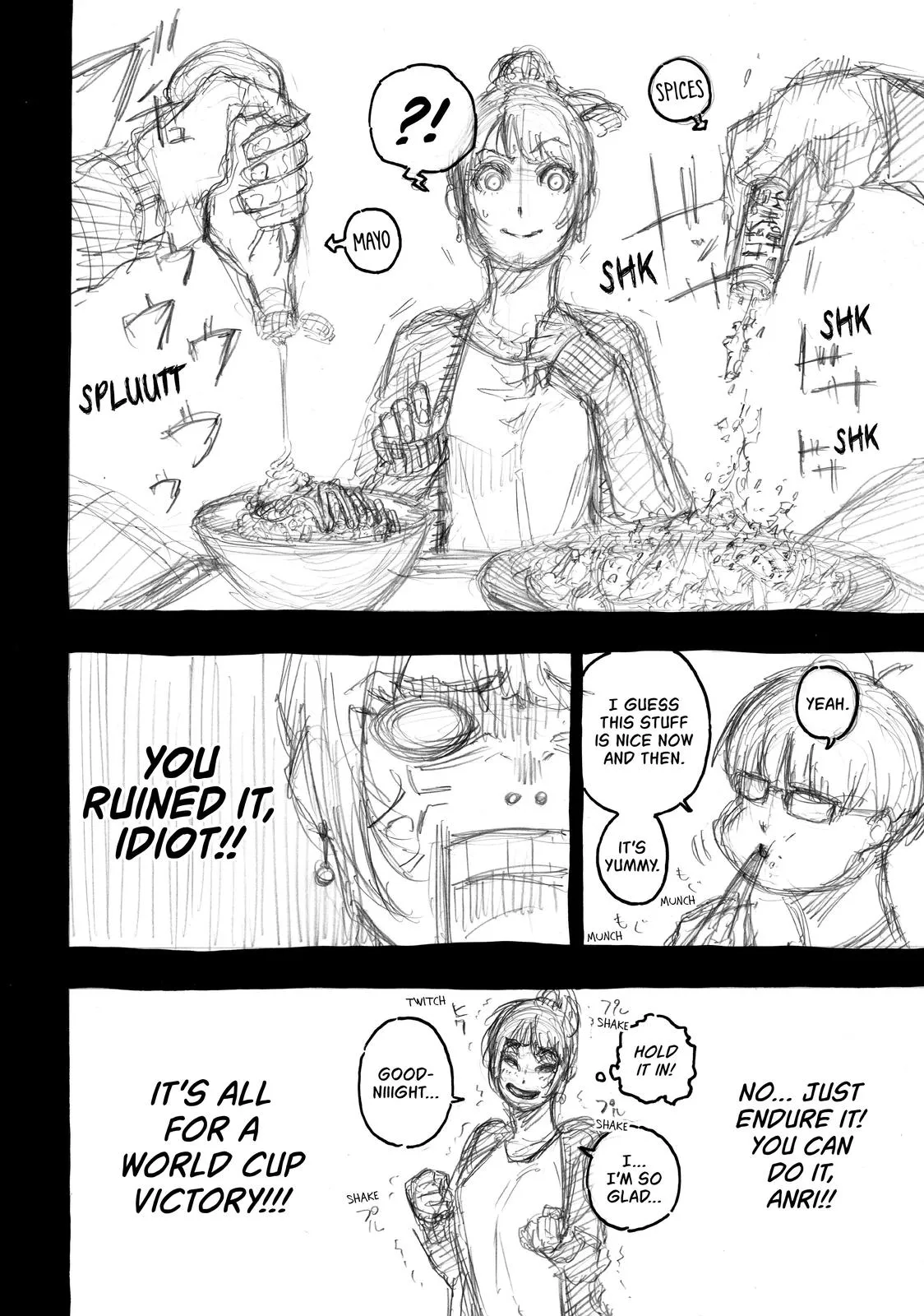
The bonus reaches its peak when Ego dumps mayo and spices all over the food.
“YOU RUINED IT, IDIOT!!”
Anri holds back tears, but she endures it.
“IT’S ALL FOR A WORLD CUP VICTORY!!!”
This matters because even the comedy keeps the same theme of endurance.
Anri is tired, frustrated, and overwhelmed.
But she keeps going because the goal remains bigger than the discomfort.
The bonus ends with her pushing herself forward.
Final Thoughts
Blue Lock Chapter 67 is the aftermath of Barou’s awakening, but it is also a chapter about the meaning of defeat.
Team White wins.
Barou admits Isagi is incredible.
Ego explains that despair is not something to avoid, it is something a real competitor must feel completely.
chigiri, Reo and Kunigami are left facing their own crossroads.
And Isagi’s team must now choose who to take next.
The chapter’s message is harsh:
Defeat does not automatically make someone stronger.
Only those who face the despair honestly can turn it into power.
Continue to Chapter 68 →