BLUE LOCK MANGA CHAPTER 65: TRICK OF FATE
BLUE LOCK CHAPTER 65 – A DETAILED BREAKDOWN:
TRICK OF FATE
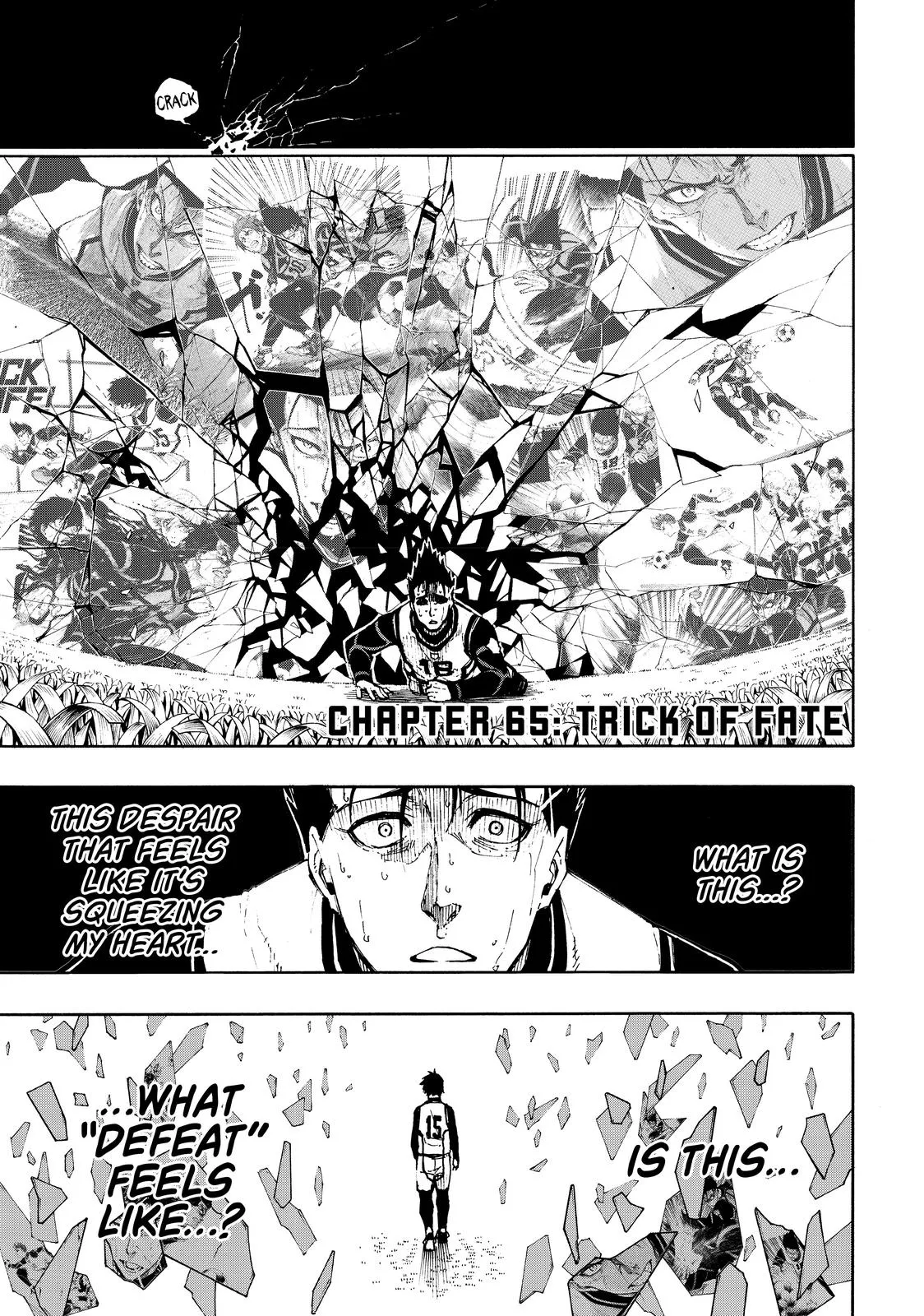
The Chapter opens inside Barou’s collapse. The match is tied, the final point will decide everything, and Barou is drowning in a feeling he barely understands: defeat. After submitting to Isagi in the previous play, the “king” is no longer standing above the field.
He is trapped under the weight of his own ego.
“What is this…?”
This chapter matters because Barou finally feels what he has forced onto others before: despair, humiliation, and the terror of being made into someone else’s tool.
Barou Finally Understands Defeat
Barou’s mind cracks open.
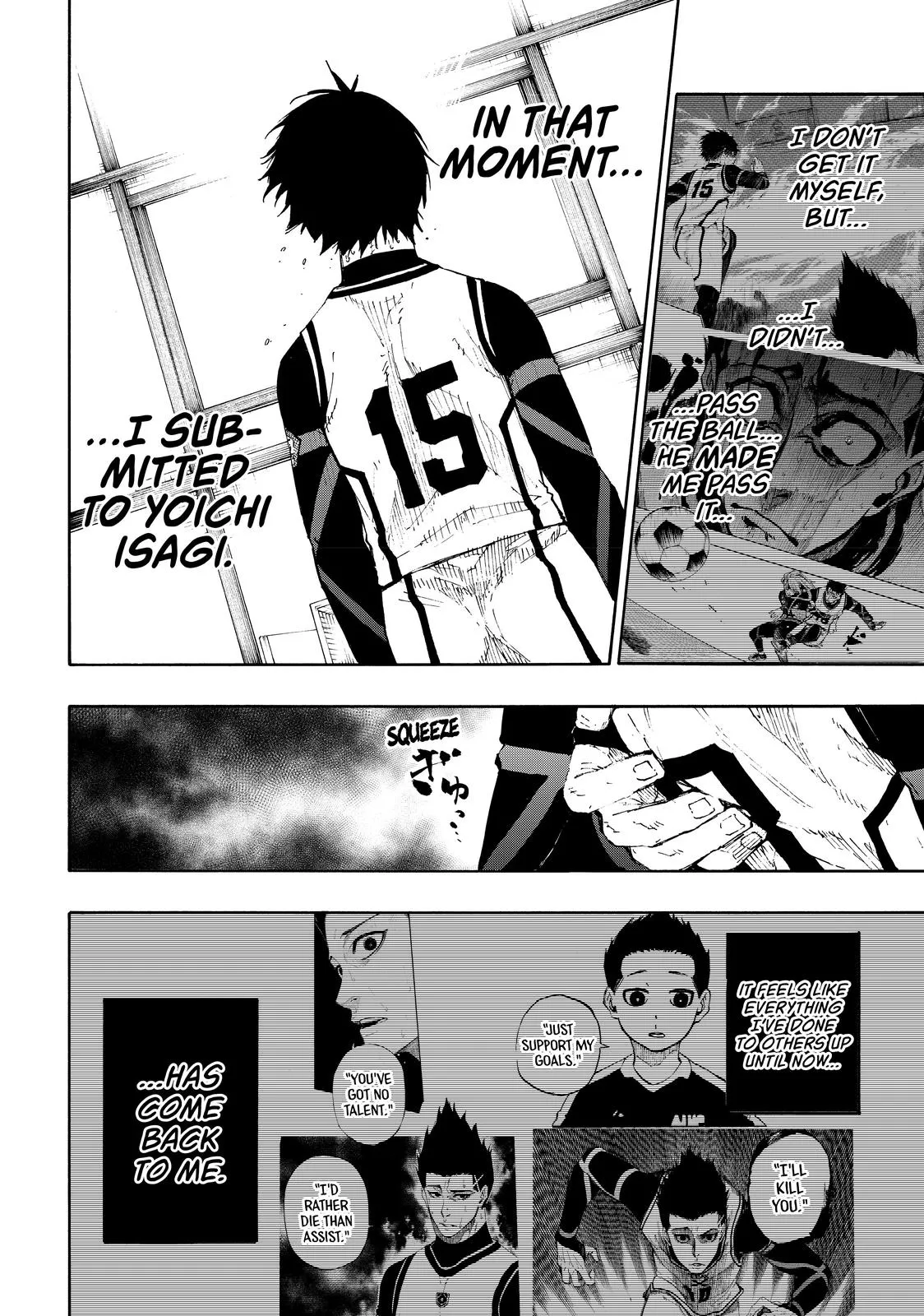
He remembers the moment he passed to Isagi, but to him, it does not feel like a normal pass.
It feels like submission.
“He made me pass it…”
That matters because Barou’s identity depends on control. He does not assist. He does not serve. He does not lower himself.
But in that instant, his body chose Isagi’s goal over his own pride.
And now, everything he has done to others feels like it has returned to crush him.
The King Loses His Crown
Barou begins to accept the thought he hates most.
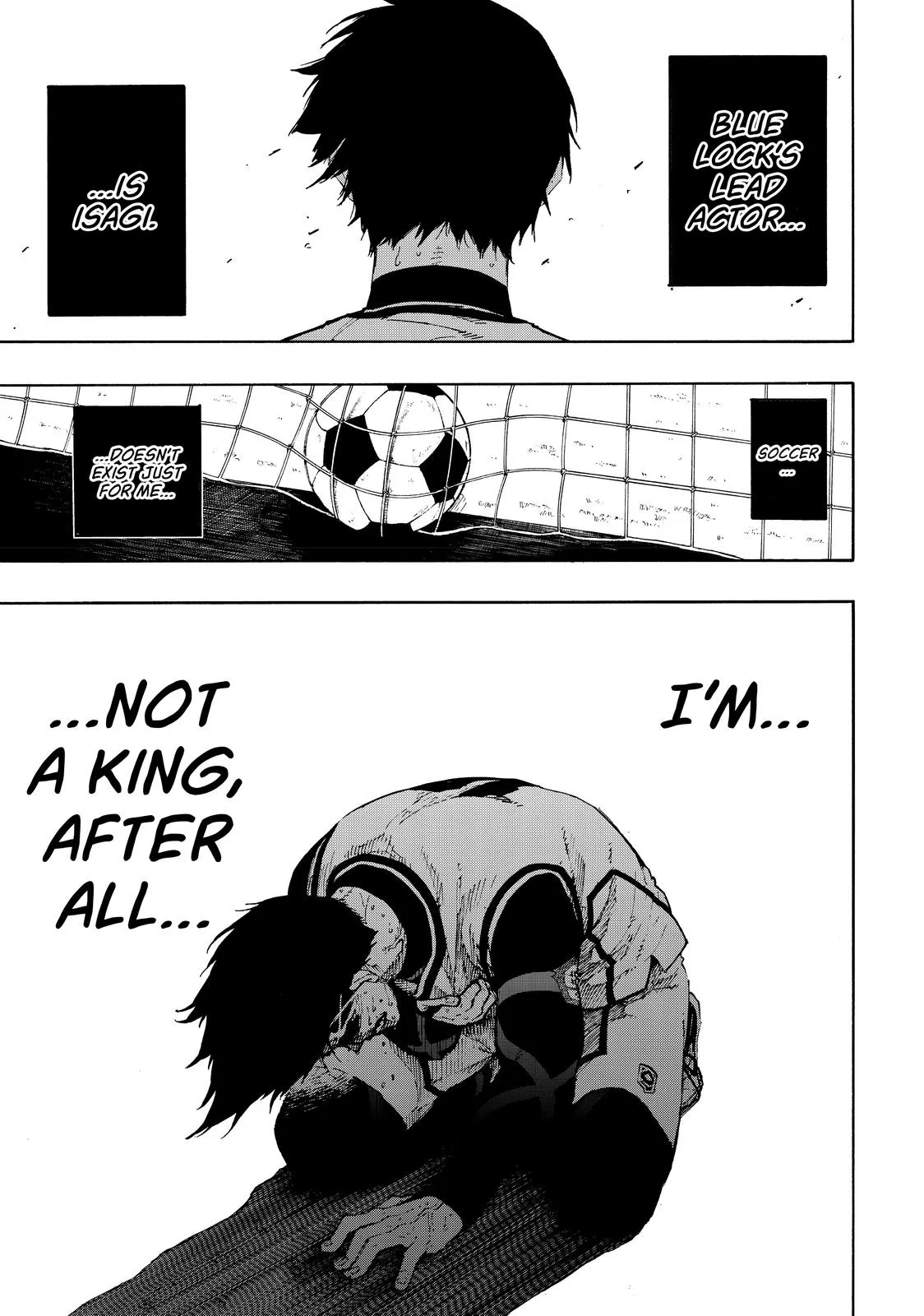
“Blue Lock’s lead actor… is Isagi.”
This is not just jealousy.
This is Barou realizing that the field no longer revolves around him.
For someone who believed soccer existed for his own goals, this is a brutal emotional death.
“I’m… not a king, after all…”
This moment matters because Barou’s ego is not loud anymore.
It is buried under defeat.
And that silence makes the chapter dangerous.
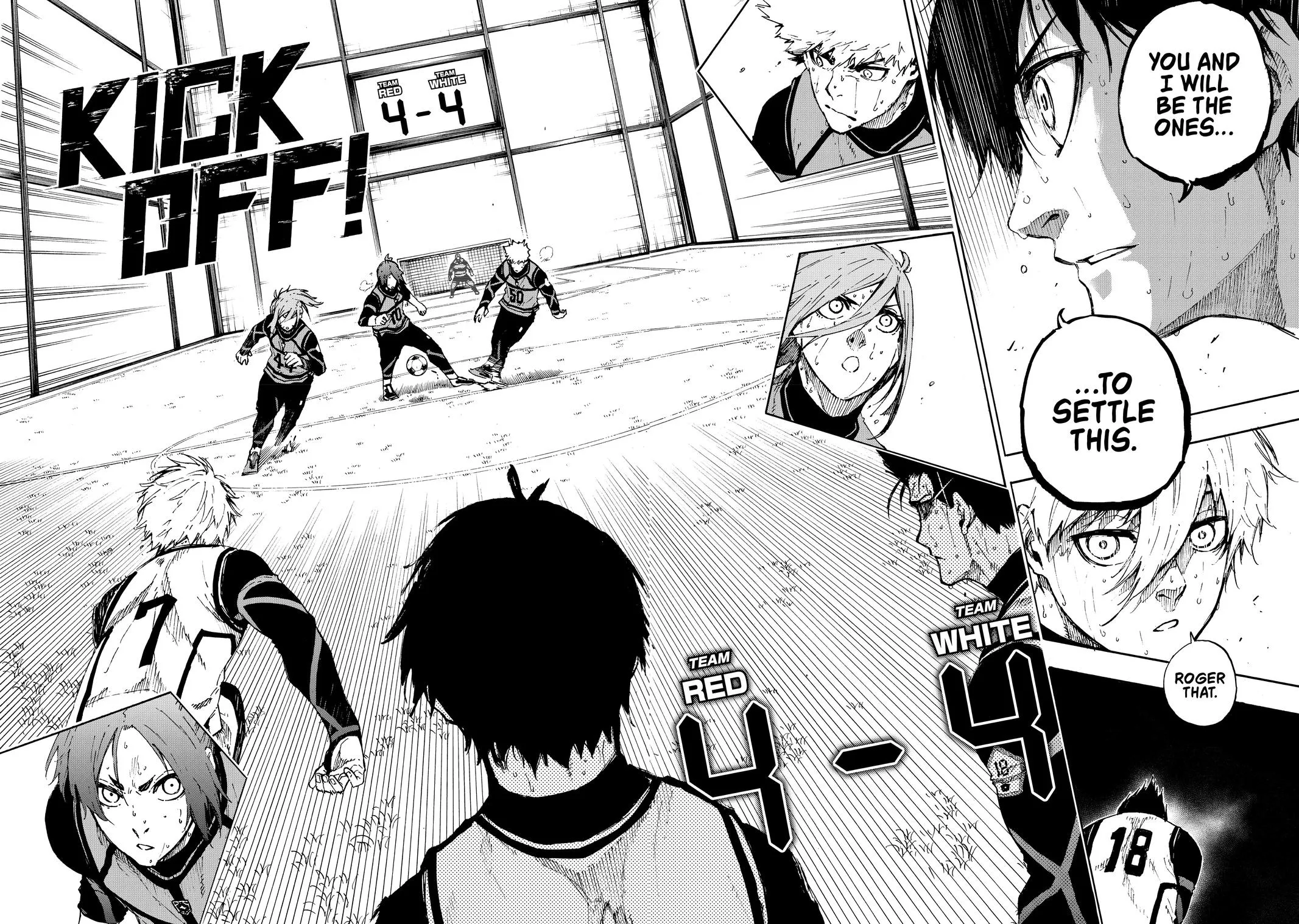
The Final Point Begins
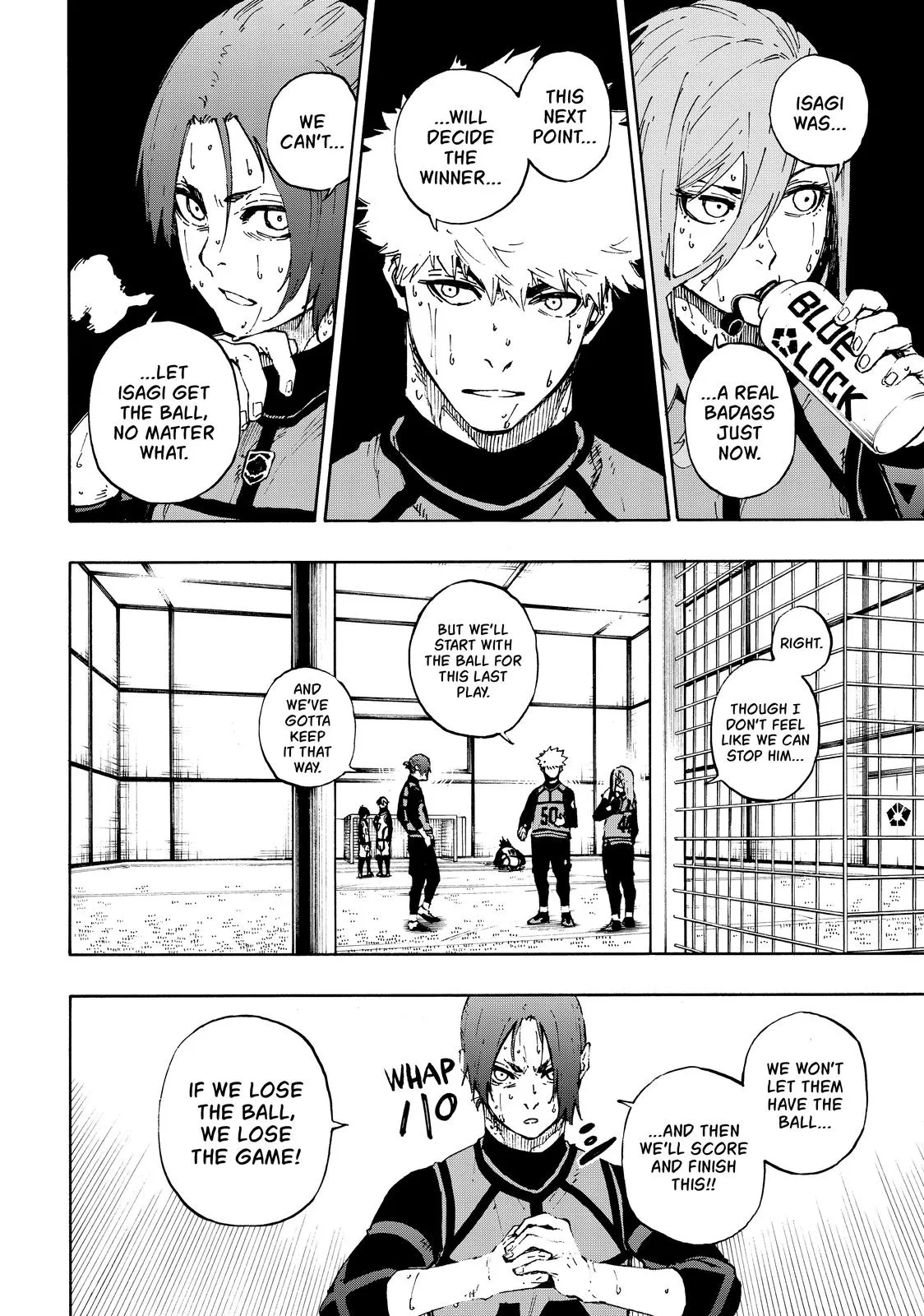
The match now stands at Team Red 4 – Team White 4.
One more goal decides the winner.
Reo immediately understands the biggest threat.
“We can’t let Isagi get the ball.”
That matters because Isagi has become the player everyone fears.
Not because he is physically unstoppable, but because his reading of the field has started controlling everyone’s choices.
Team Red knows the rule now:
Lose the ball, lose the game.
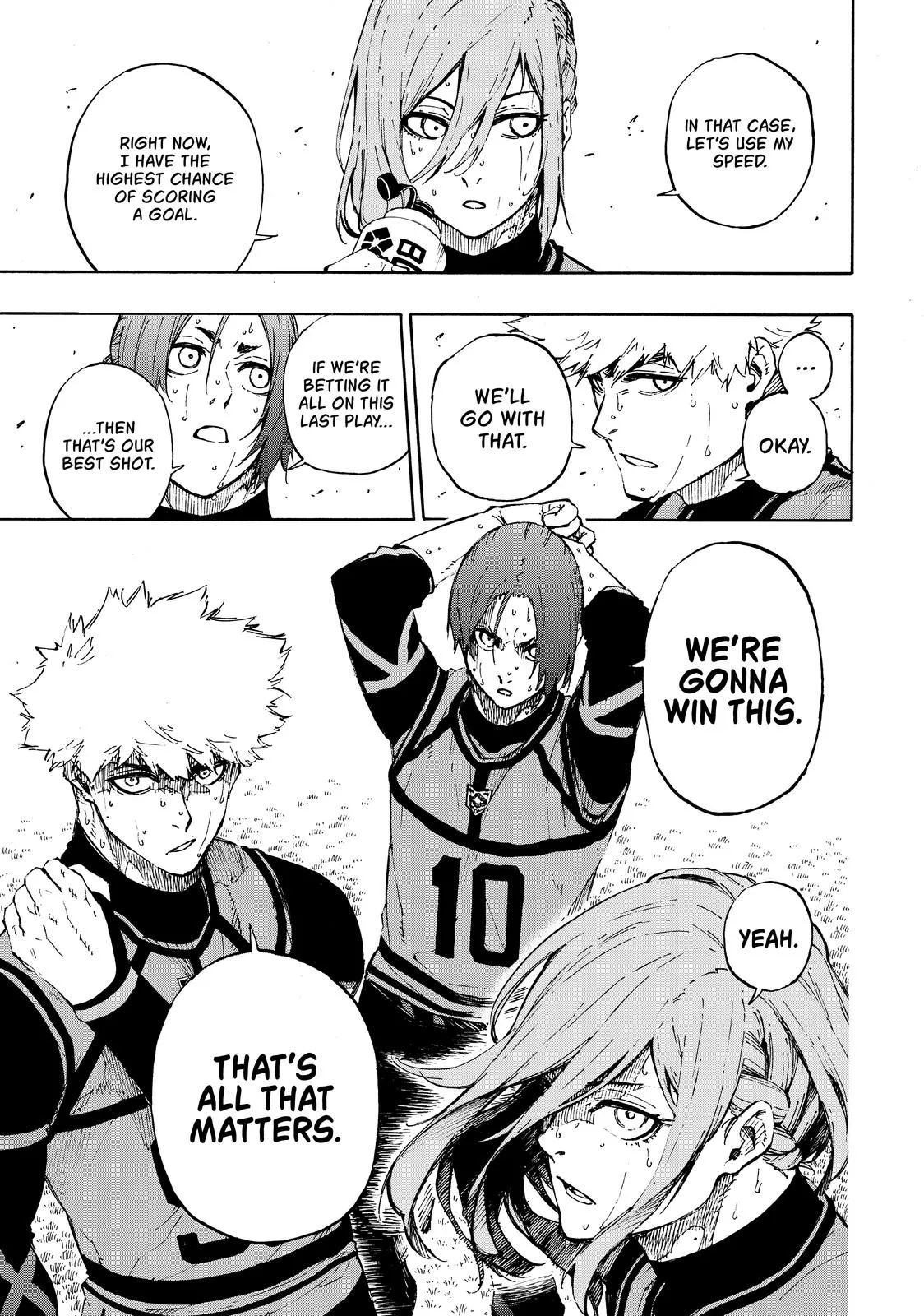
Team Red Chooses Chigiri’s Speed
Chigiri steps forward with the clearest weapon on Team Red’s side.
“Let’s use my speed.”
This matters because Chigiri currently has the highest chance of scoring.
His full-speed trap from the previous chapter changed the match.
He is no longer just fast. He can now keep moving without losing momentum.
Team Red decides to bet everything on that.
No hesitation.
No backup plan.
Just speed.
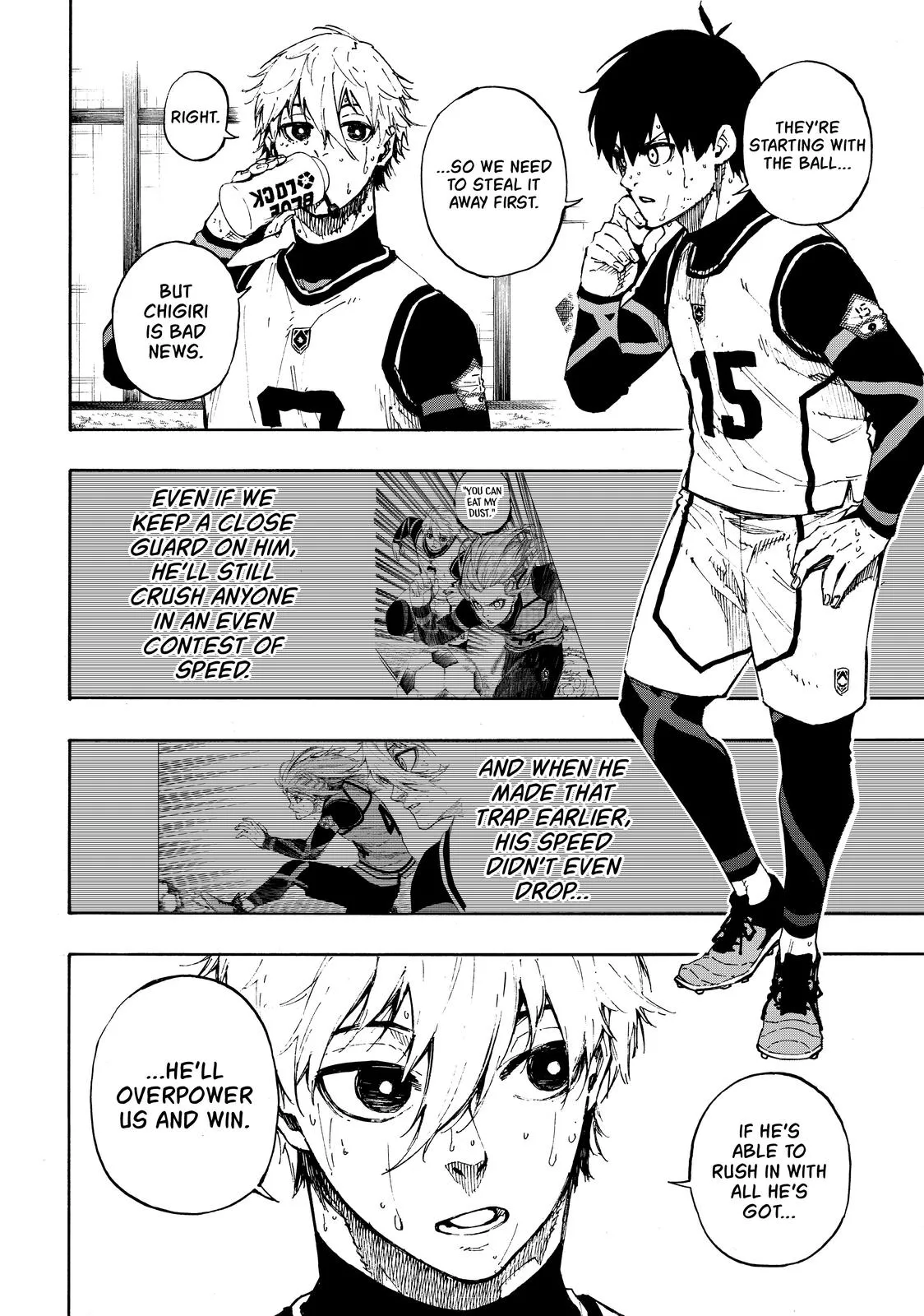
Isagi and Nagi Read the Threat
On Team White’s side, Isagi and Nagi understand the danger.
Chigiri is “bad news.”
Even if they guard him closely, he can crush them in an even race of speed.
“You can eat my dust.”
That matters because Team White cannot beat Chigiri by simply chasing him.
If he gets the ball while running forward, the match is over.
So Isagi changes the problem.
They do not need to beat Chigiri after the pass.
They need to stop the pass before it becomes deadly.
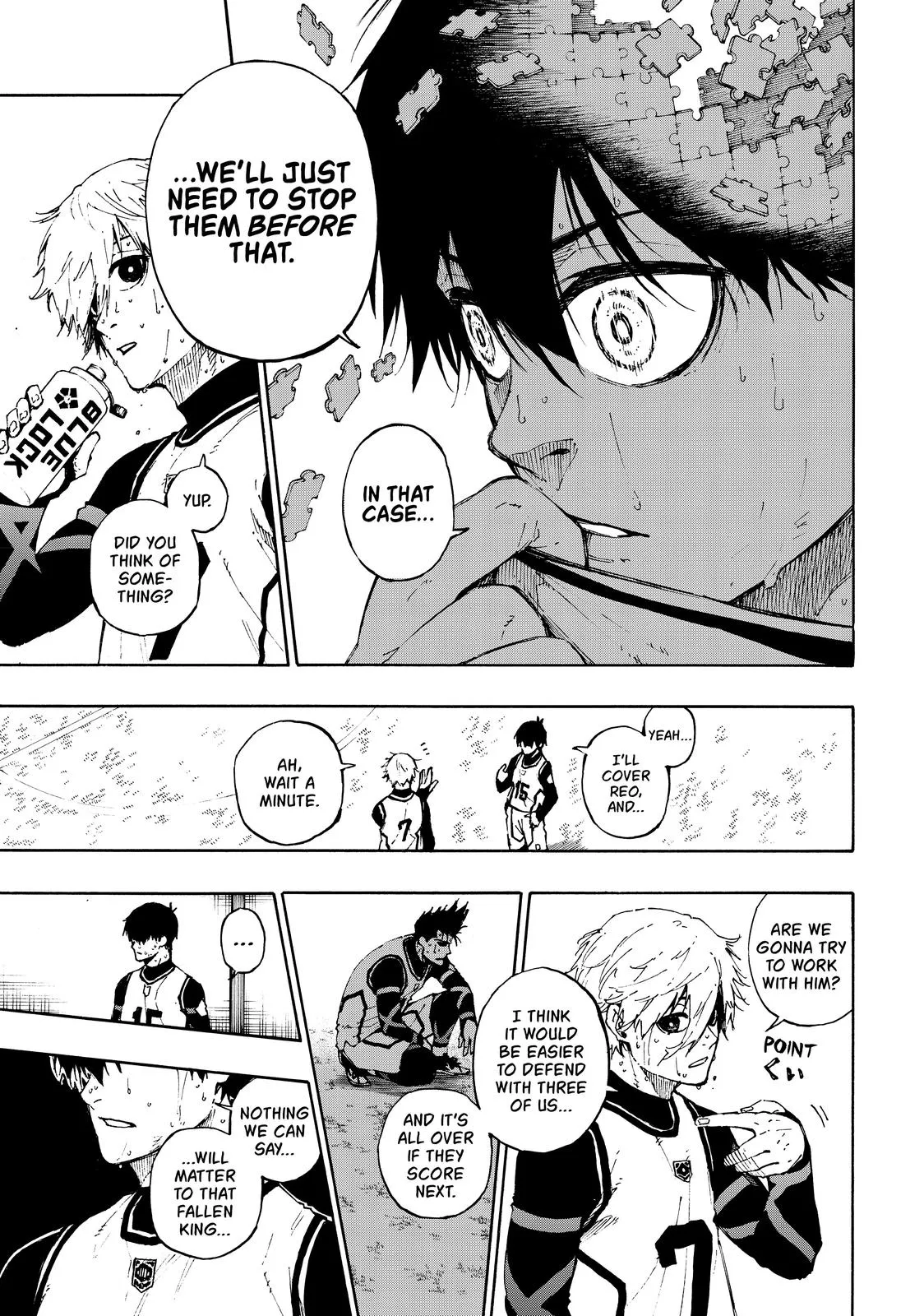
Barou Is Left Out of the Plan
Nagi asks whether they should work with Barou.
But the answer is clear.
“Nothing we can say… will matter to that fallen king…”
This matters because Barou is physically on the field, but mentally separated from the team.
He is not trusted as a partner.
He is not treated like a weapon.
He is treated like someone broken by defeat.
That makes him unpredictable, but also unusable in Isagi and Nagi’s current plan.
Isagi and Nagi Take the Final Stage
The kickoff begins.
The score is tied.
The entire match comes down to one play.
“You and I will be the ones… to settle this.”
Isagi says this to Nagi, and Nagi accepts.
That matters because Team White’s final strategy is built around their shared field vision.
They are not relying on power.
They are relying on prediction, positioning, and one massive gamble.
Isagi Locks Down Reo’s Options
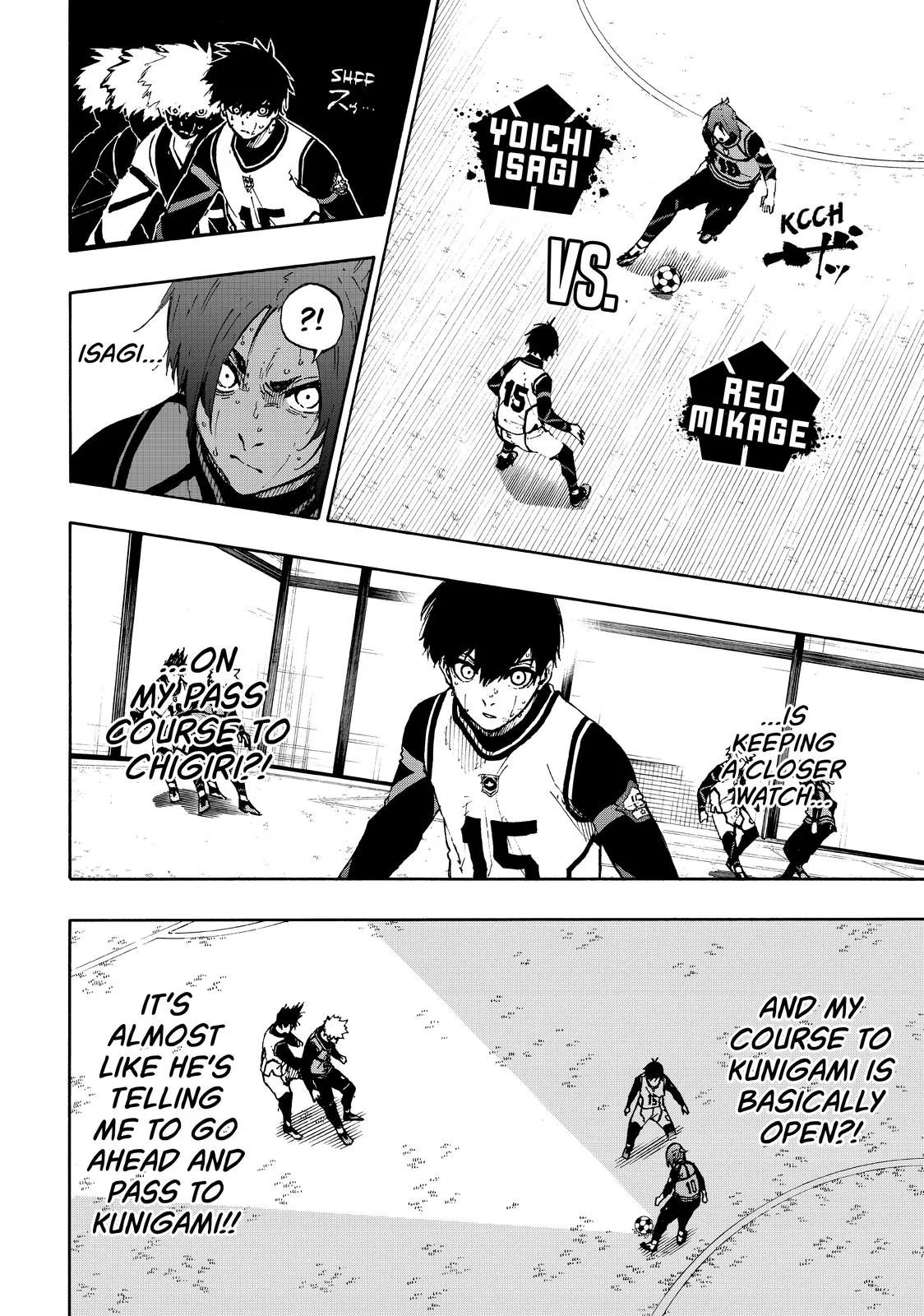
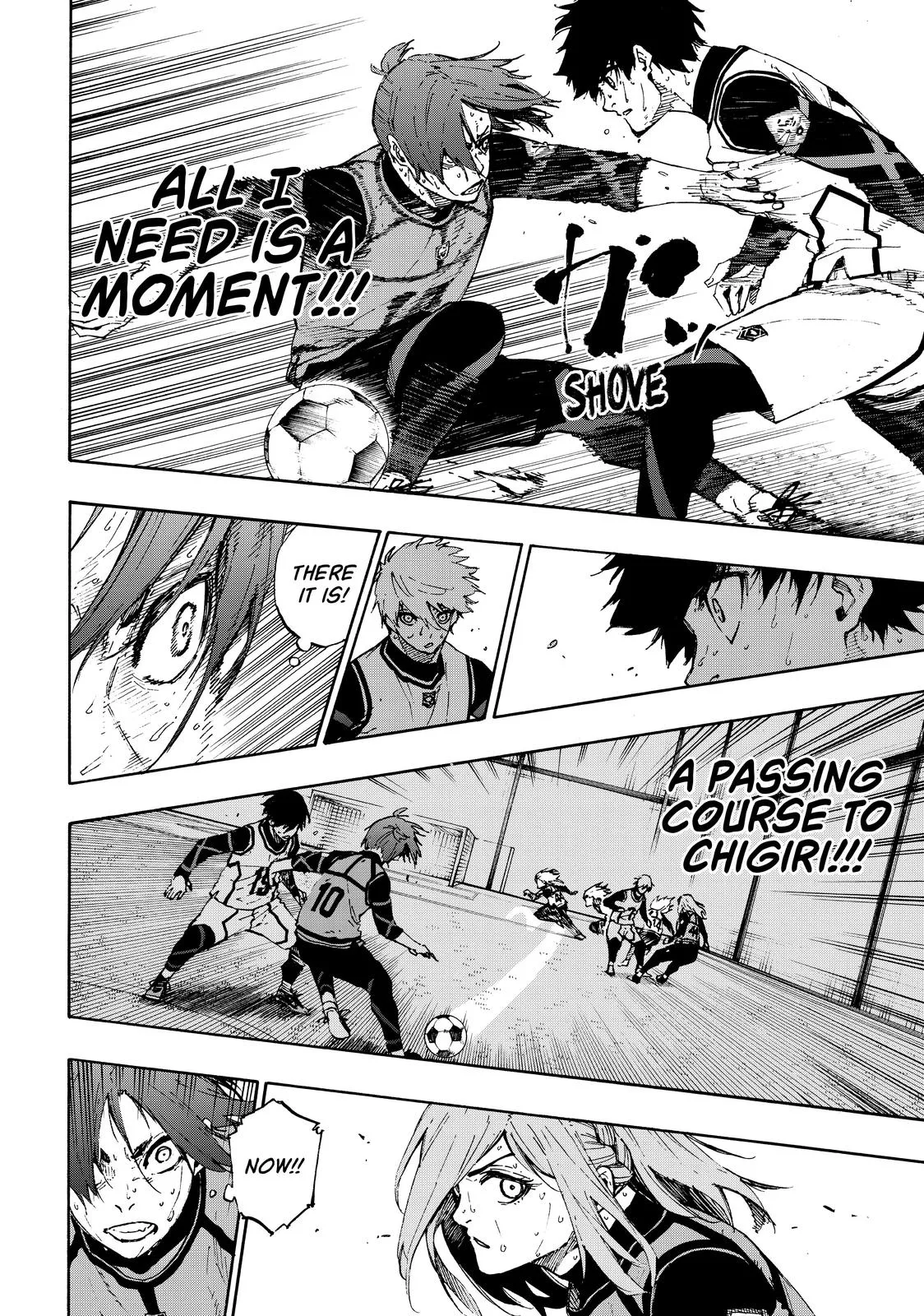
Reo starts with the ball.
Isagi faces him directly.
“Yoichi Isagi vs. Reo Mikage”
Reo quickly notices the trap.
Isagi is guarding the pass course to Chigiri while leaving the route to Kunigami more open.
This matters because Isagi is not simply defending Reo.
He is shaping Reo’s choices.
He is making the “safe” option look obvious while blocking the one Team Red actually wants.
Nagi Guards Chigiri
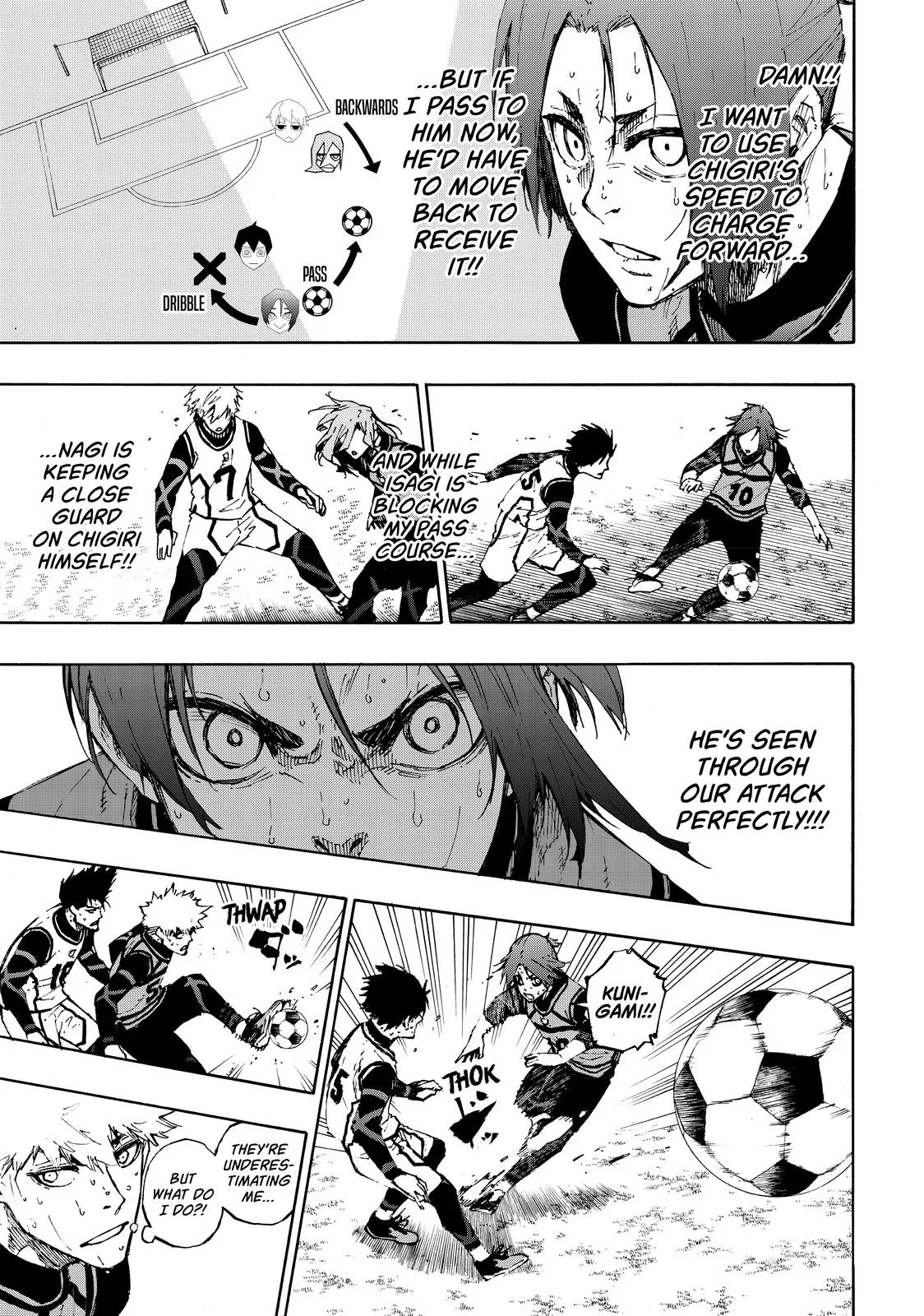
While Isagi pressures Reo’s passing lane, Nagi stays close to Chigiri.
This blocks the ideal route.
If Reo passes to Chigiri too early, Chigiri would have to move backward to receive it.
That ruins the full-speed attack.
Reo realizes the problem.
“He’s seen through our attack perfectly!!!”
This matters because Isagi and Nagi have correctly identified Team Red’s winning pattern.
Chigiri’s speed is terrifying only if the pass lets him explode forward.
So they attack the setup, not the sprint.
Reo Is Forced Into a Decision
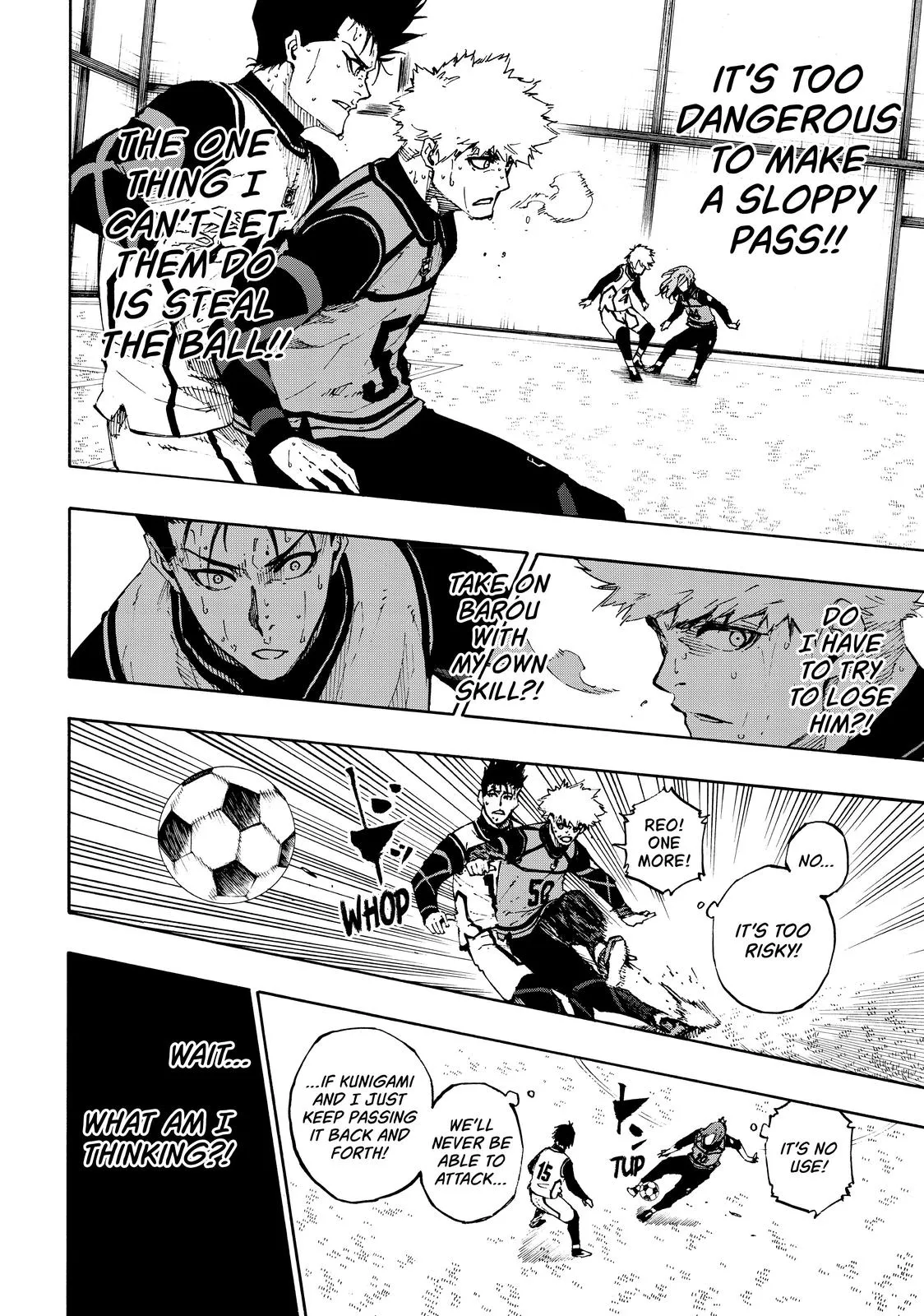
Reo cannot make a sloppy pass.
If Team White steals the ball, the game ends.
He considers safer passing with Kunigami, but that would only stall the attack.
“We’ll never be able to attack…”
This matters because Reo is trapped between caution and ambition.
He cannot simply protect the ball forever.
To win, he has to create a real path to Chigiri.
So he decides to challenge Isagi.
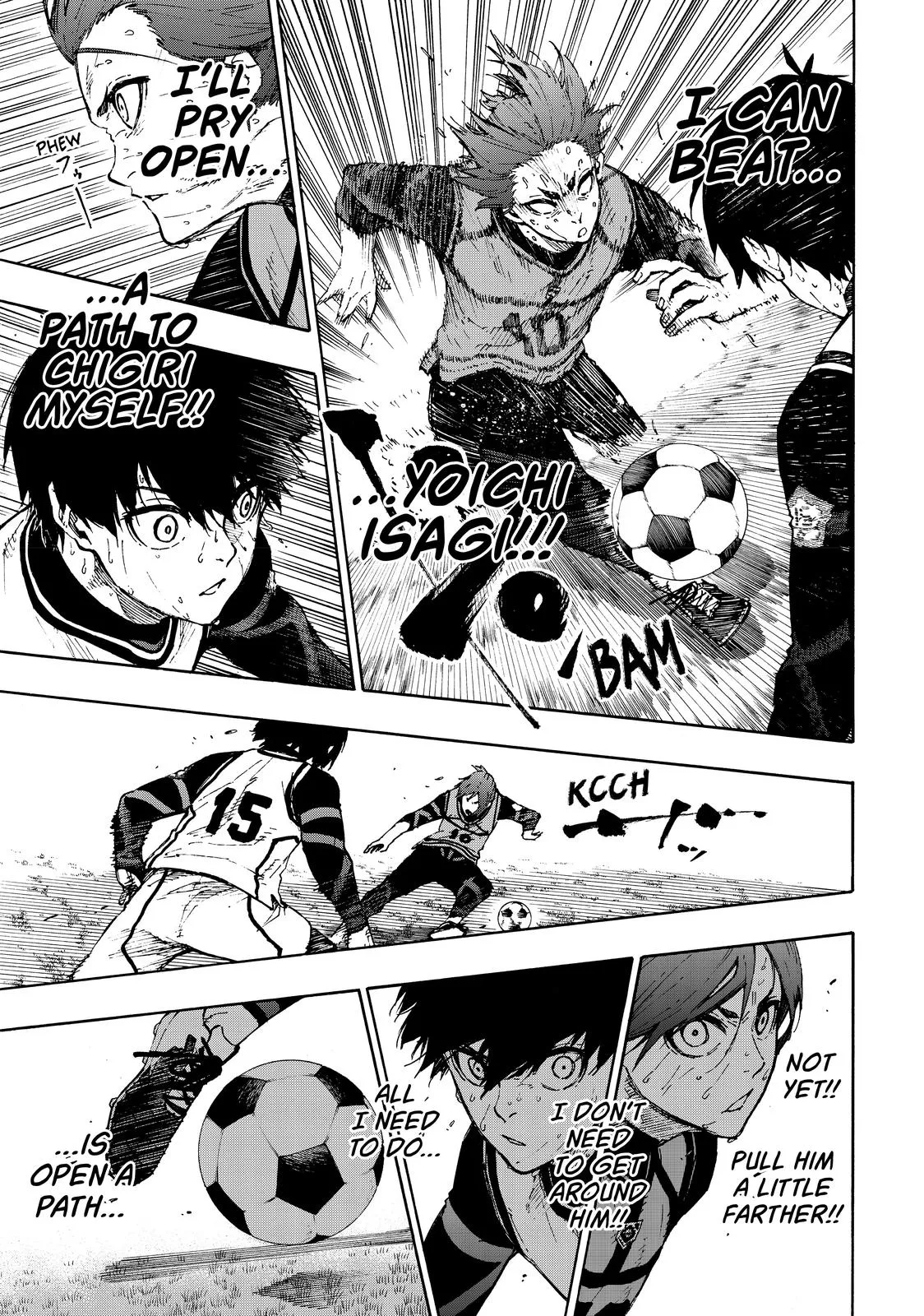
Reo Tries to Beat Isagi
Reo believes he can open the path himself.
“I can beat… Yoichi Isagi!!!”
He does not need to fully get past Isagi.
He only needs one moment.
One gap.
One passing course.
That matters because Reo’s goal is not personal glory here.
He is trying to create the exact opening Chigiri needs to finish the match.
For one brief instant, he succeeds.
The Pass to Chigiri Opens
Reo pulls the defense just enough.
A lane appears.
“All I need is a moment!!!”
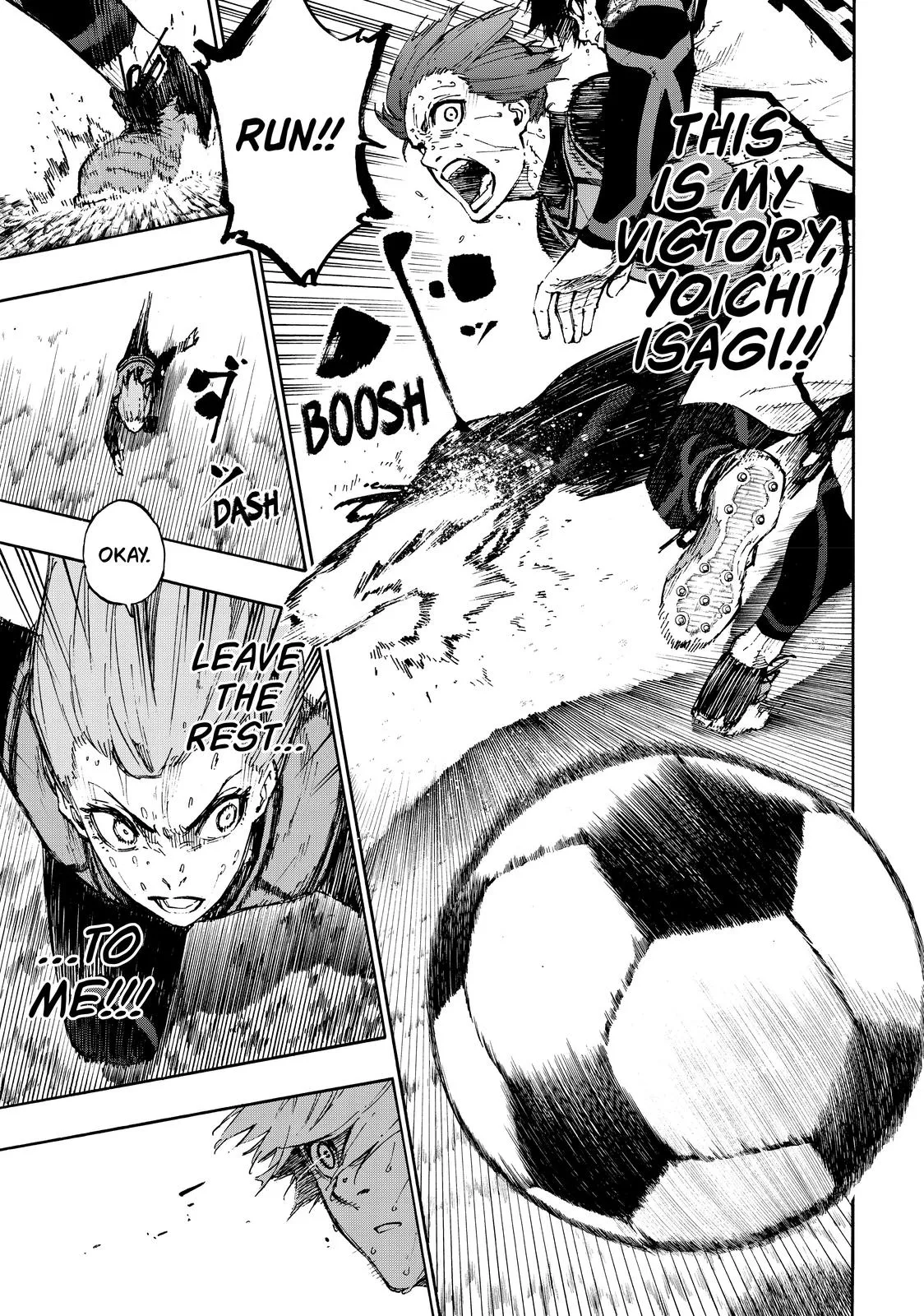
He sends the ball toward Chigiri.
Chigiri is ready to run.
“Leave the rest… to me!!!”
This matters because Team Red’s plan finally reaches the point Team White feared most.
If Chigiri receives that pass cleanly, his speed could decide the match.
The winning route is open.
Or at least, it looks open.
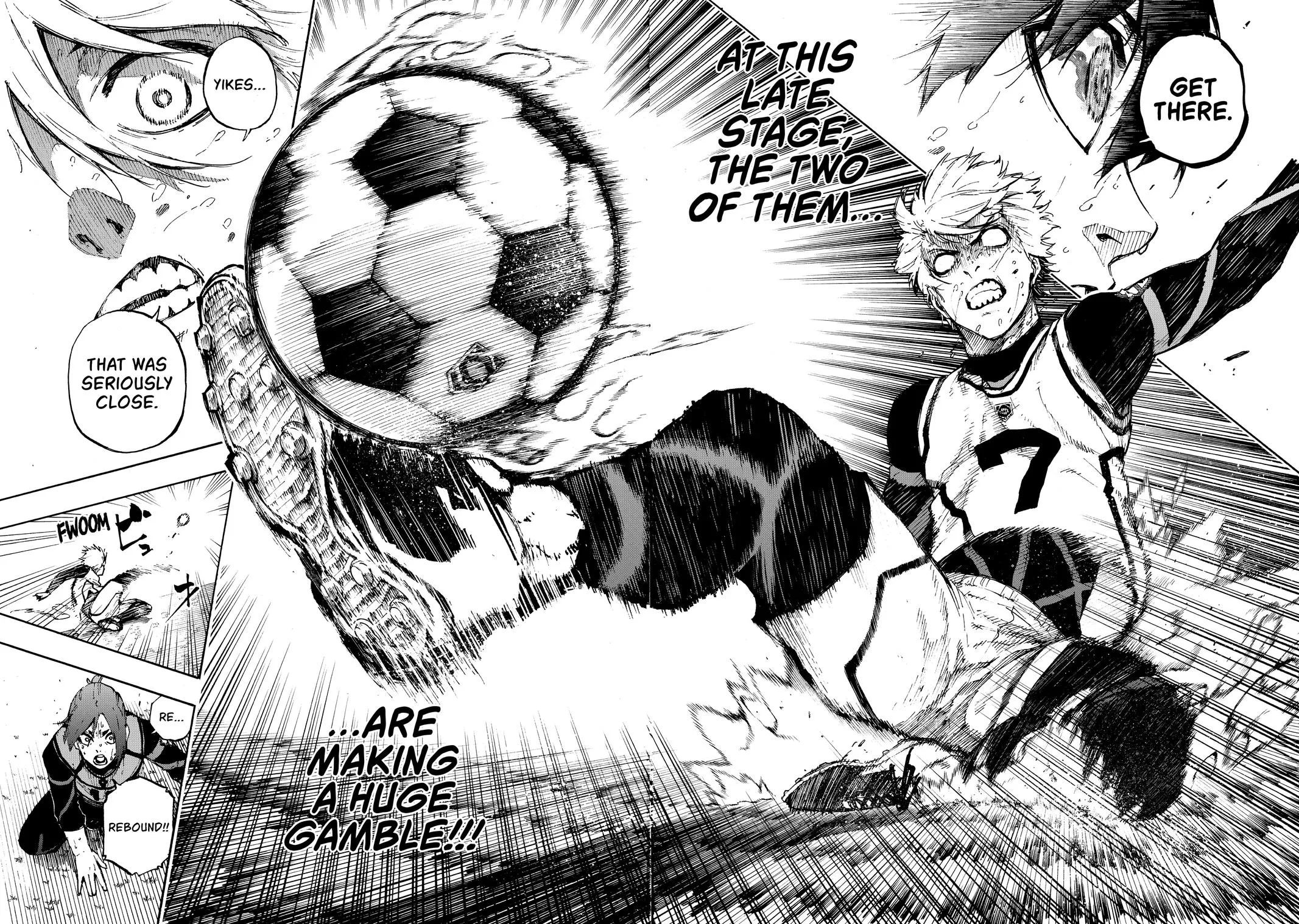
Nagi Makes the Gamble
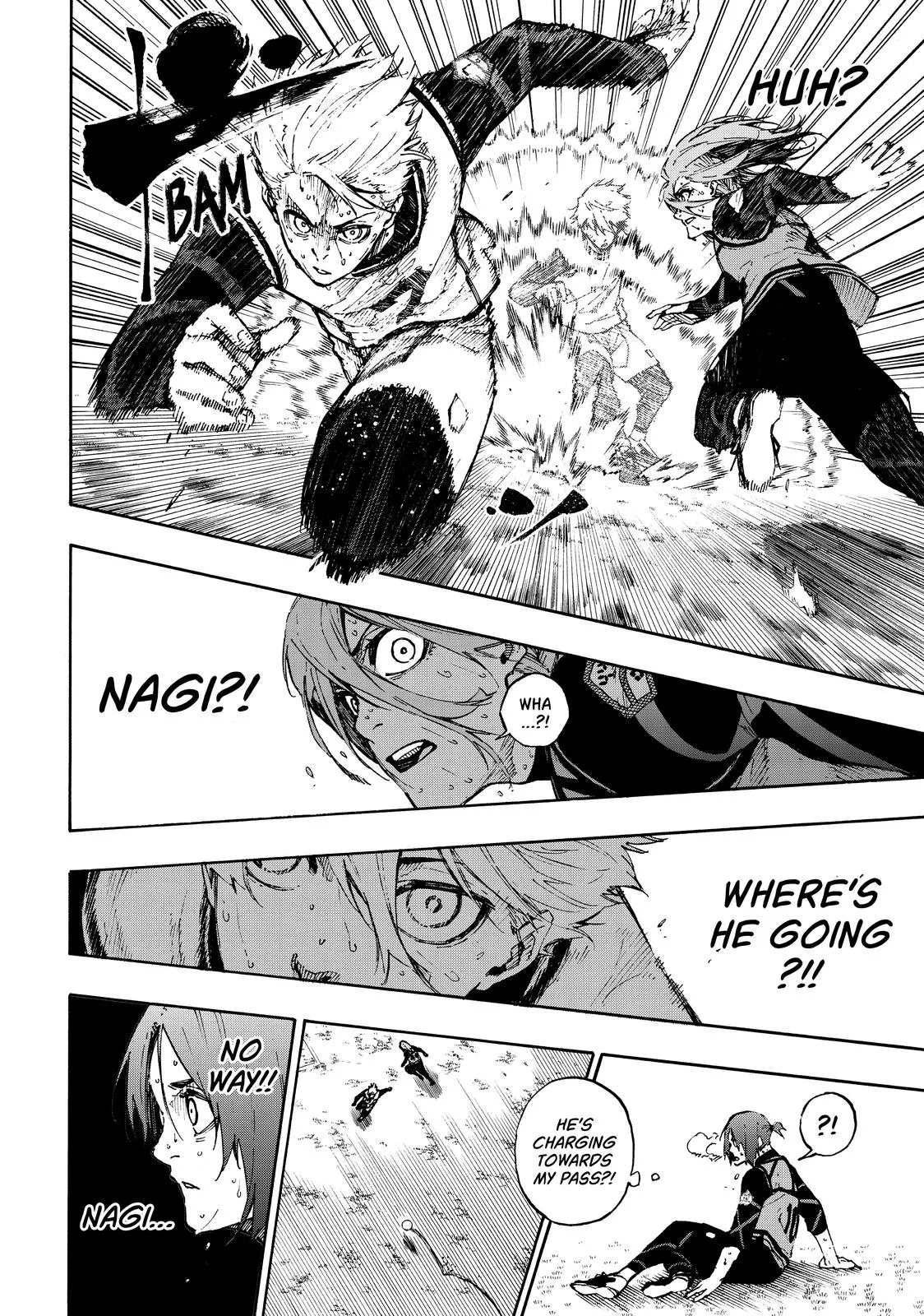
Then Nagi moves.
Not toward Chigiri in a race.
Toward the pass itself.
“He’s charging towards my pass?!”
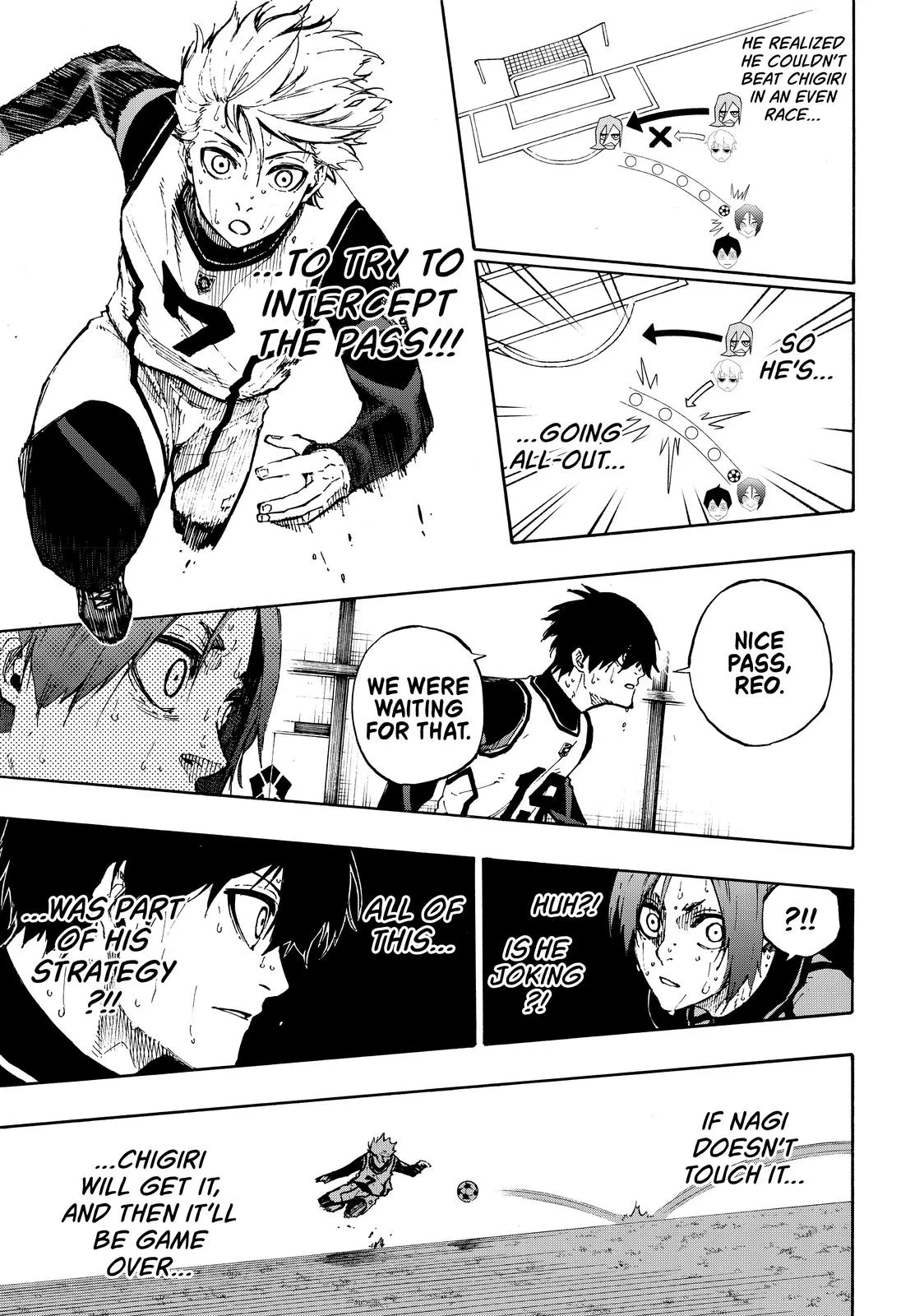
This matters because Nagi knows he cannot defeat Chigiri in an even contest of speed.
So he refuses to enter that contest.
Instead, he dives into the space before Chigiri can own it.
It is not safe.
It is not guaranteed.
It is a gamble.
Isagi Reveals the Trap
Isagi speaks like the outcome was planned.
“Nice pass, Reo. We were waiting for that.”
That line changes the entire play.
Team Red thought Reo had created the opening.
But Isagi and Nagi had been baiting the pass.
This matters because the chapter turns strategy into suspense.
Isagi and Nagi were not just defending.
They were waiting for Reo to believe he had won.
The Gamble Barely Works
Nagi throws himself toward the ball.
“Get there.”
He manages to interfere with the pass, but the play does not end cleanly.
The ball becomes a rebound.
That matters because even Isagi and Nagi’s strategy is not perfect control.
They stopped Chigiri’s direct path, but now fate gets involved.
The ball is loose.
The match is still alive.
And then it lands somewhere no one expected.
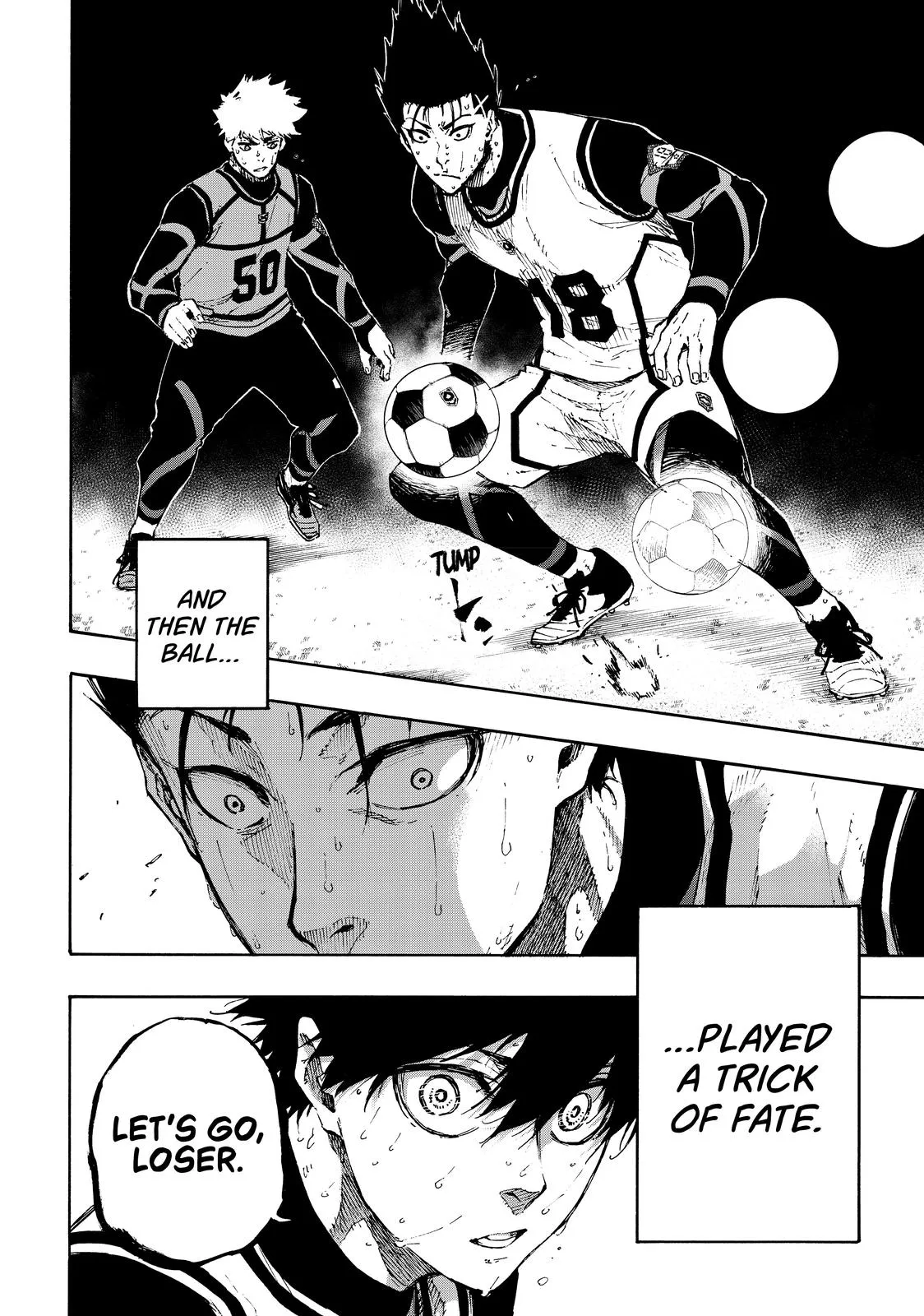
The Trick of Fate Falls to Barou
The rebound comes to Barou.
“And then the ball… played a trick of fate.”
This moment matters because Barou had been emotionally buried the entire chapter.
He was defeated.
Ignored.
Written off as a fallen king.
But now the ball comes back to him at the final moment.
Isagi sees it too.
“Let’s go, loser.”
That line matters because Isagi is not comforting Barou.
He is provoking him.
The final play has dragged Barou back onto the stage.
Not as king.
Not yet.
But as the player fate refuses to leave behind.
Why This Chapter Matters
Blue Lock Chapter 65 matters because it turns defeat into a setup.
Barou begins the chapter broken by Isagi’s dominance.
Team Red builds its final attack around Chigiri’s speed.
Isagi and Nagi answer with a dangerous interception plan.
Reo thinks he has opened the winning path.
Nagi risks everything to stop it.
And then the rebound falls to Barou.
The “fallen king” is suddenly holding the next piece of the match.
The title, “Trick of Fate,” lands perfectly.
Because after all the planning, reading, baiting, and gambling, the ball chooses the one player drowning in despair.
Now Barou has to decide what he is.
A loser.
A supporting actor.
Or something far more dangerous.
Continue to Chapter 66 →