BLUE LOCK MANGA CHAPTER 64: THE LEAD ACTOR'S STAGE
BLUE LOCK CHAPTER 64 – A DETAILED BREAKDOWN:
THE LEAD ACTOR’S STAGE
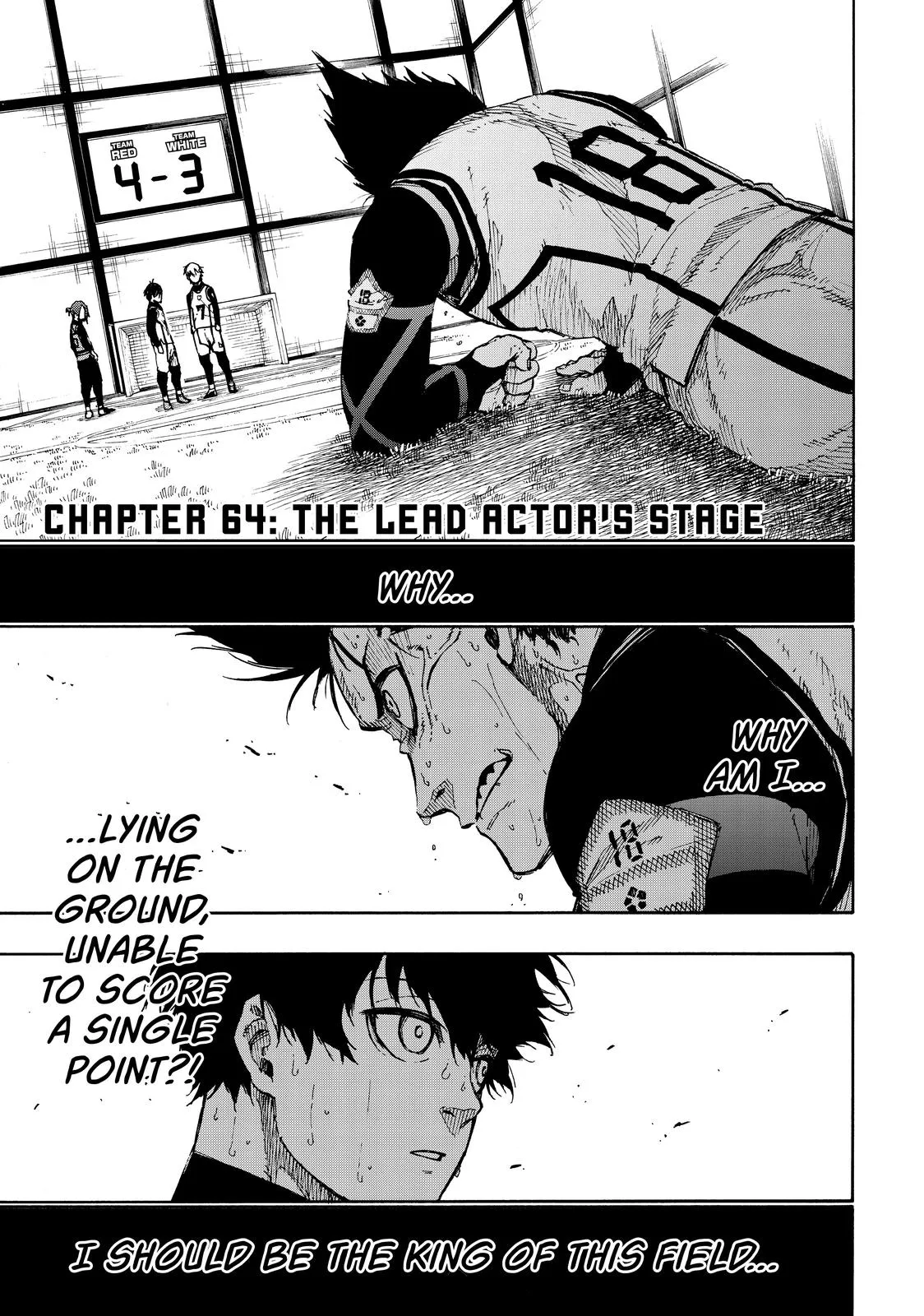
The Chapter begins with Barou at his lowest point. The score is Team Red 4 – Team White 3, and Barou is on the ground, unable to score even once. For someone who believes he should be “the king of this field,” this is not just a bad moment.
It is humiliation.
“Why am I… lying on the ground, unable to score a single point?!”
This chapter matters because Barou is forced to face the one thing his ego cannot accept: he is not controlling the match anymore.
Barou’s Throne Begins to Crack
Barou’s thoughts turn inward.
He reminds himself who he is.
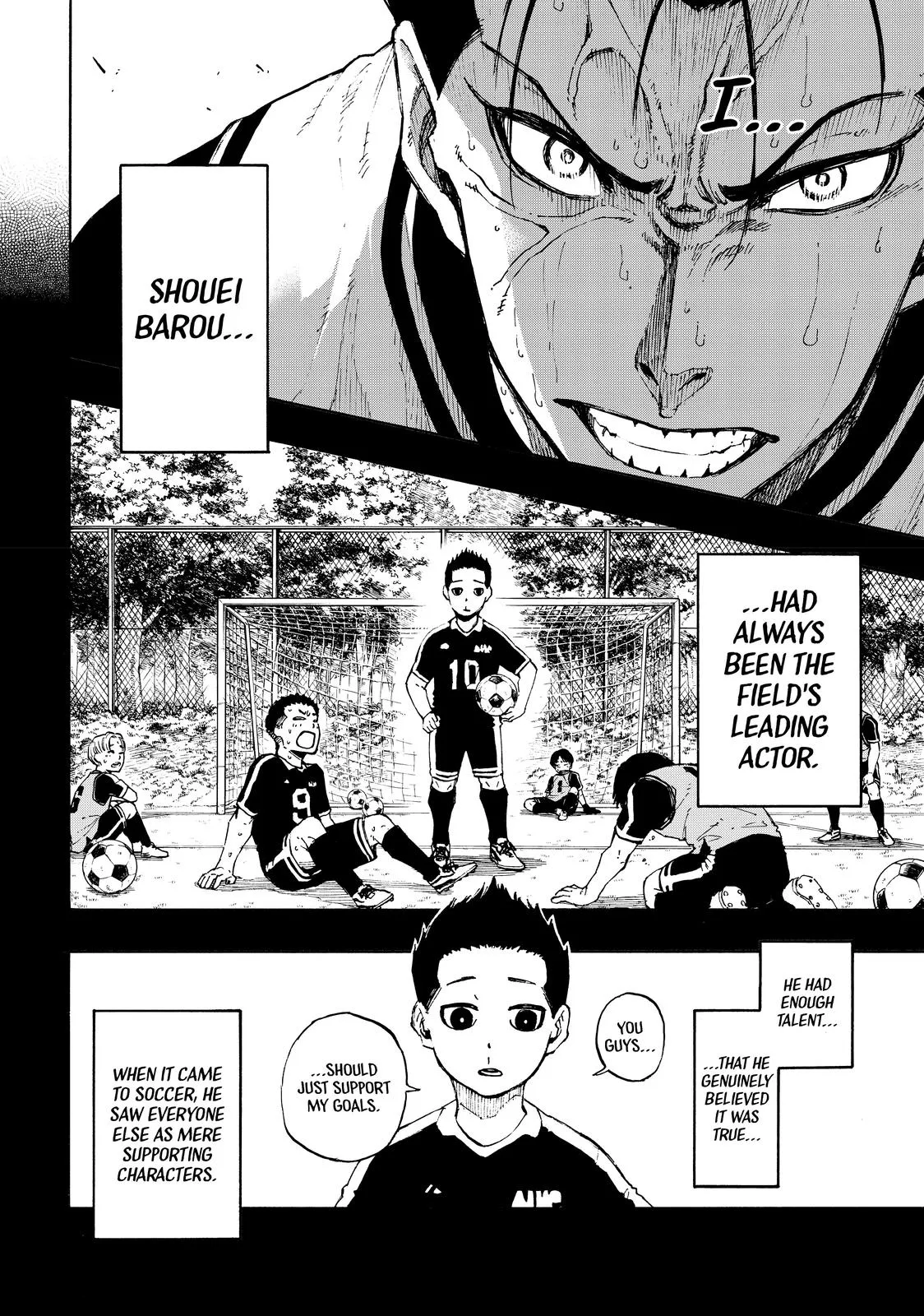
“I… Shouei Barou…”
He had always believed he was the field’s leading actor. Not a teammate. Not a helper. Not a side character.
The field was his stage, and everyone else existed to support his goals.
“You guys… should just support my goals.”
This matters because the chapter immediately shows Barou’s core belief. His ego is not casual confidence. It is the foundation of how he sees soccer.
To Barou, being used by someone else is worse than failure.
It means losing his role.
Barou Never Tried to Understand Others
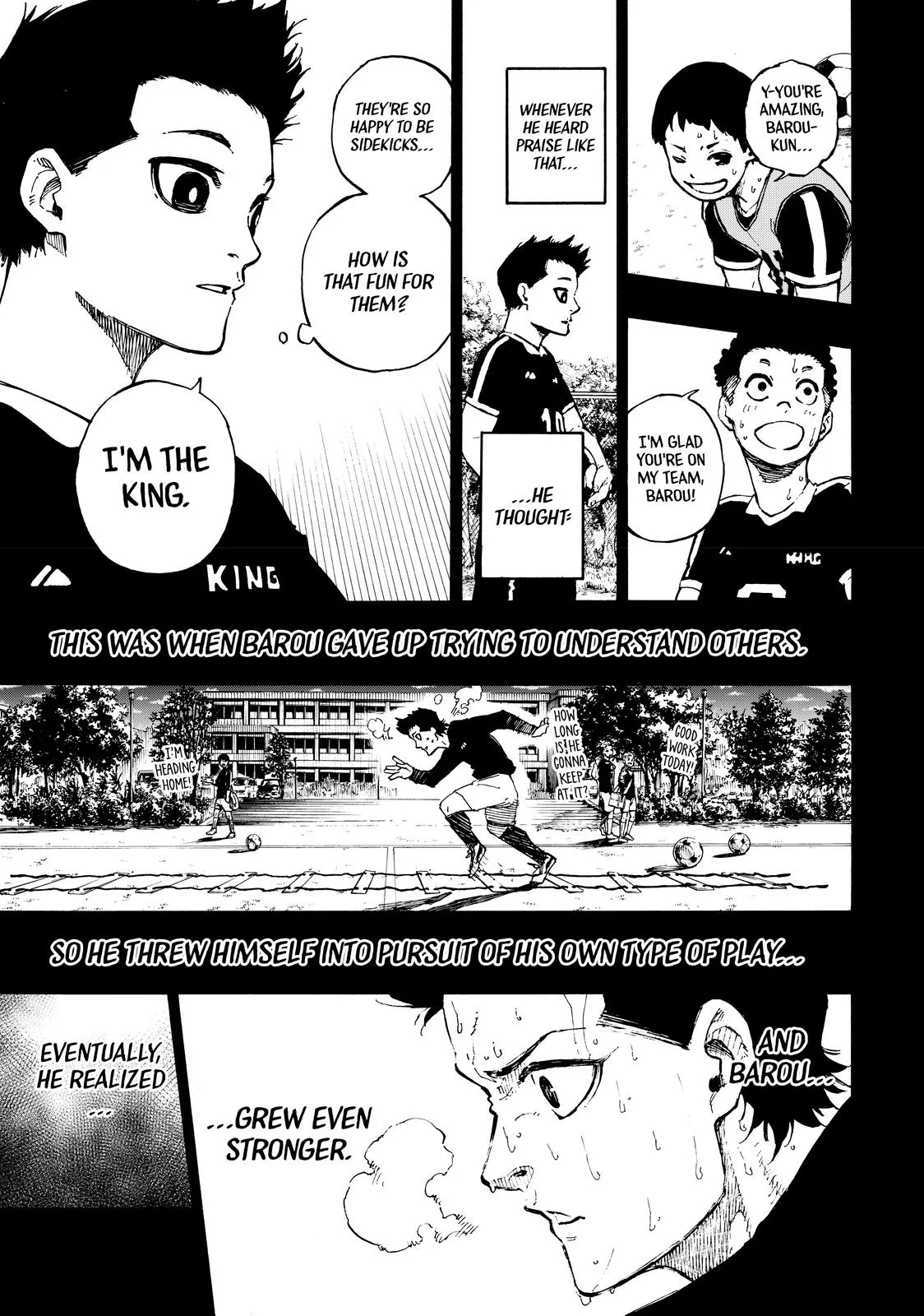
The transcript shows young Barou surrounded by teammates praising him.
“You’re amazing, Barou-kun…”
But Barou does not hear teamwork in that praise.
He hears confirmation.
His teammates are happy to be sidekicks, and he cannot understand why.
“How is that fun for them?”
This moment matters because it explains why Barou became isolated.
He stopped trying to understand other players. Instead, he chased only his own style.
The chapter says it clearly:
“This was when Barou gave up trying to understand others.”
That sentence is brutal.
Barou did not simply become selfish. He made selfishness his entire way of playing.
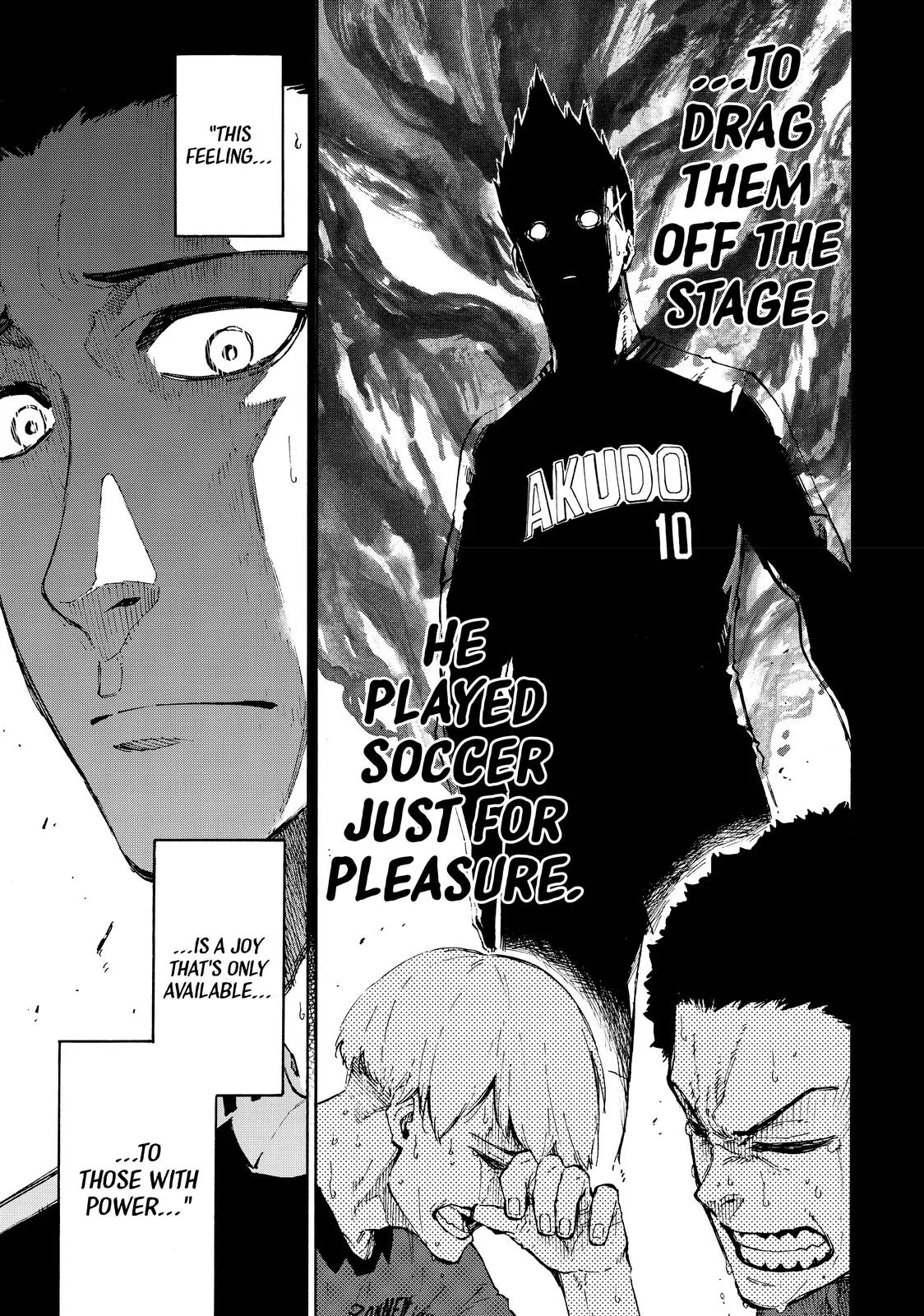
The Pleasure Behind Barou’s Soccer
Barou realizes something deeper about himself.
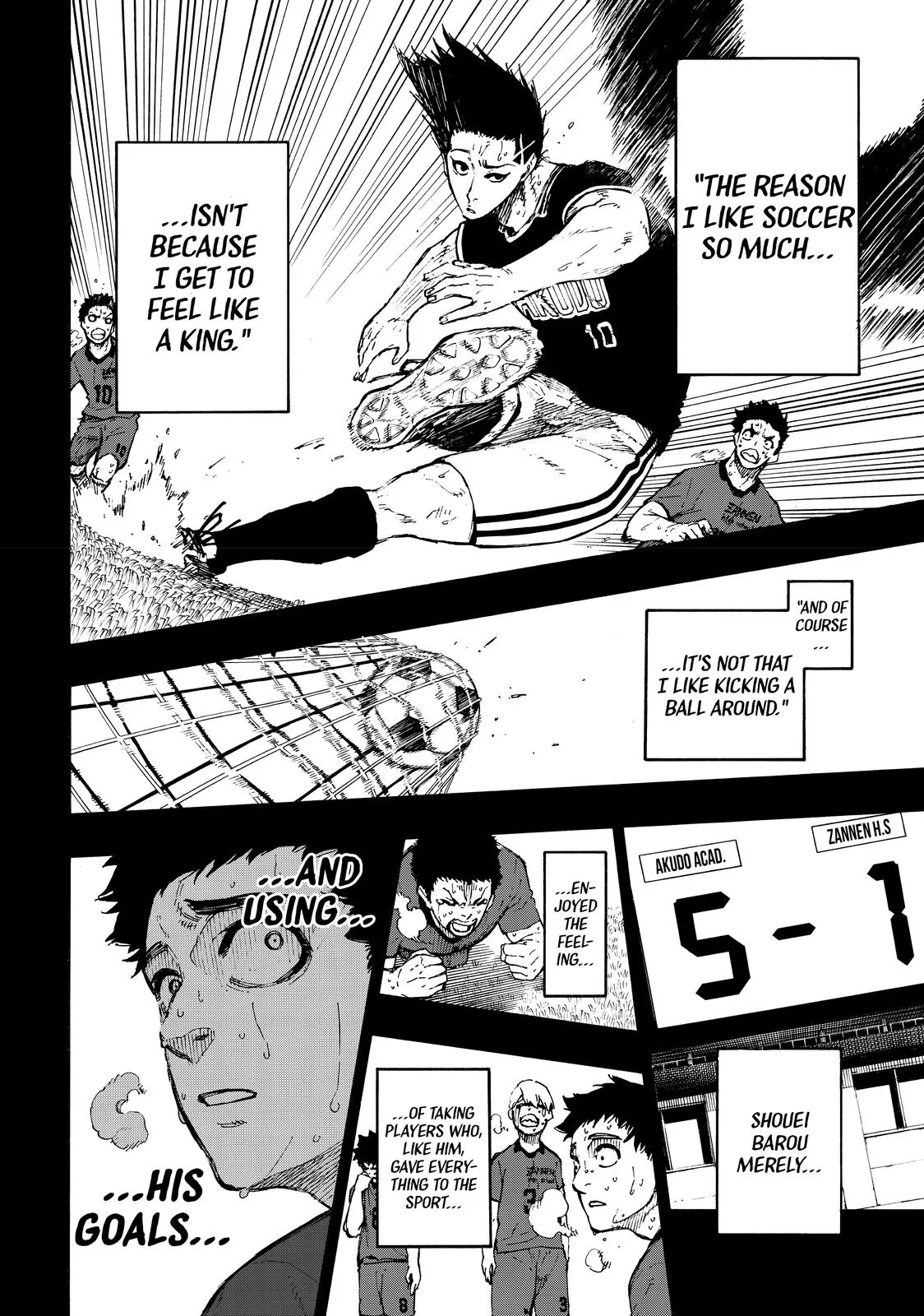
He does not love soccer just because it makes him feel like a king.
He does not love it simply because he enjoys kicking the ball.
His pleasure comes from power.
The transcript frames his joy as taking players who give everything to the sport and dragging them off the stage through his goals.
“This feeling… is a joy that’s only available… to those with power…”
This matters because Barou’s ego is not just about scoring.
It is about domination.
He wants to stand above others. He wants them to feel removed from the spotlight.
That is why losing the lead role hurts him so badly.
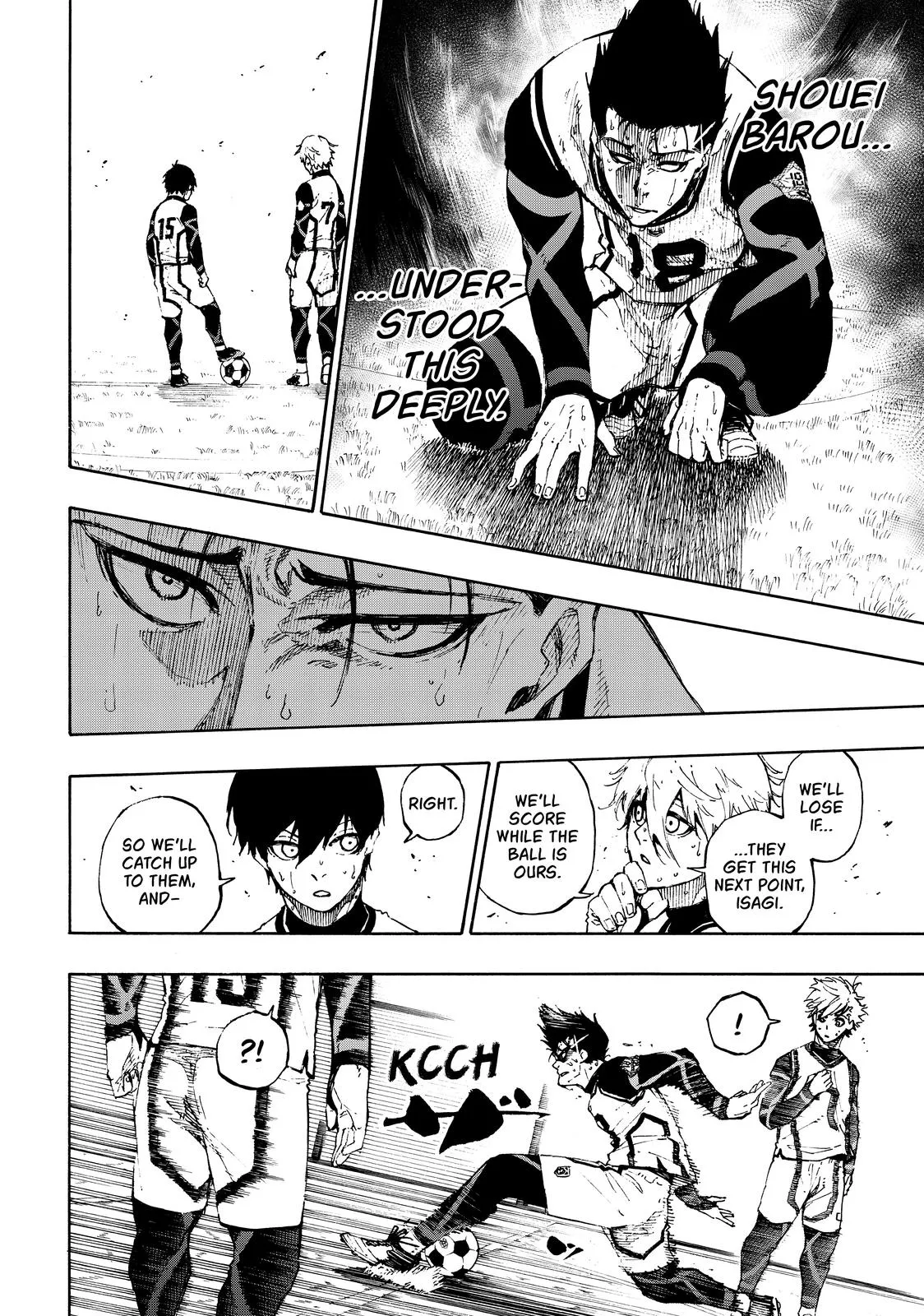
Team White Faces Match Point Pressure
The game returns to the present.
Team White is behind, and the danger is obvious.
“We’ll lose if they get this next point, Isagi.”
Isagi and Nagi understand the situation. They need to catch up while the ball is theirs.
But before their plan can unfold, Barou interrupts.
He intercepts the ball.
This matters because Barou is not thinking like a teammate. He is acting like someone desperate to reclaim the stage by force.
He wants the next moment to belong to him.
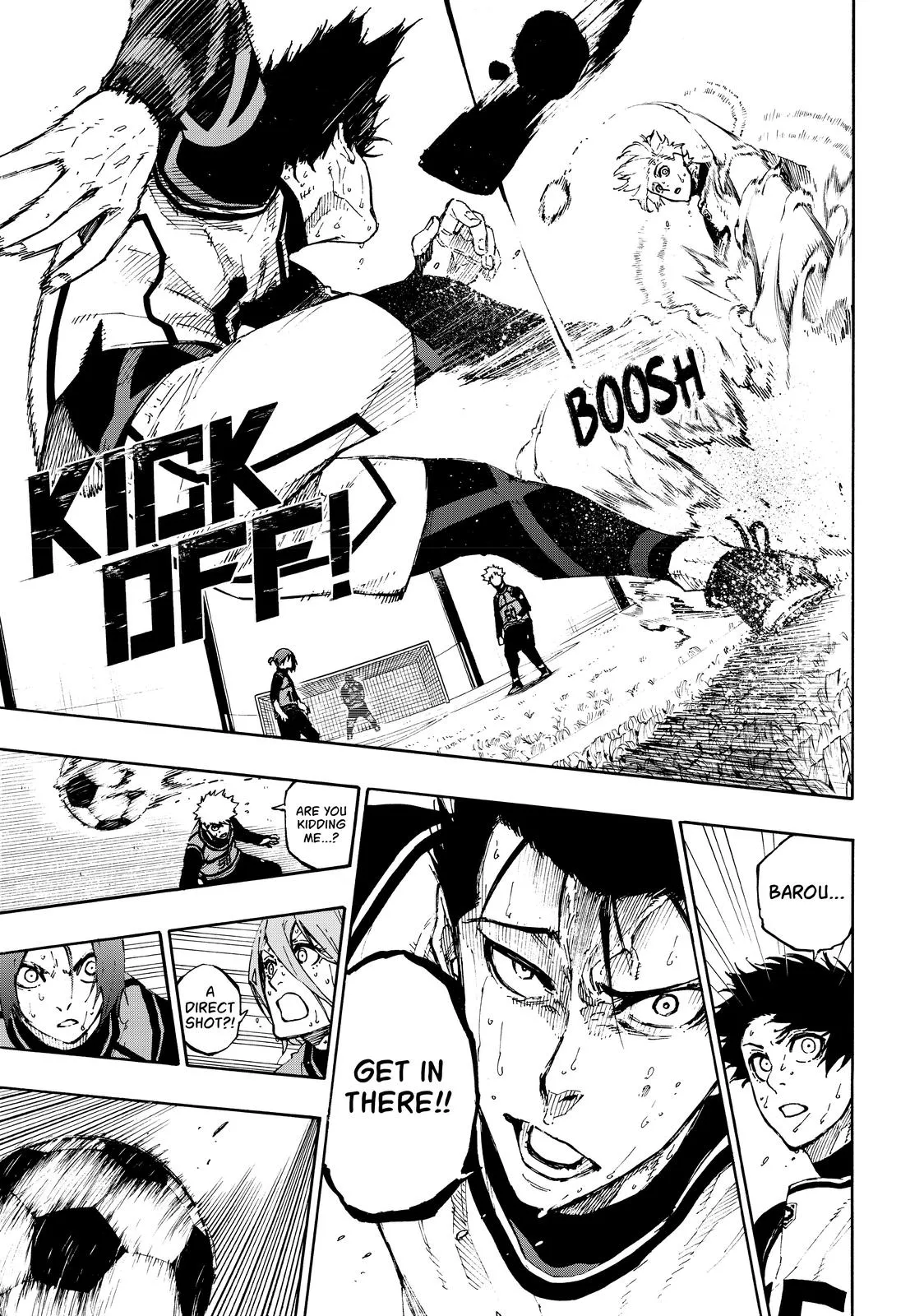
Barou Fires a Direct Shot
From kickoff, Barou does something reckless.
He shoots directly at the goal.
“Are you kidding me…? A direct shot?!”
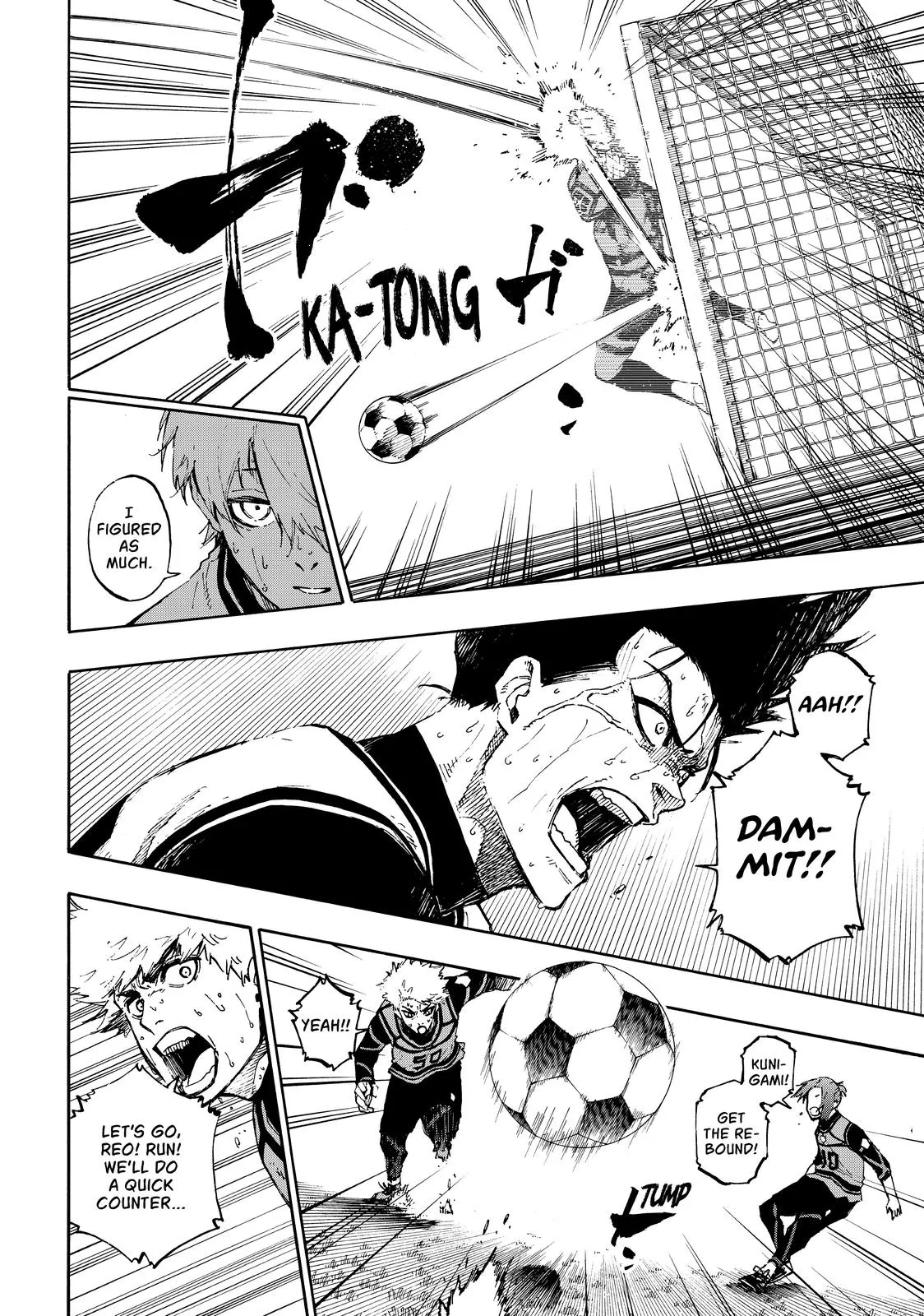
The shot hits the post.
“Dammit!!”
This matters because Barou’s ego pushes him into forcing the play.
He wants to become the hero immediately, but the field does not obey him.
The ball does not reward his pride.
It punishes his impatience.
The Rebound Turns Into Chaos
The rebound creates a scramble.
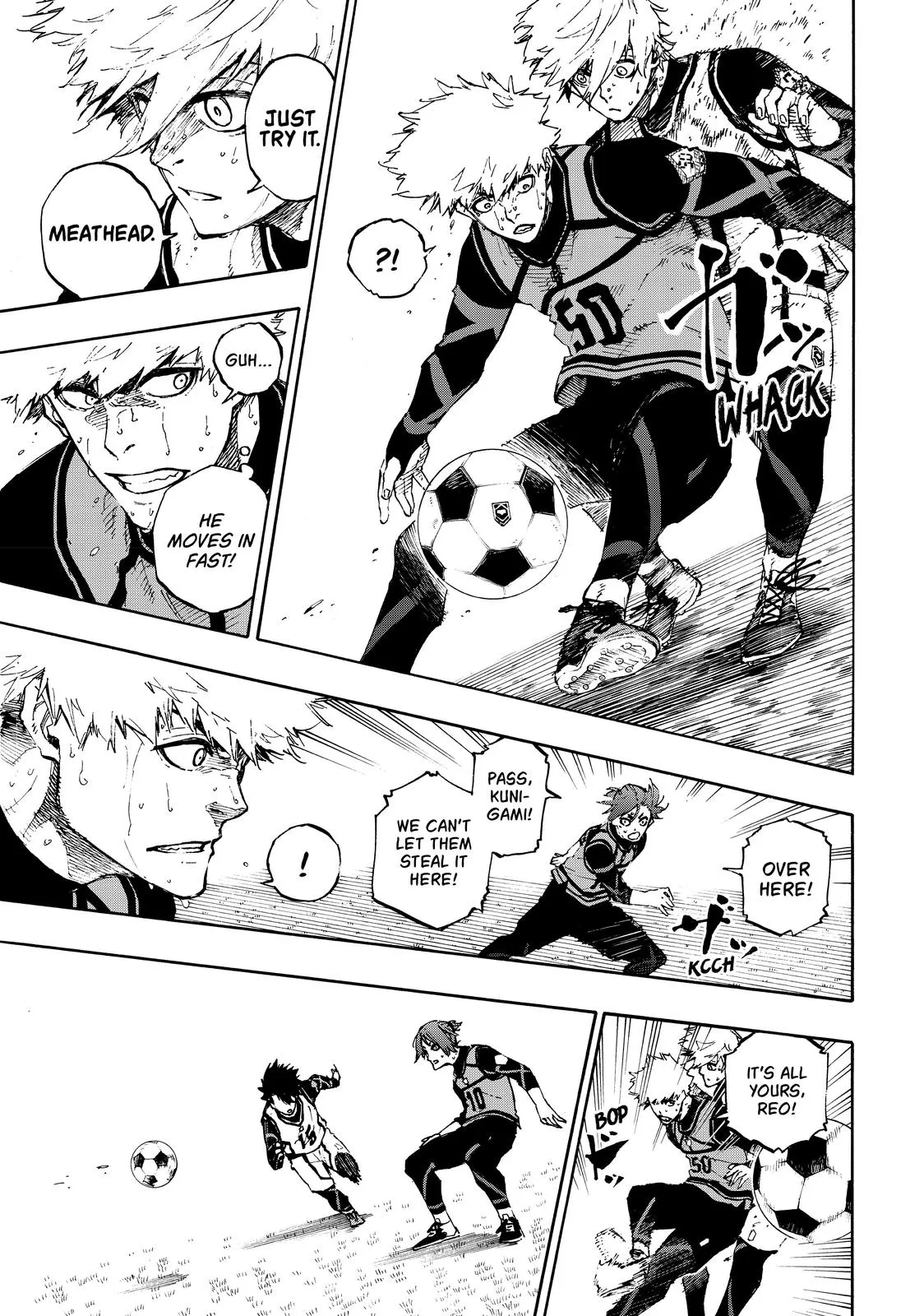
Kunigami moves for the ball, Reo gets involved, and Team Red tries to launch a quick counter.
Kunigami grabs the ball and sends it to Reo.
“It’s all yours, Reo!”
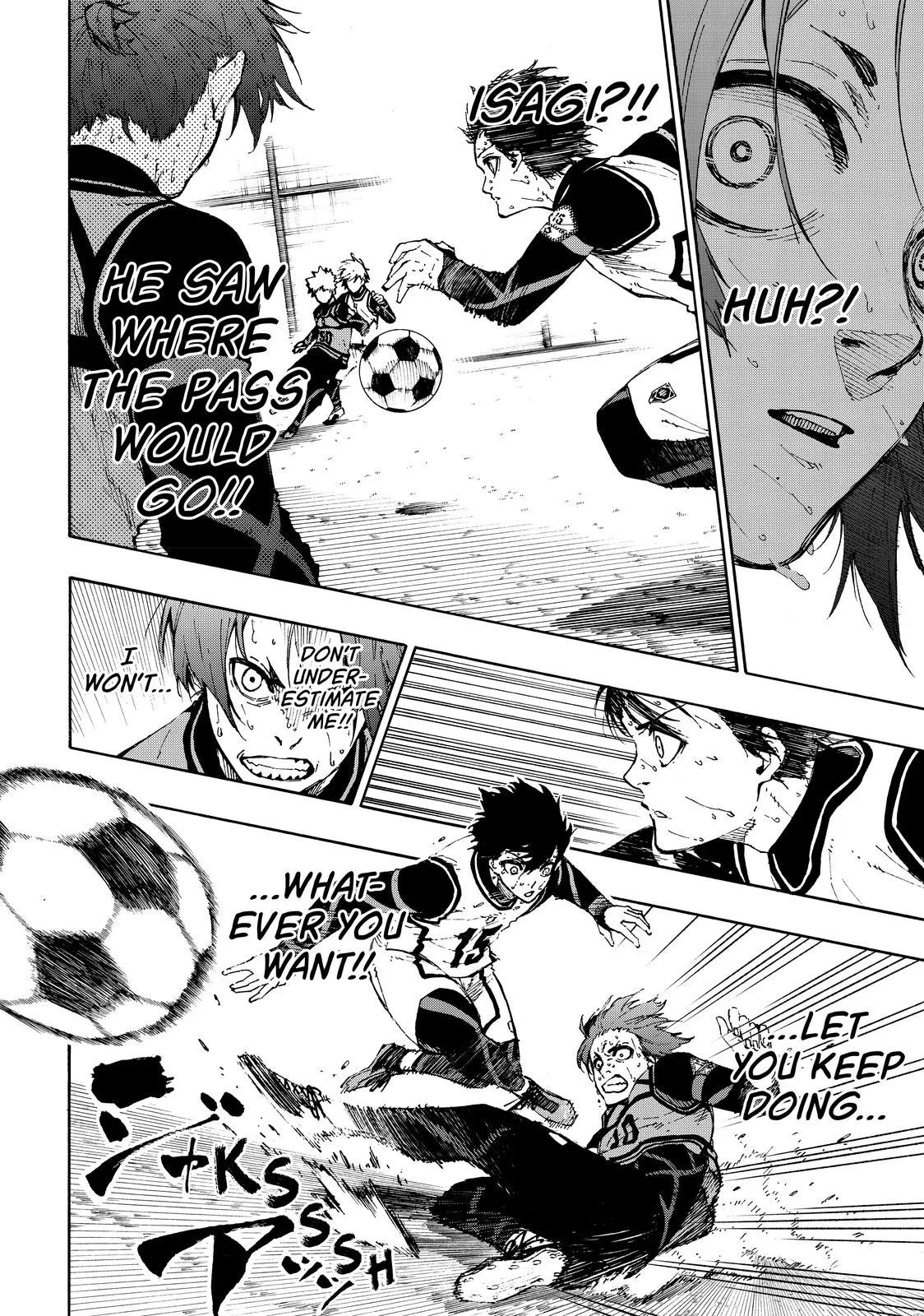
But Isagi reads the pass.
He sees where the ball is going before the play fully develops.
This matters because Isagi is still controlling the flow of the match through prediction.
While Barou tries to force his own glory, Isagi waits for the correct opening.
That contrast is the heart of the chapter.
Reo Tries to Resist Isagi
Reo notices Isagi coming.
He refuses to let Isagi keep doing whatever he wants.
“Don’t underestimate me!!”
But the ball does not settle cleanly.
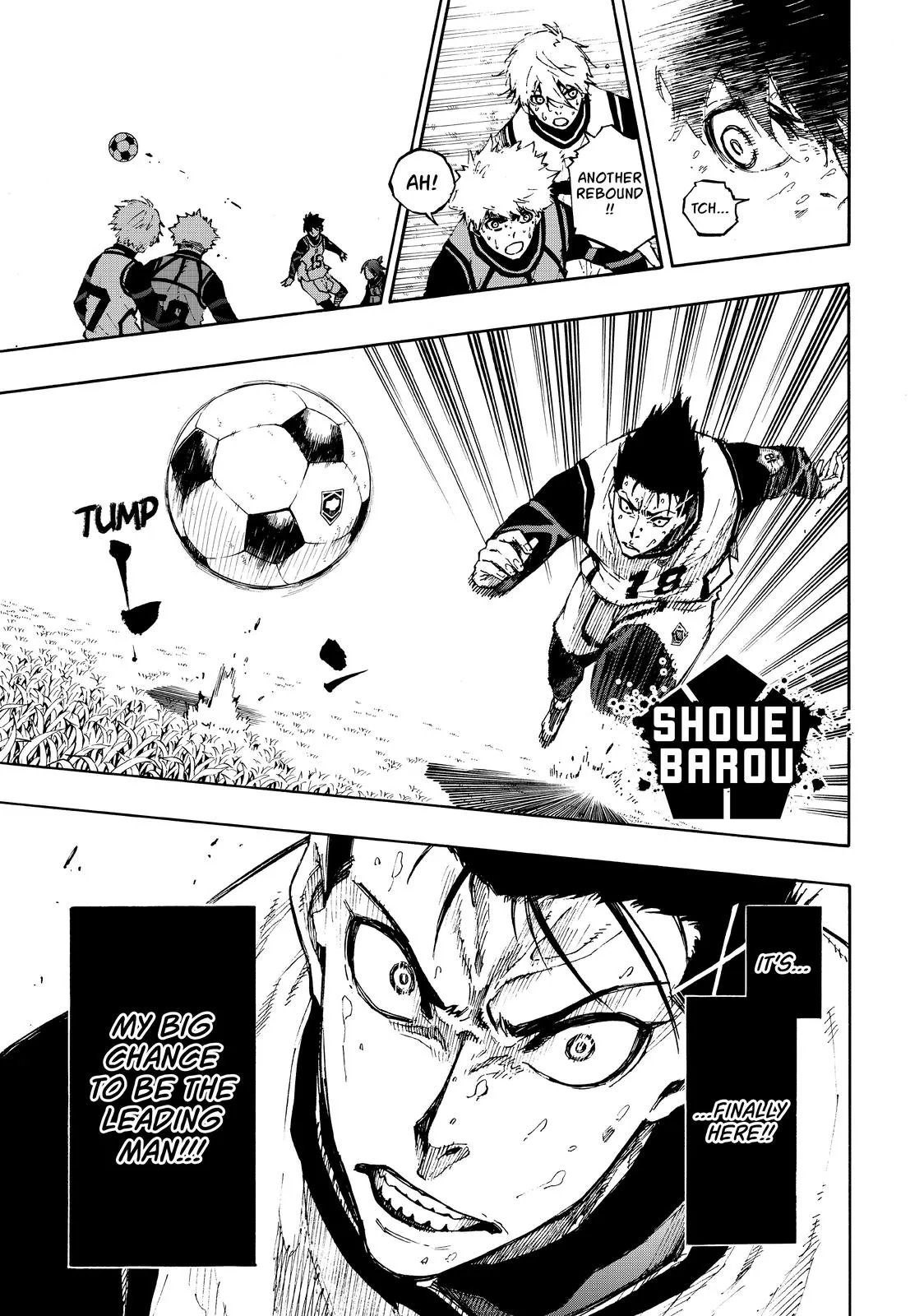
Another rebound appears.
Nagi reacts.
“Another rebound!!”
This matters because the entire field is now unstable.
No one has full control for a second.
And that one loose moment becomes Barou’s chance.
Barou Sees His Leading-Man Moment
The ball drops.
Barou sees it.
“It’s finally here!!”
For Barou, this is the moment he has been waiting for.
His chance to become the lead actor again.
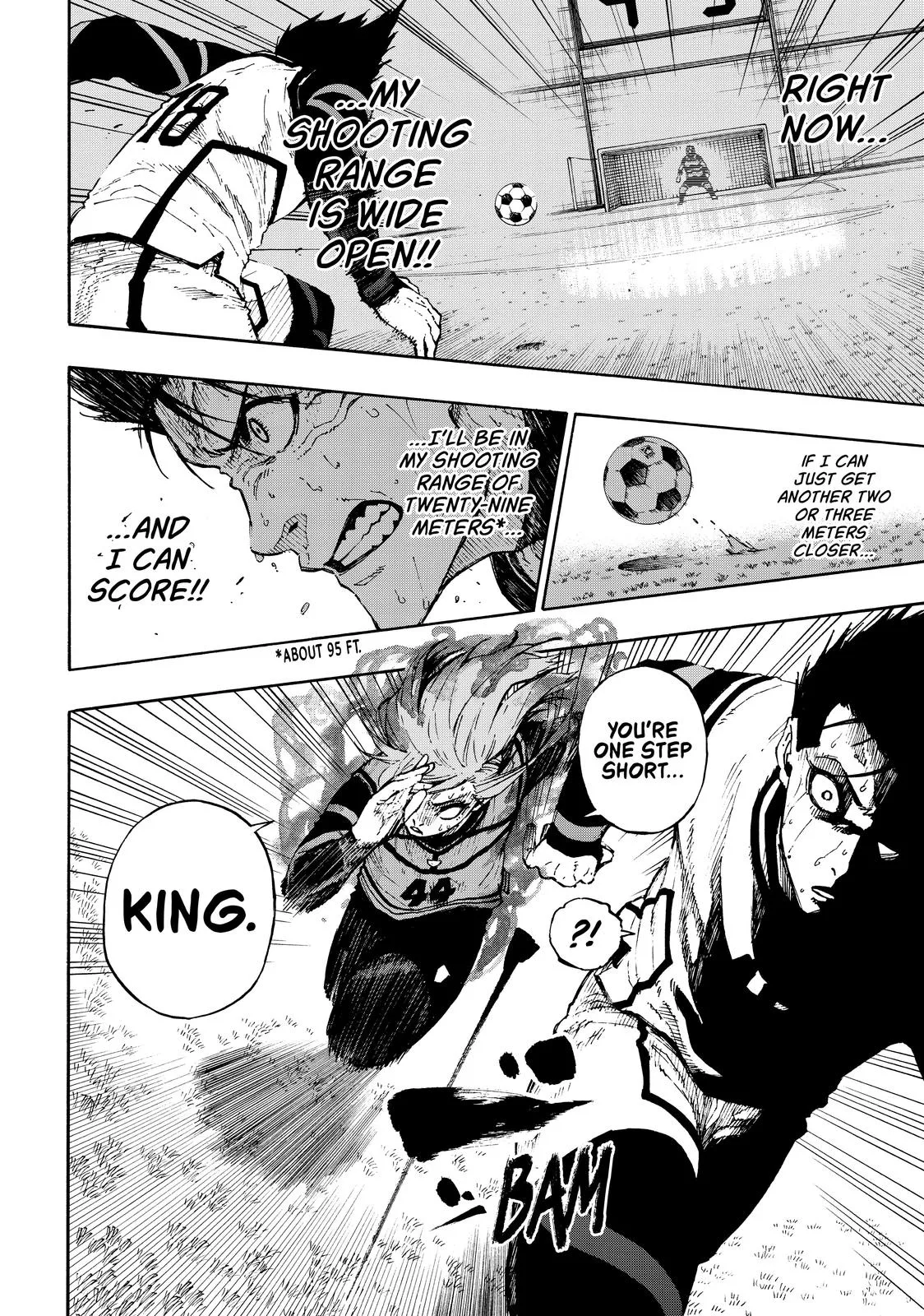
His shooting range is almost open. He only needs two or three more meters to reach his preferred range of twenty-nine meters.
The transcript even marks it as about 95 feet.
This matters because Barou is not far from glory.
He can almost see the goal that would restore his identity.
But “almost” is the cruelest distance on the field.
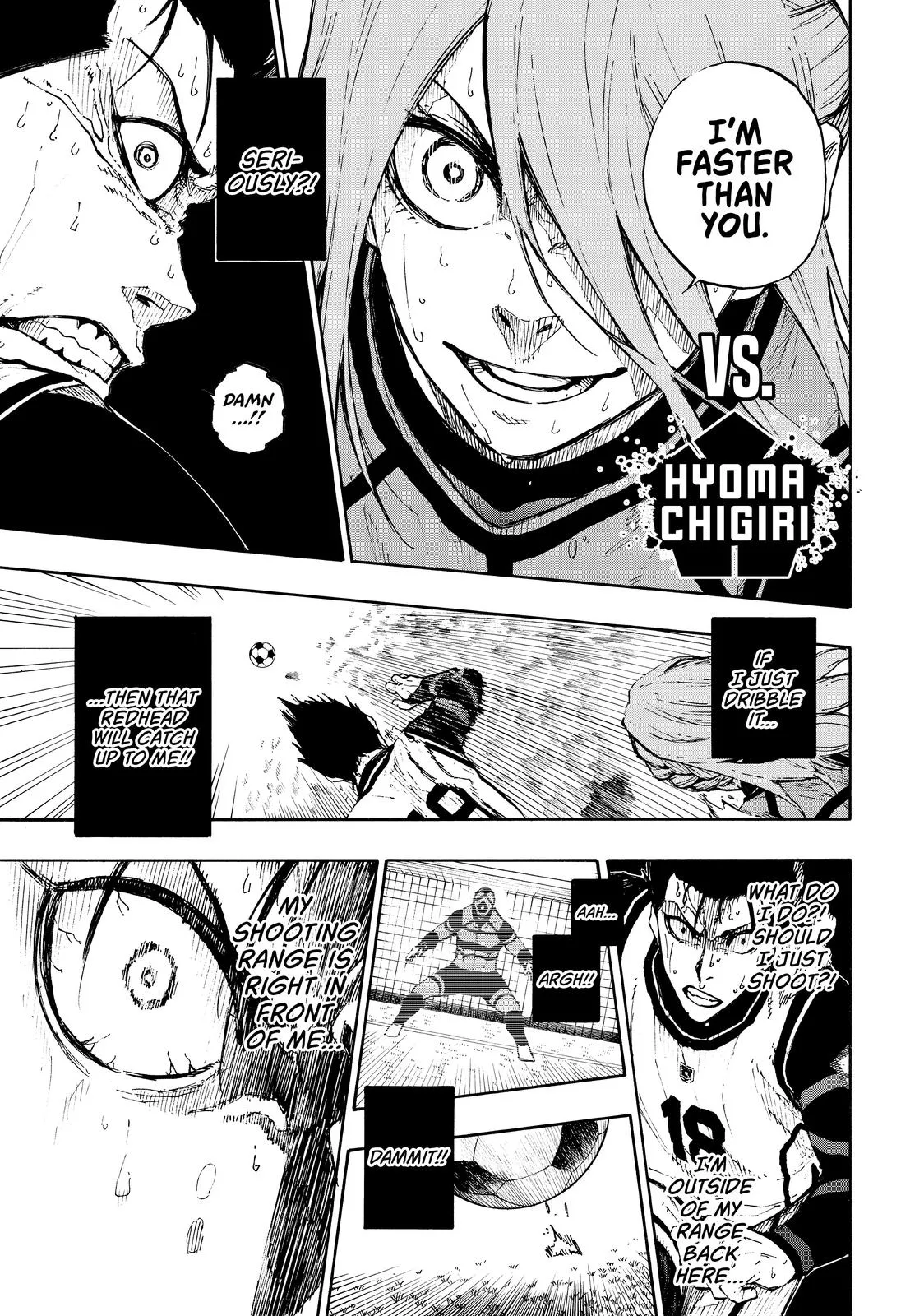
Chigiri Blocks the King’s Path
Chigiri closes in.
“You’re one step short… King.”
That line cuts deep.
Barou only needs one more step, but Chigiri’s speed denies him that step.
Barou realizes the problem instantly.
If he dribbles, Chigiri will catch him.
If he shoots now, he is outside his range.
“What do I do?!”
This matters because Barou’s power has reached a limit.
His old way of playing cannot solve the situation.
For the first time, the king has the ball and still cannot command the field.
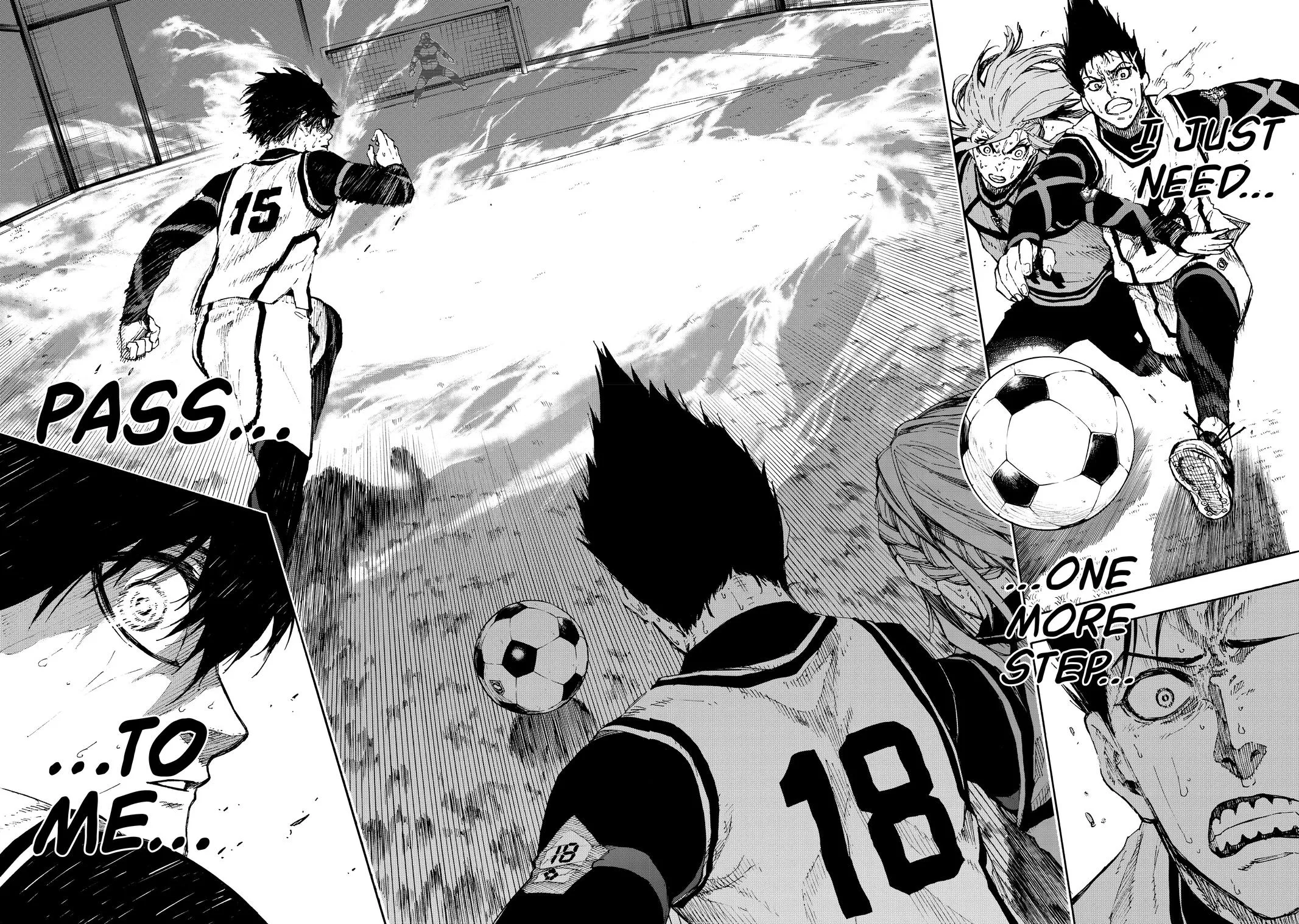
Isagi Calls for the Pass
Then Isagi appears in Barou’s awareness.
“Pass… to me…”
Barou still wants one more step.
He still wants to score himself.
But Chigiri is beside him. His range is not ready. The chance is slipping.
And then something terrifying happens.
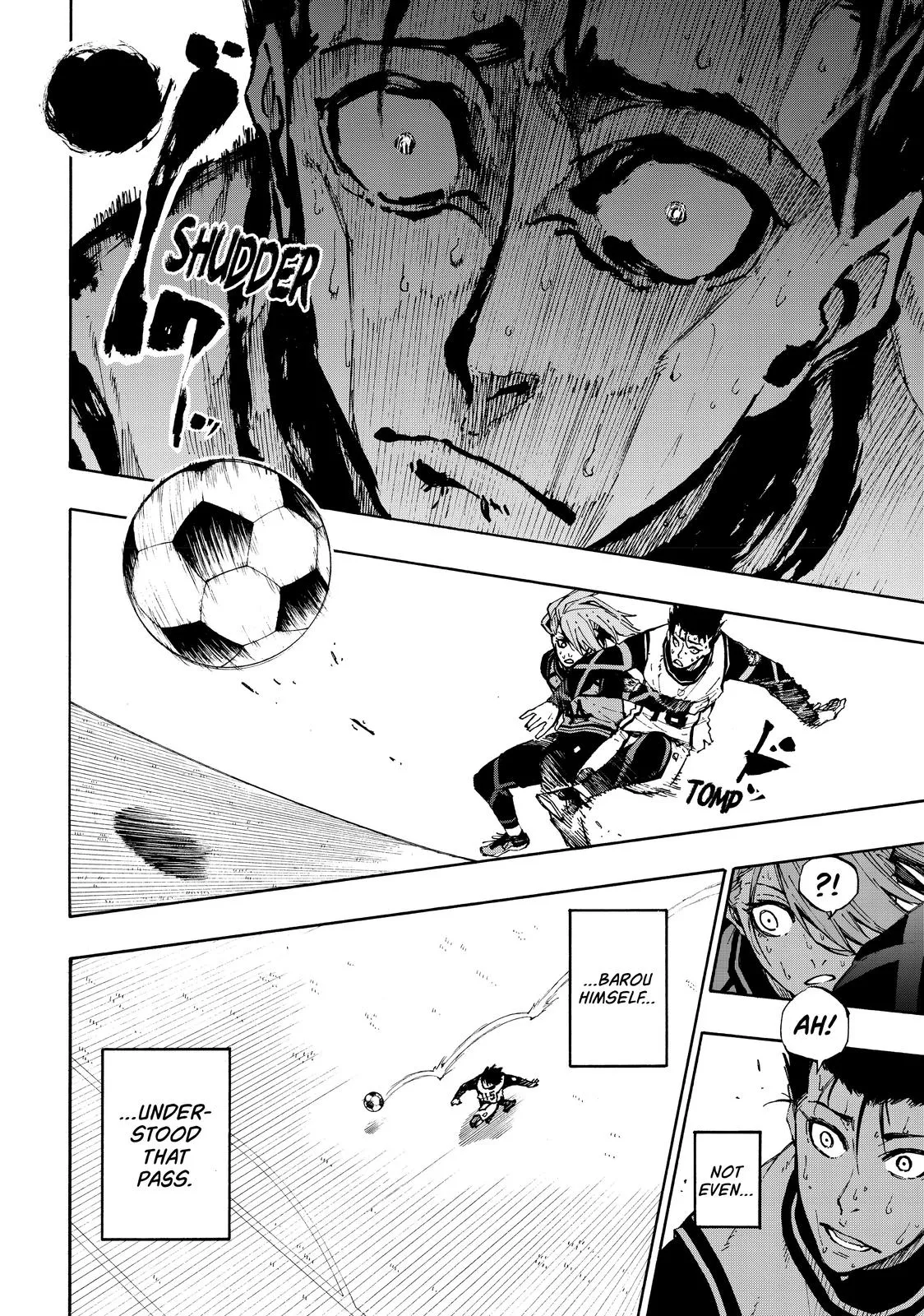
The ball rolls free.
Barou passes.
Not proudly.
Not deliberately.
The transcript describes it as unconscious and automatic.
This matters because Barou’s body understands what his ego refuses to accept.
The correct play is to give the ball to Isagi.
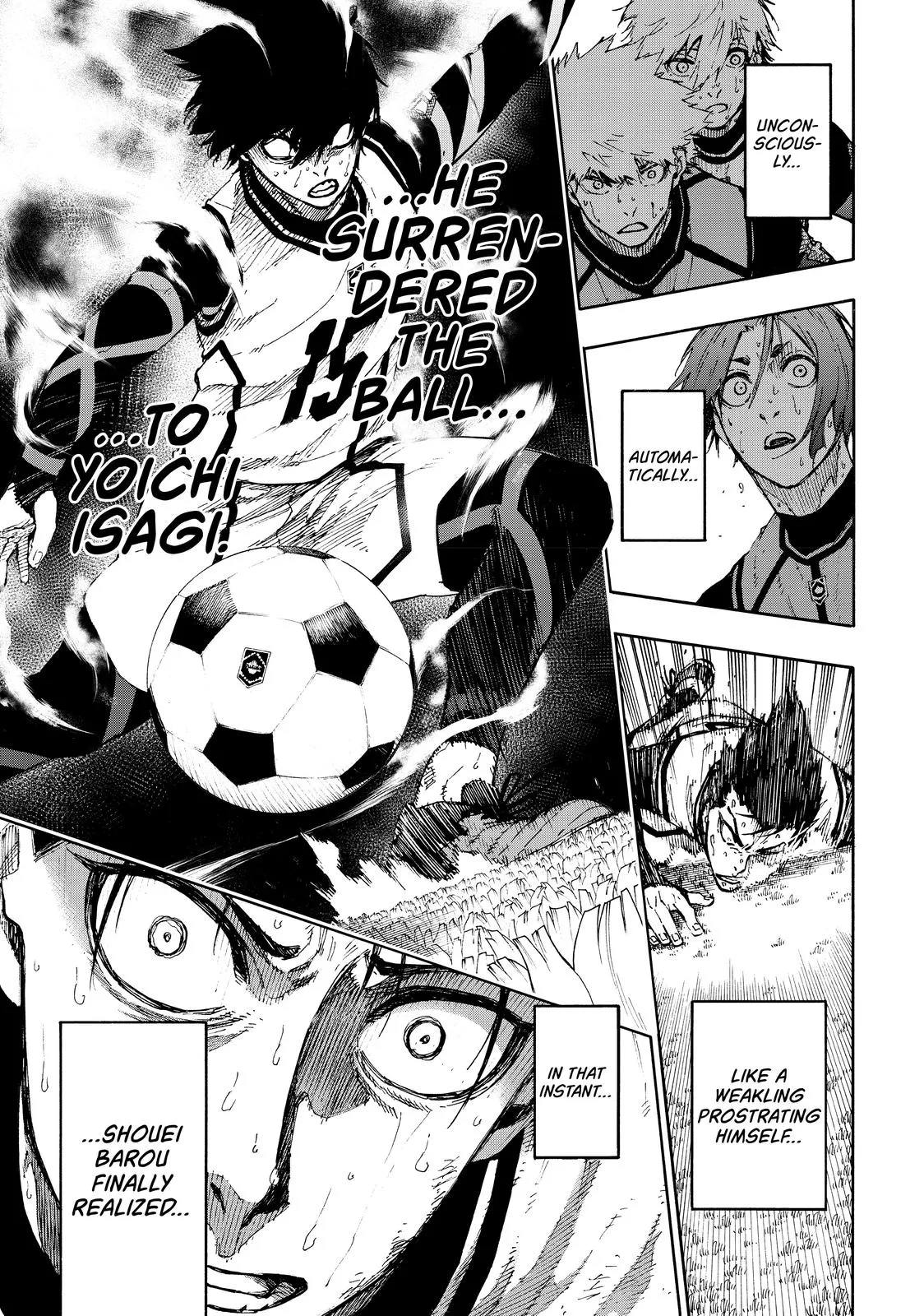
Barou Surrenders the Ball
The narration makes the moment feel like collapse.
Barou does not simply pass.
He “surrenders” the ball.
“Like a weakling…”
That is how devastating it feels to him.
In that instant, Barou understands the truth of the field.
The lead actor is not him.
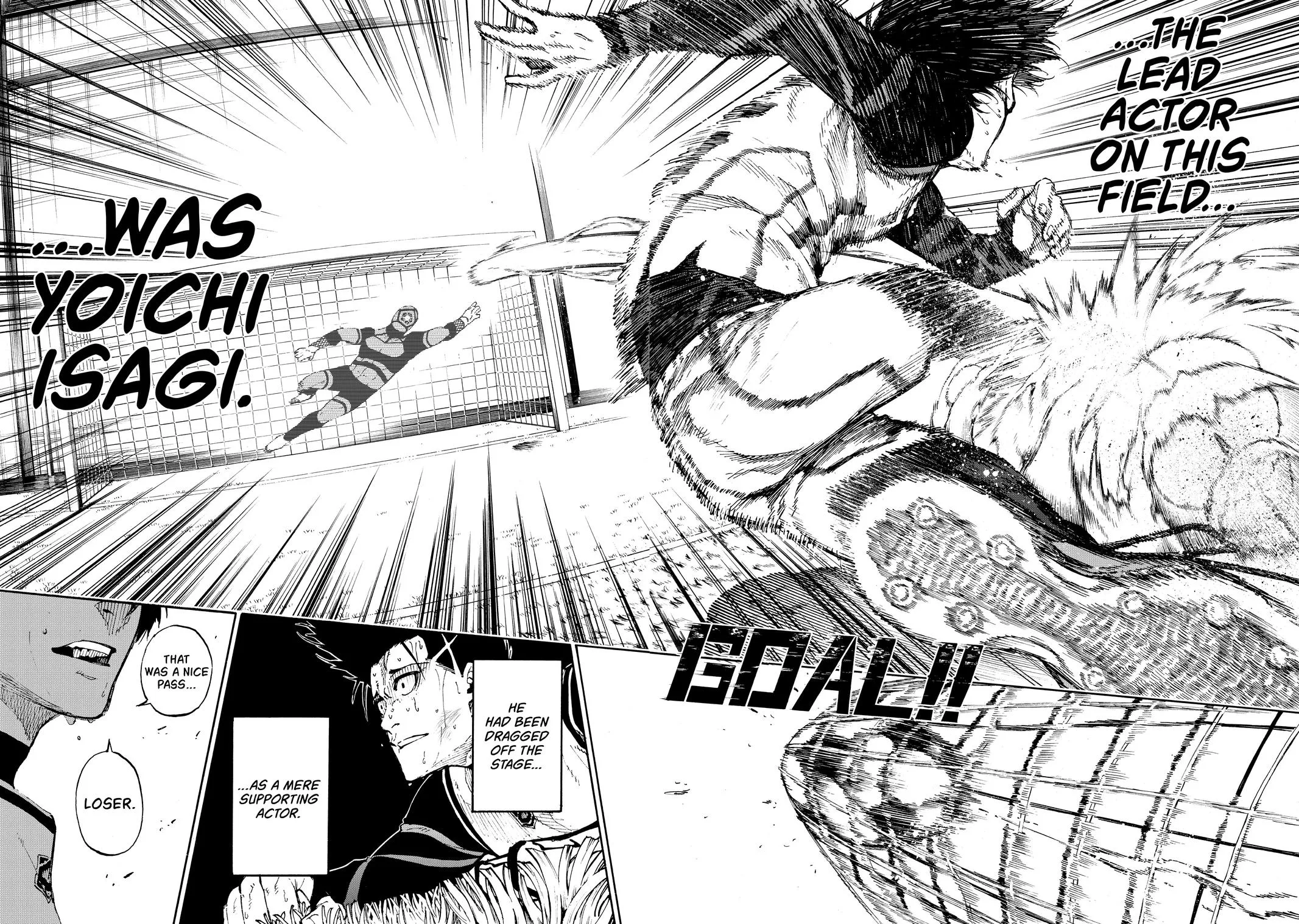
“The lead actor on this field… was Yoichi Isagi.”
This matters because it completes Barou’s humiliation.
He has spent his whole life seeing others as supporting characters.
Now he becomes one.
Isagi Scores and Takes the Stage
Isagi receives the pass and scores.
“Goal!!”
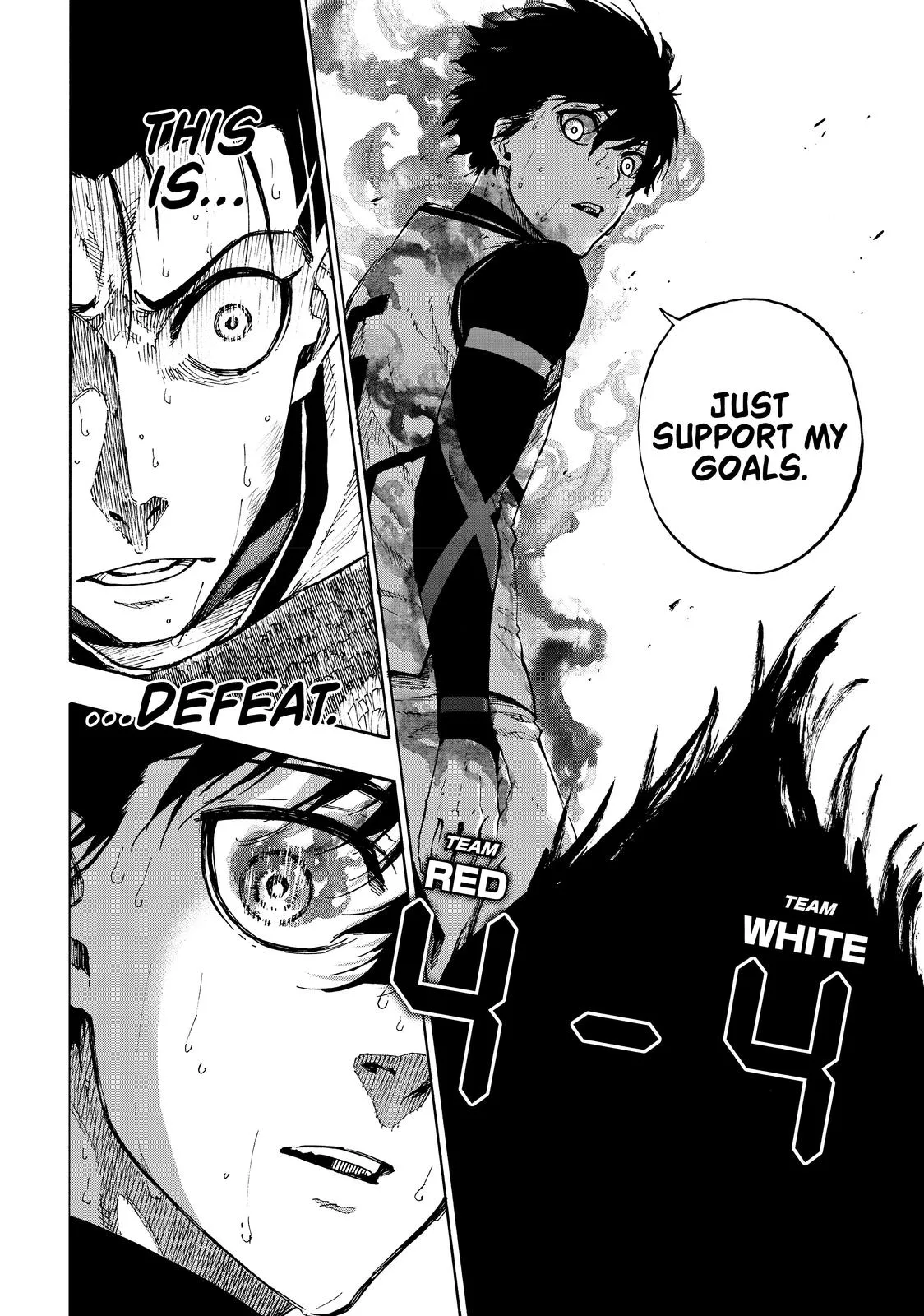
The score becomes Team Red 4 – Team White 4.
Team White catches up.
But the emotional score is even harsher.
Isagi turns Barou’s own worldview against him.
“That was a nice pass… Loser.”
This matters because Isagi is not just scoring a goal.
He is claiming the role Barou thought belonged only to him.
The king has been dragged off the stage.
Barou Learns What Defeat Feels Like
The chapter ends with Barou facing the full weight of what happened.
“This is… defeat.”
Then Isagi’s words land like a final command:
“Just support my goals.”
This matters because it mirrors Barou’s own past.
Barou once told others to support his goals.
Now Isagi says it to him.
That reversal is the core of Blue Lock Chapter 64.
Barou is forced into the exact role he despised: the supporting actor.
Why Chapter Matters
Blue Lock Chapter 64 matters because it breaks Barou from the inside.
He does not lose because he lacks talent.
He loses because his ego cannot adapt fast enough.
His pride demands that he be the lead actor.
But the field chooses Isagi.
Barou’s entire identity is dragged into the open, stripped down, and challenged.
The match is now tied at 4–4, but Barou’s personal battle has reached something darker.
He has finally learned defeat.
And now the question is simple:
What happens when a buried ego is forced to rise again?
Continue to Chapter 65 →