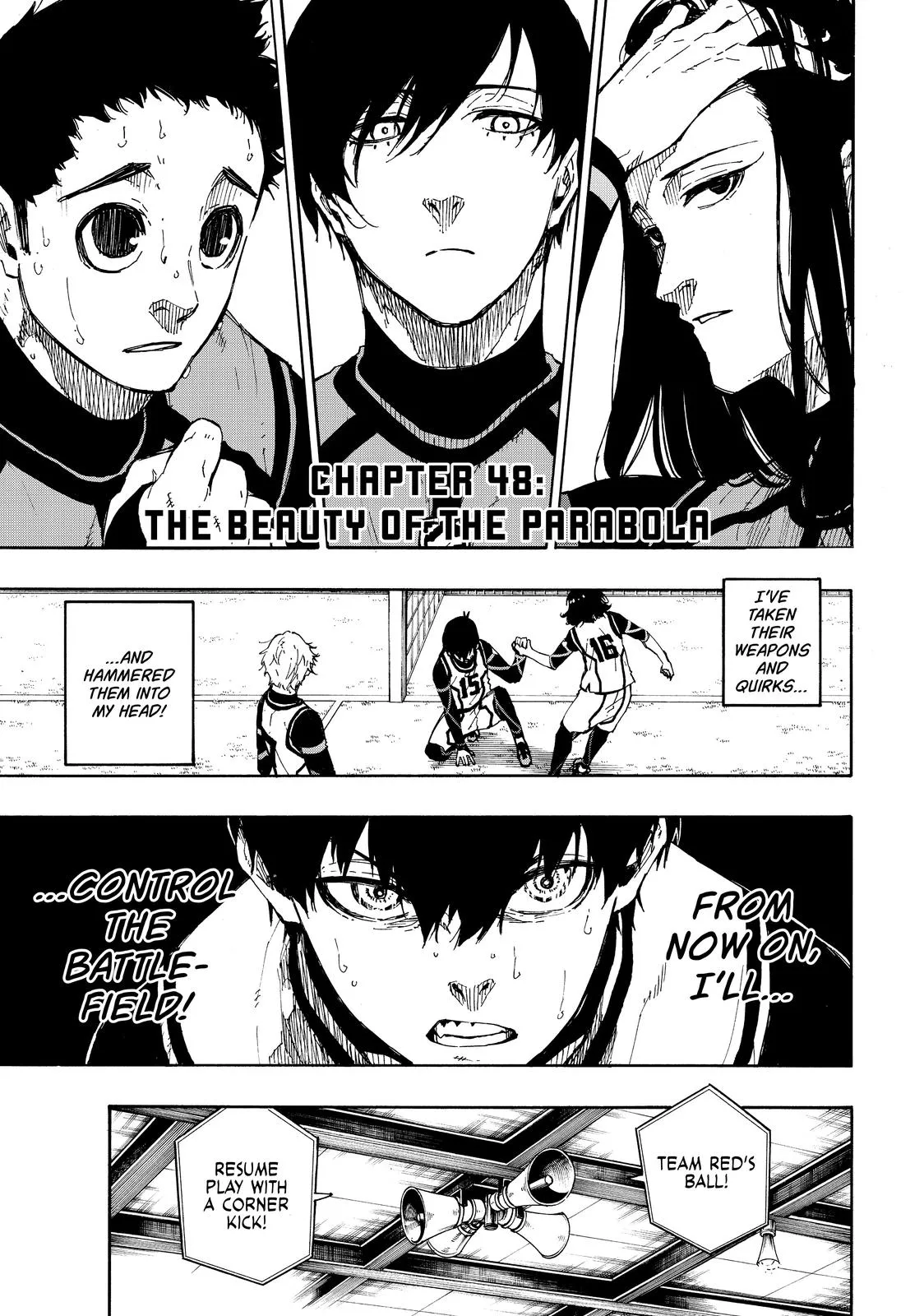
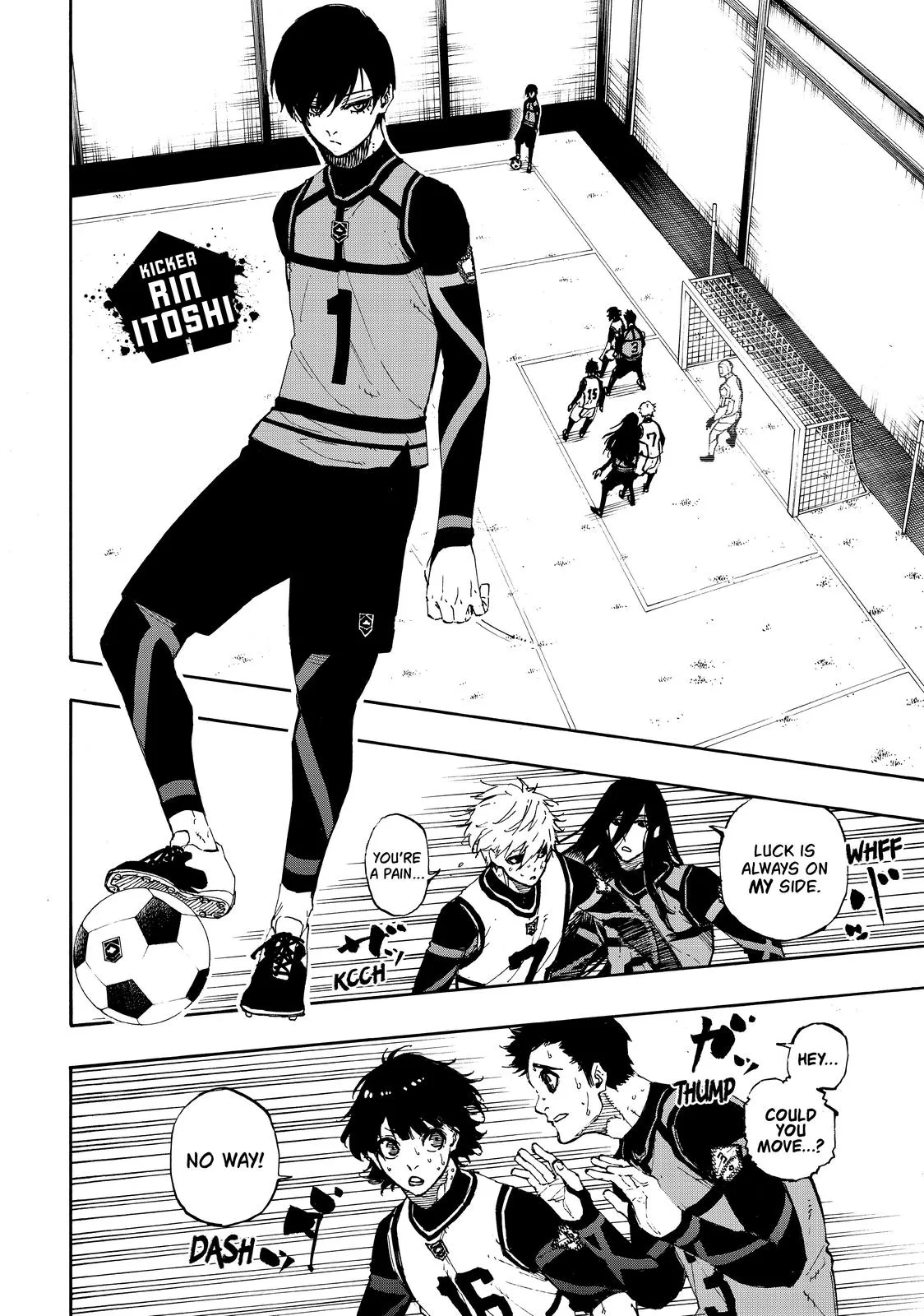
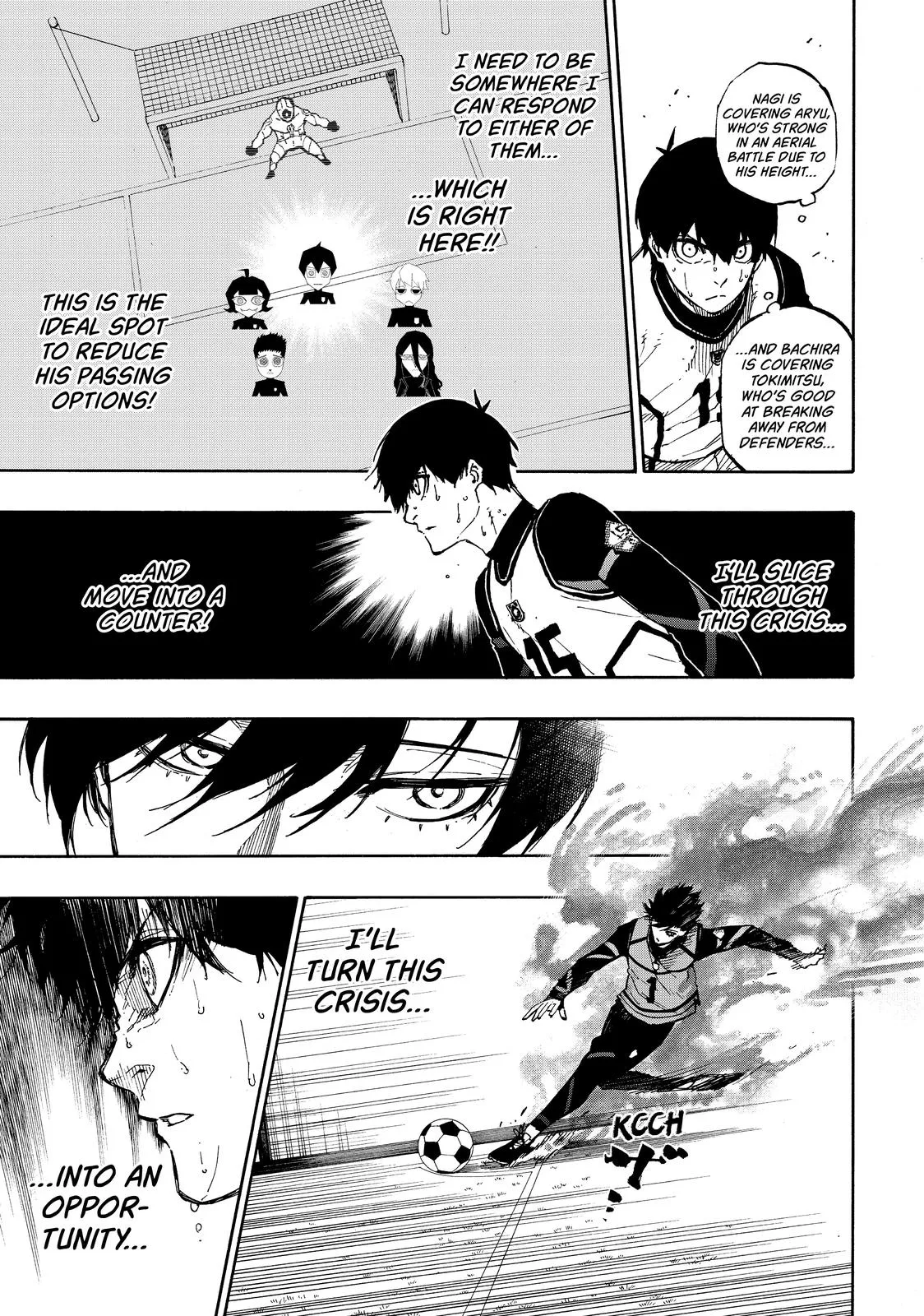
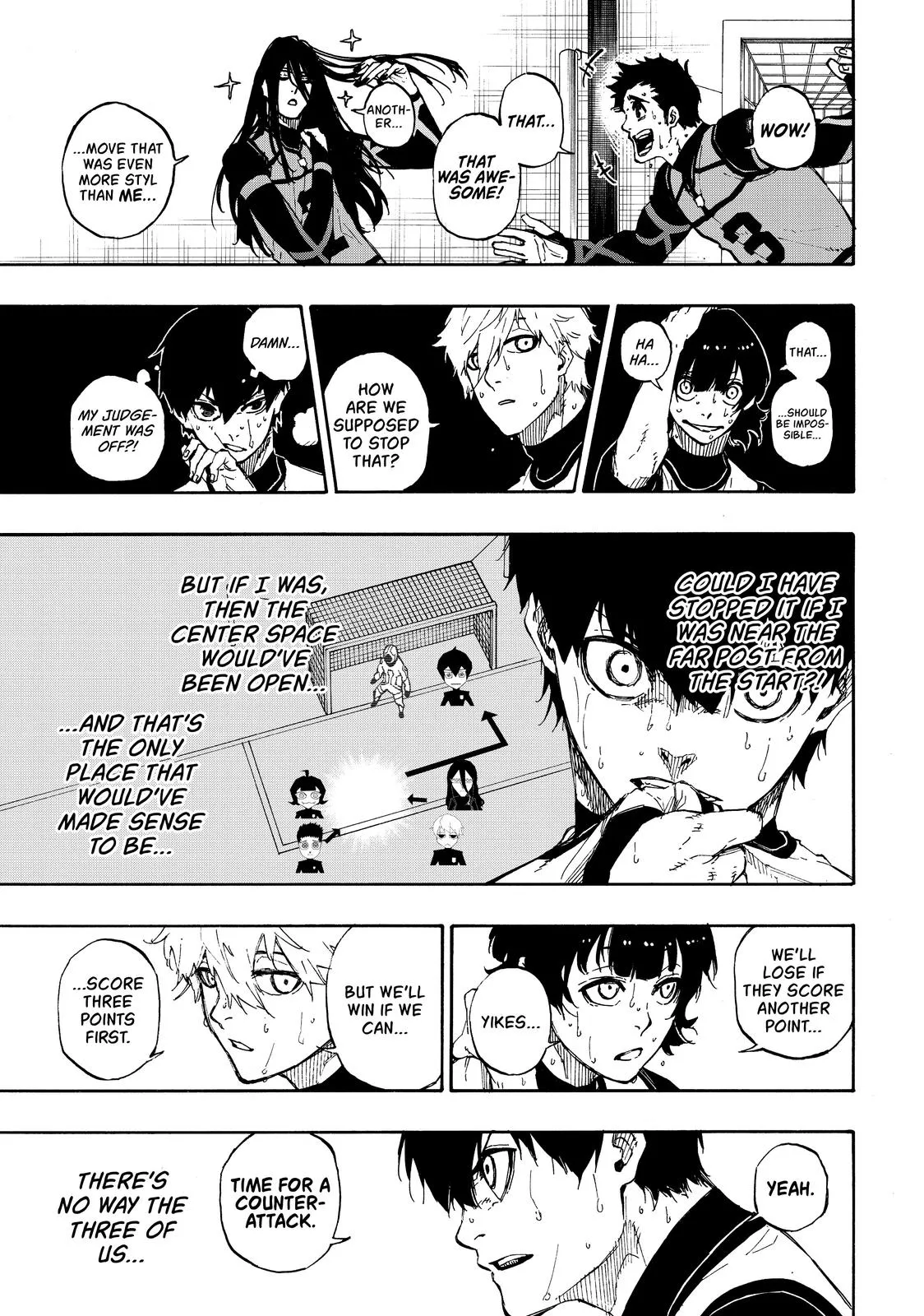
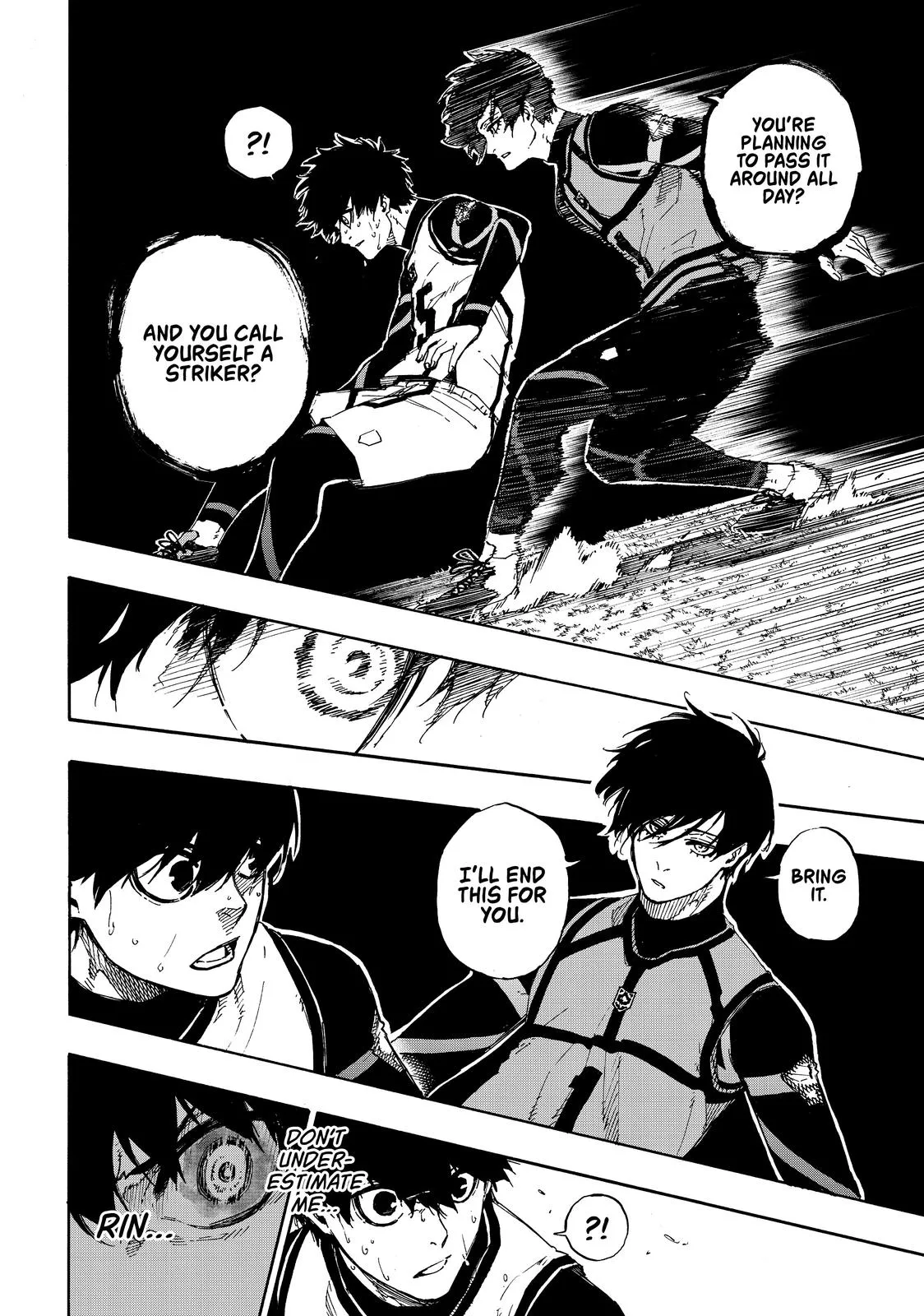
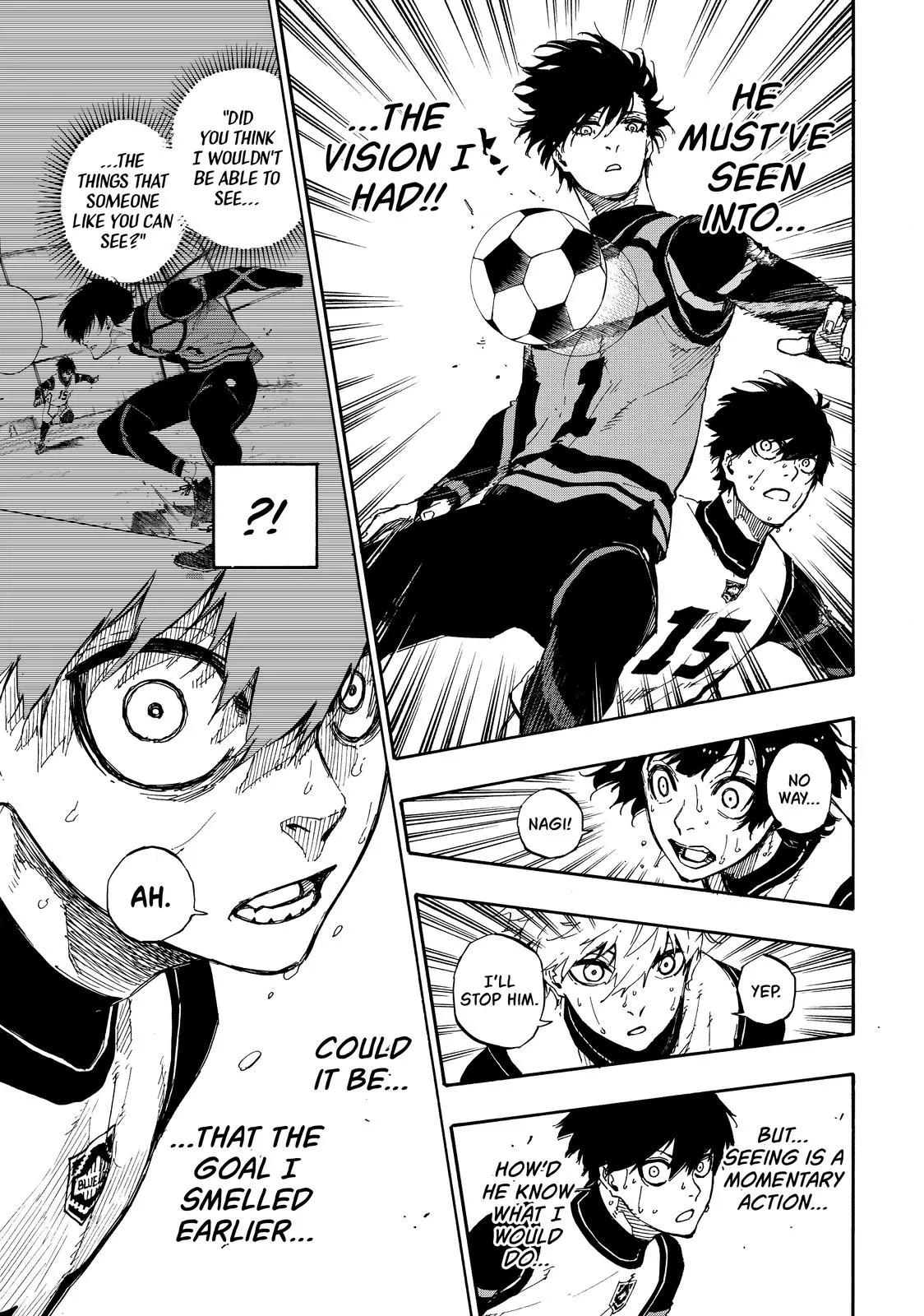
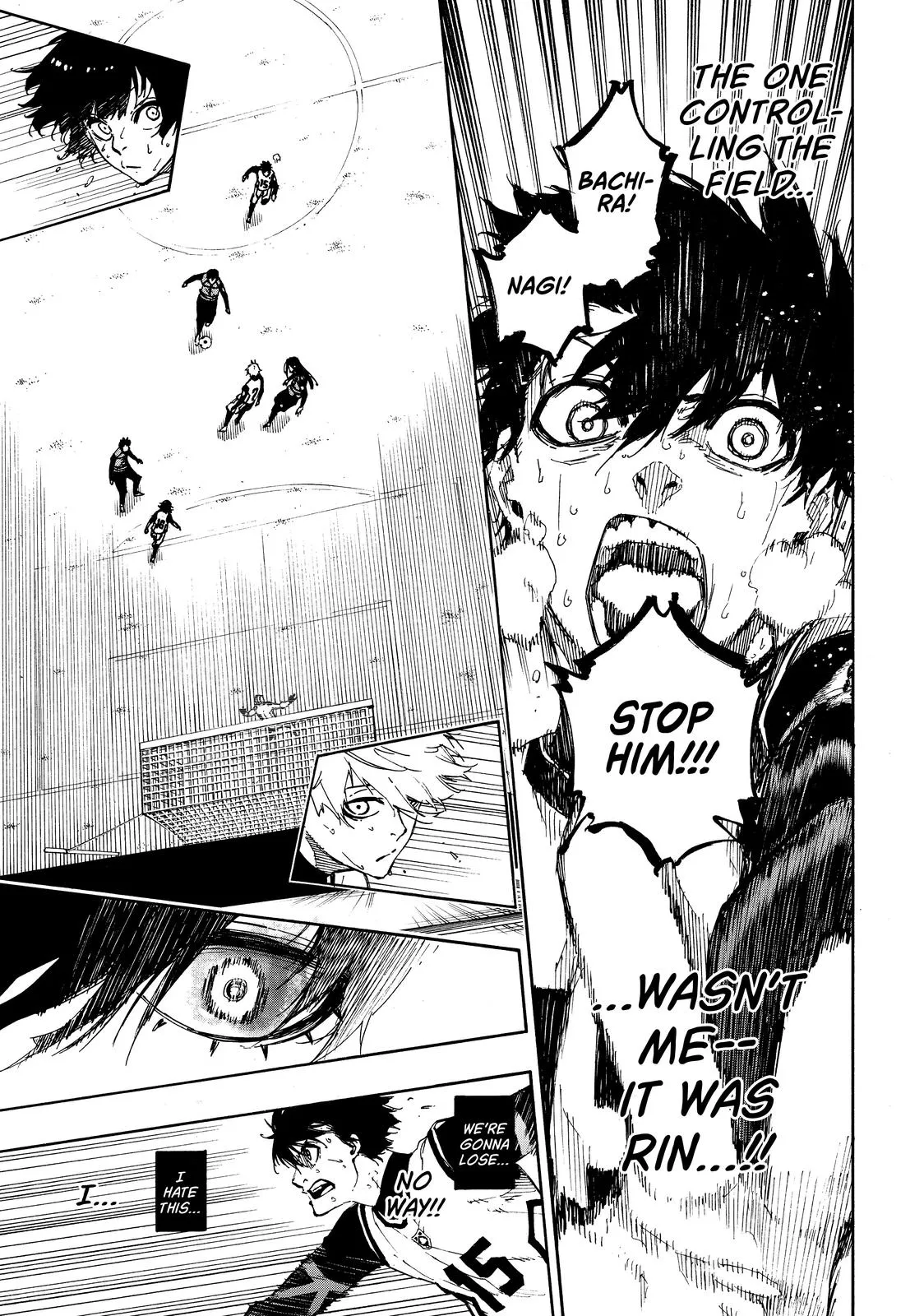
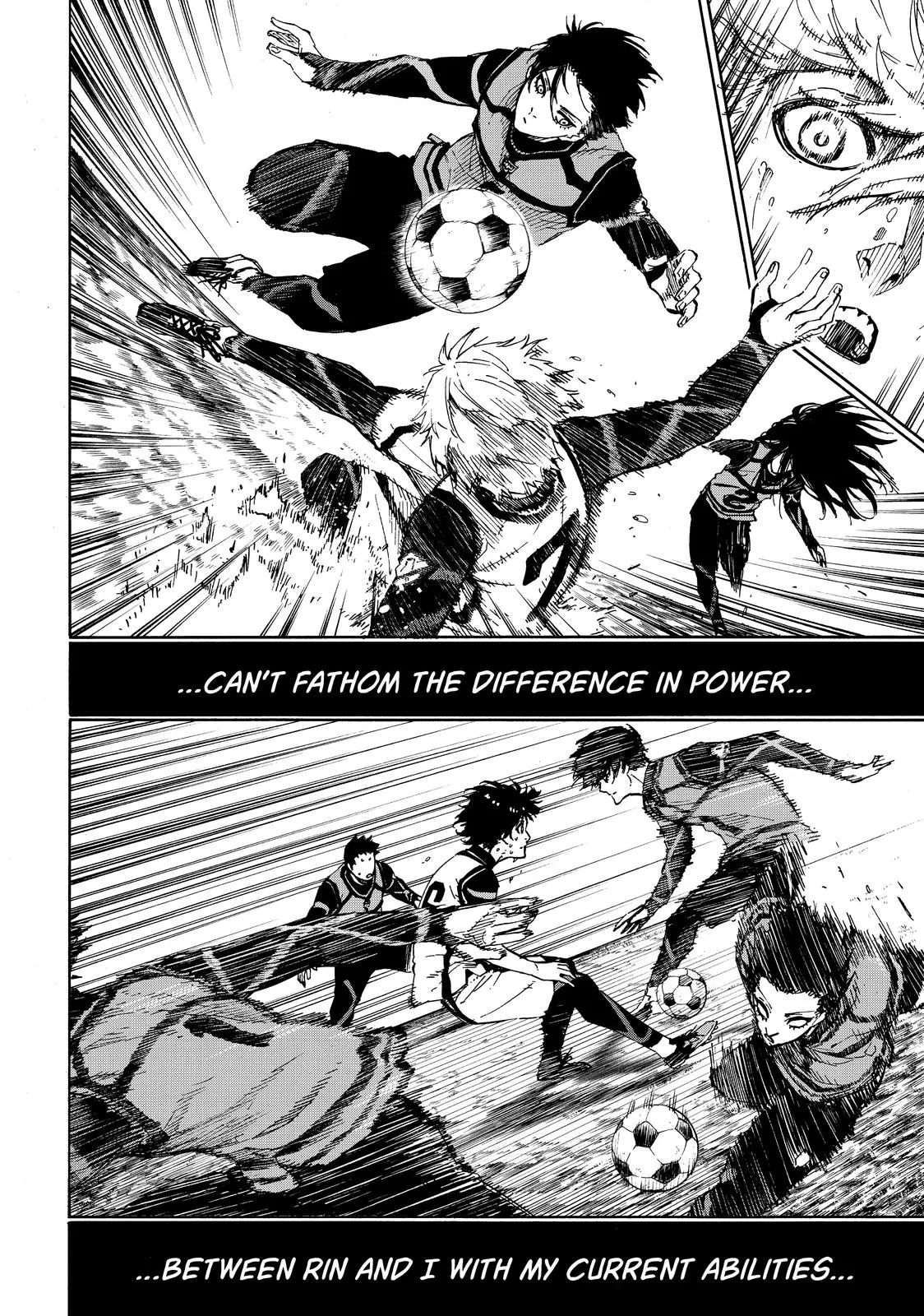
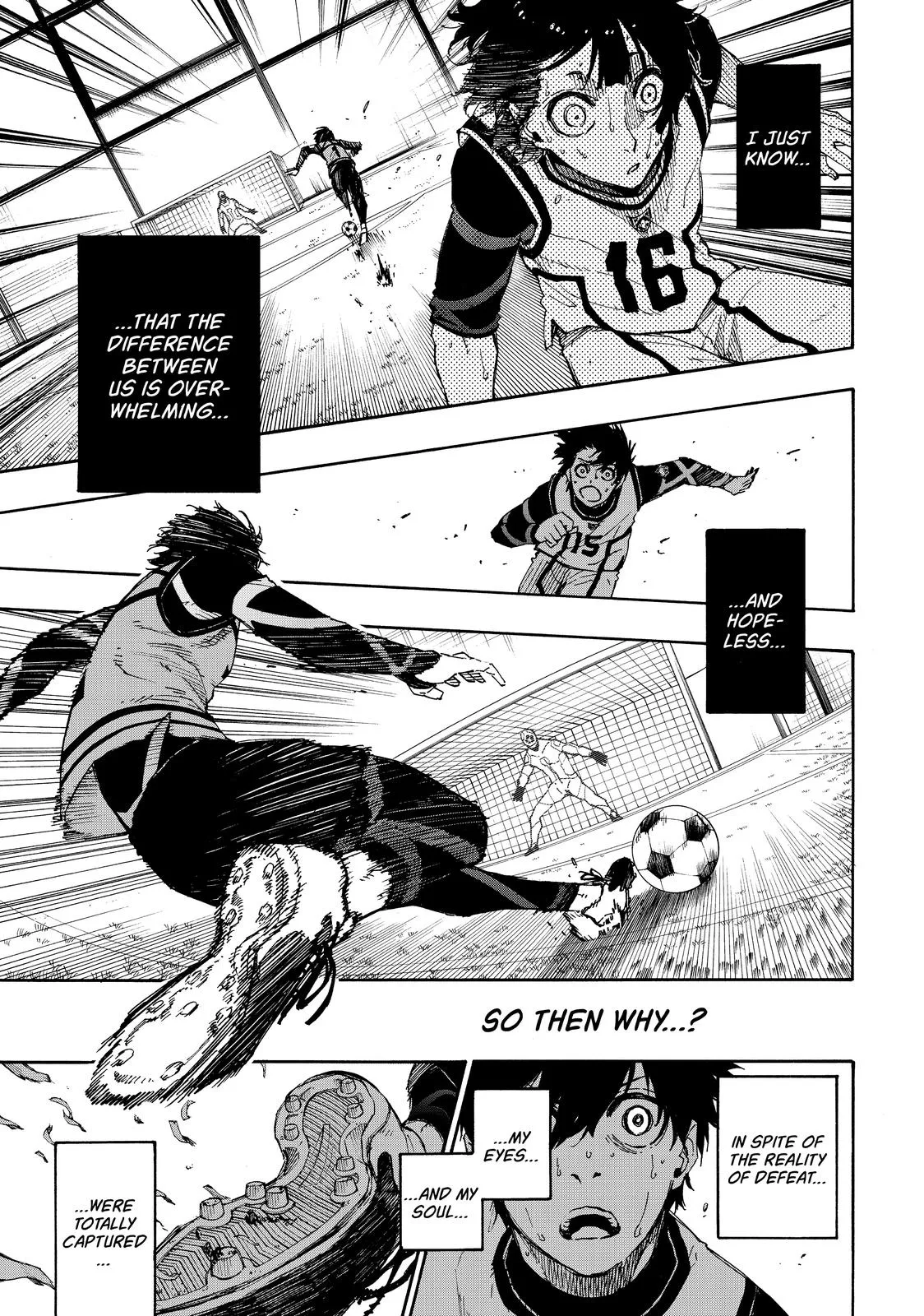
Blue Lock Chapter 48 opens in the middle of a high-pressure clash as Team White struggles to keep up with Rin Itoshi’s overwhelming control of the field. Isagi senses that the gap between himself and Rin is vast and suffocating, yet his eyes remain locked on every movement Rin makes. Even as defeat feels inevitable, Isagi cannot look away. His awareness sharpens as he realizes that Rin is not just playing faster or stronger, but reading the entire flow of the game several steps ahead, shaping the battlefield through vision alone.
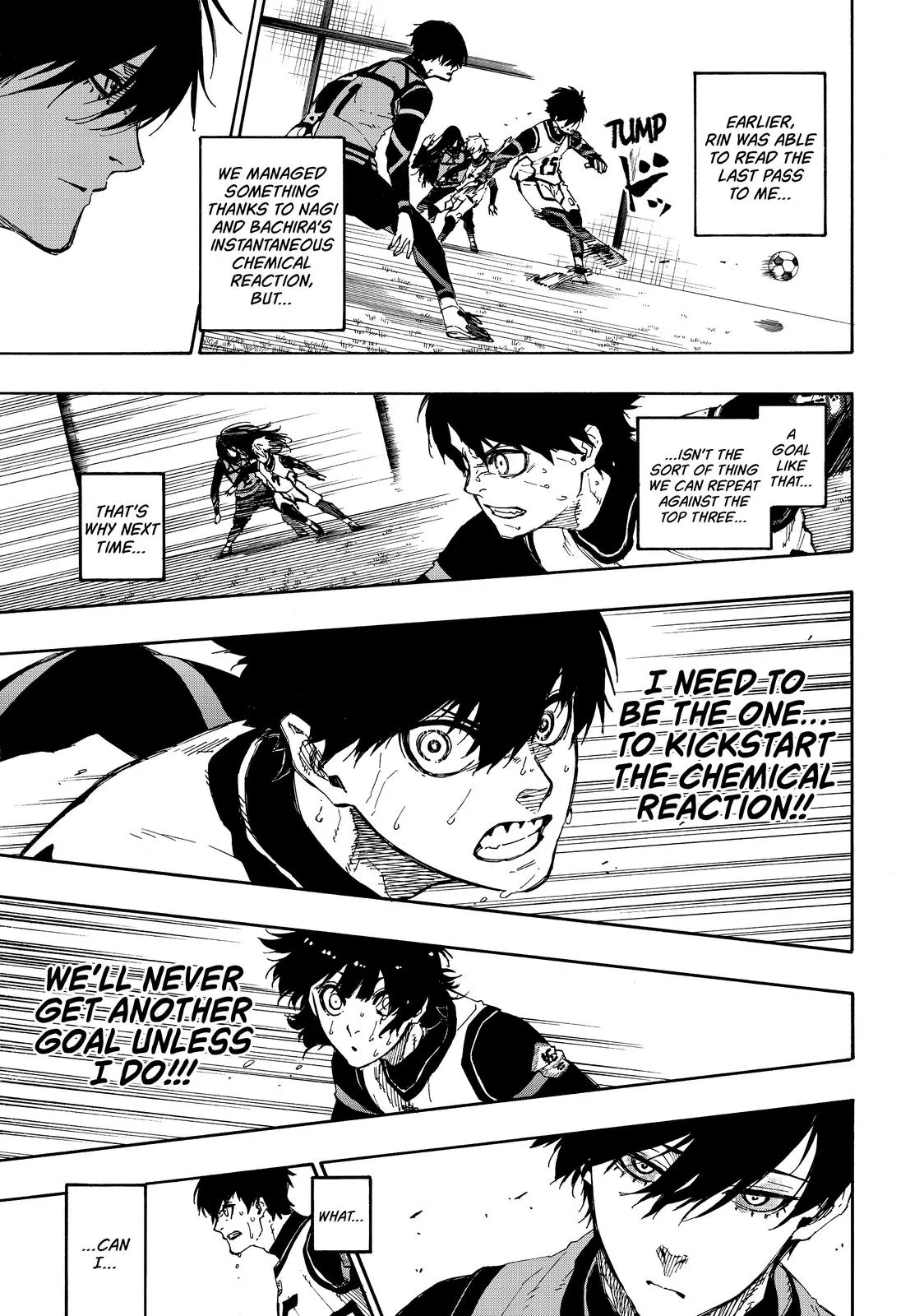
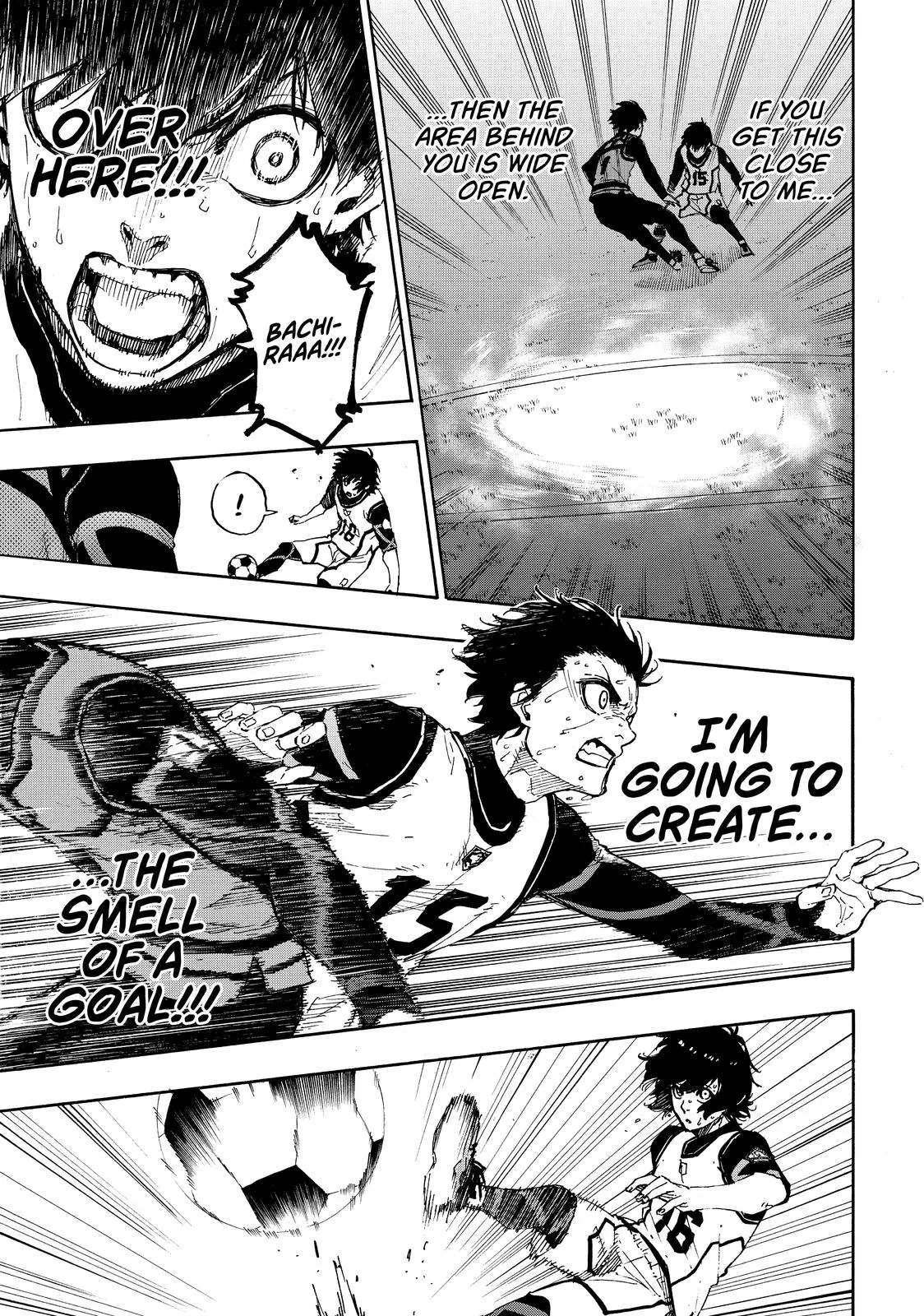
As play continues, Isagi reflects on the earlier success created by Nagi and Bachira’s instinctive chemical reactions. He understands that such moments were flashes of brilliance, not something they can rely on repeatedly against elite opponents. Determined to change the outcome, Isagi resolves to become the one who initiates the next reaction rather than merely responding. This decision fuels his movement as he pushes forward, convinced that scoring is impossible unless he takes responsibility for creating the opportunity himself.
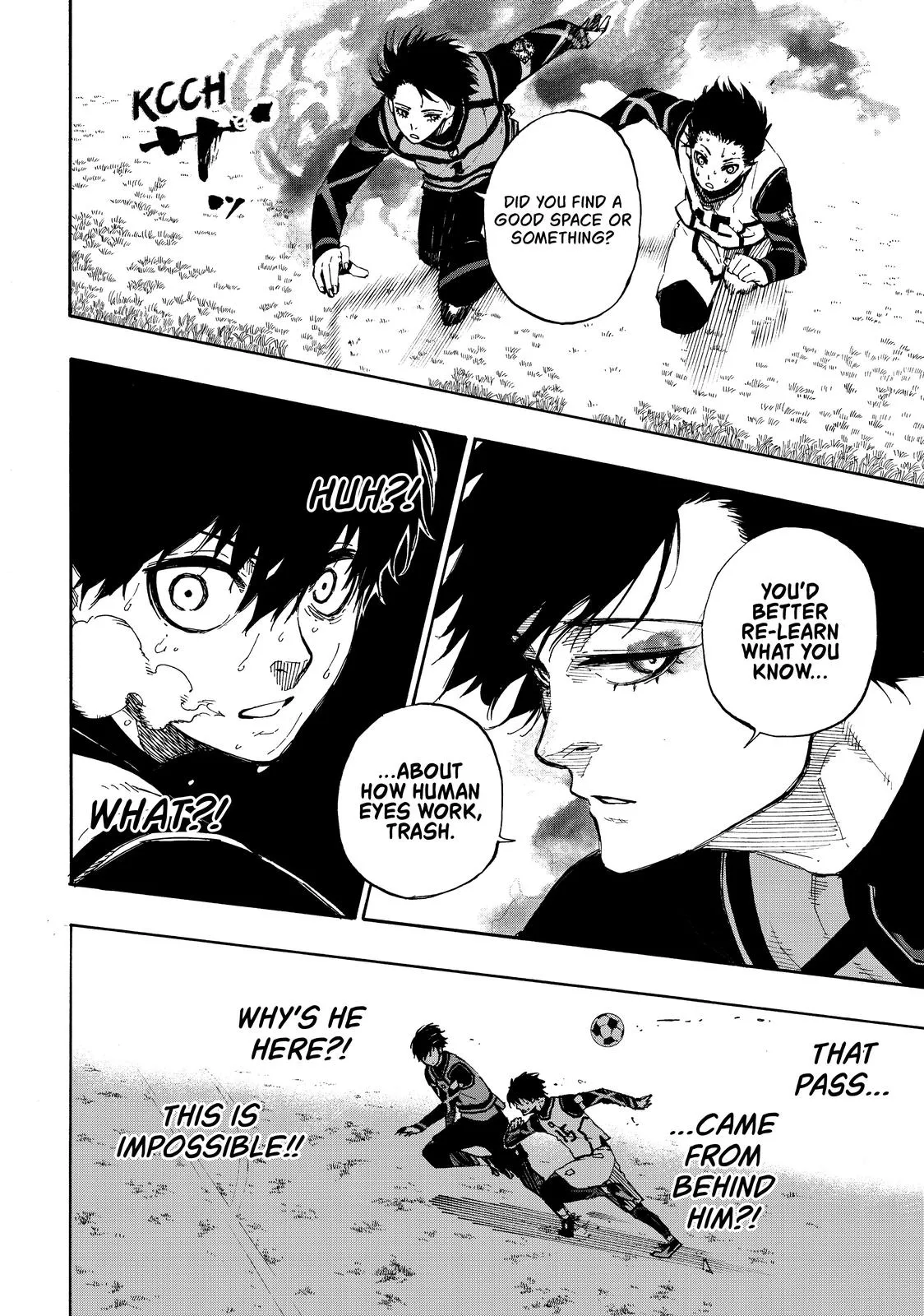
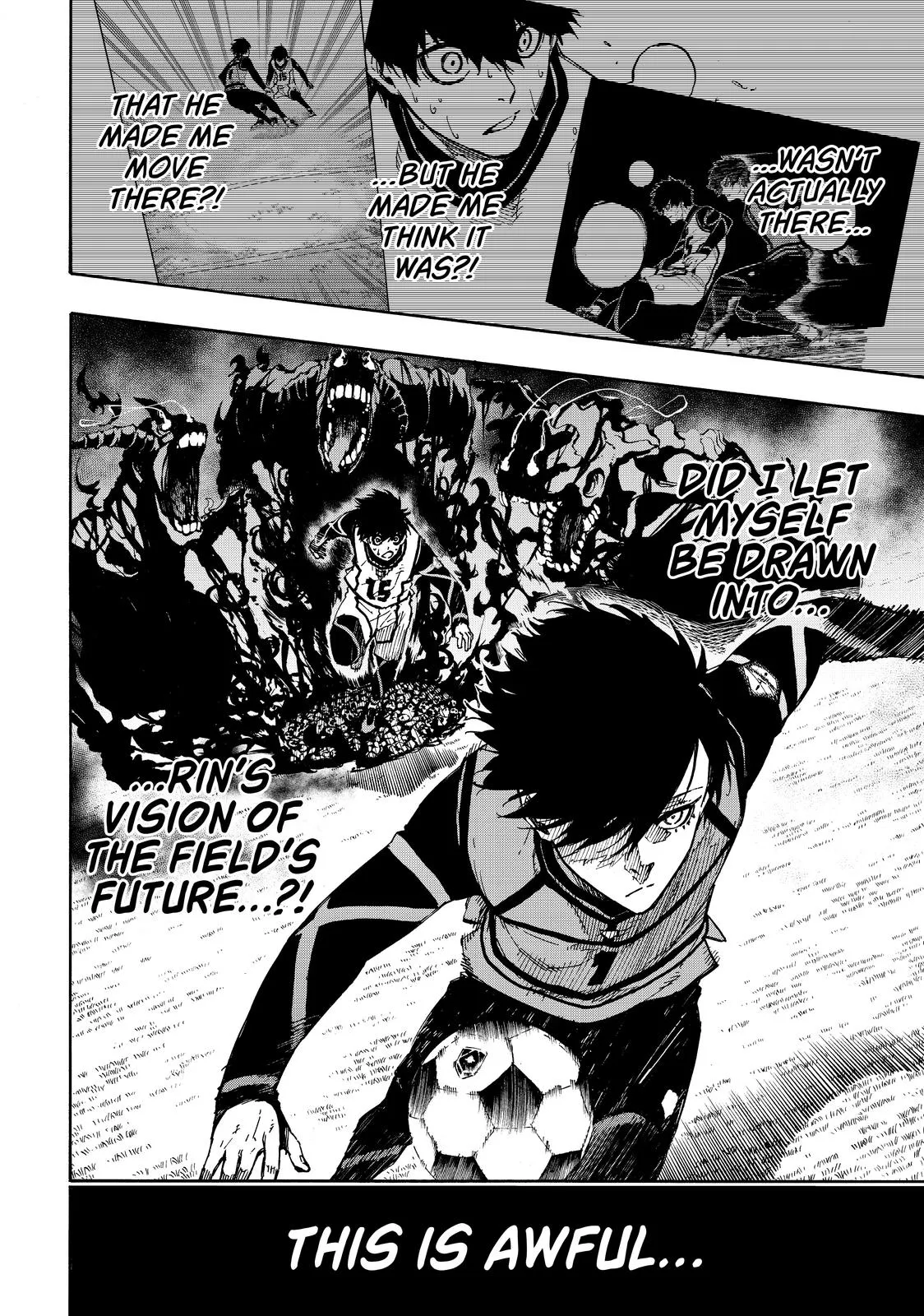
Rin, however, proves to be far beyond Isagi’s expectations. He manipulates positioning and perception, drawing Isagi into the wrong space by exploiting how players read visual information. Isagi realizes too late that Rin has predicted his choices, not by copying his actions, but by understanding how his mind works. Rin’s vision of the field feels absolute, forcing Isagi to confront a painful truth: the difference in their abilities is not just physical or technical, but rooted in perception and anticipation.
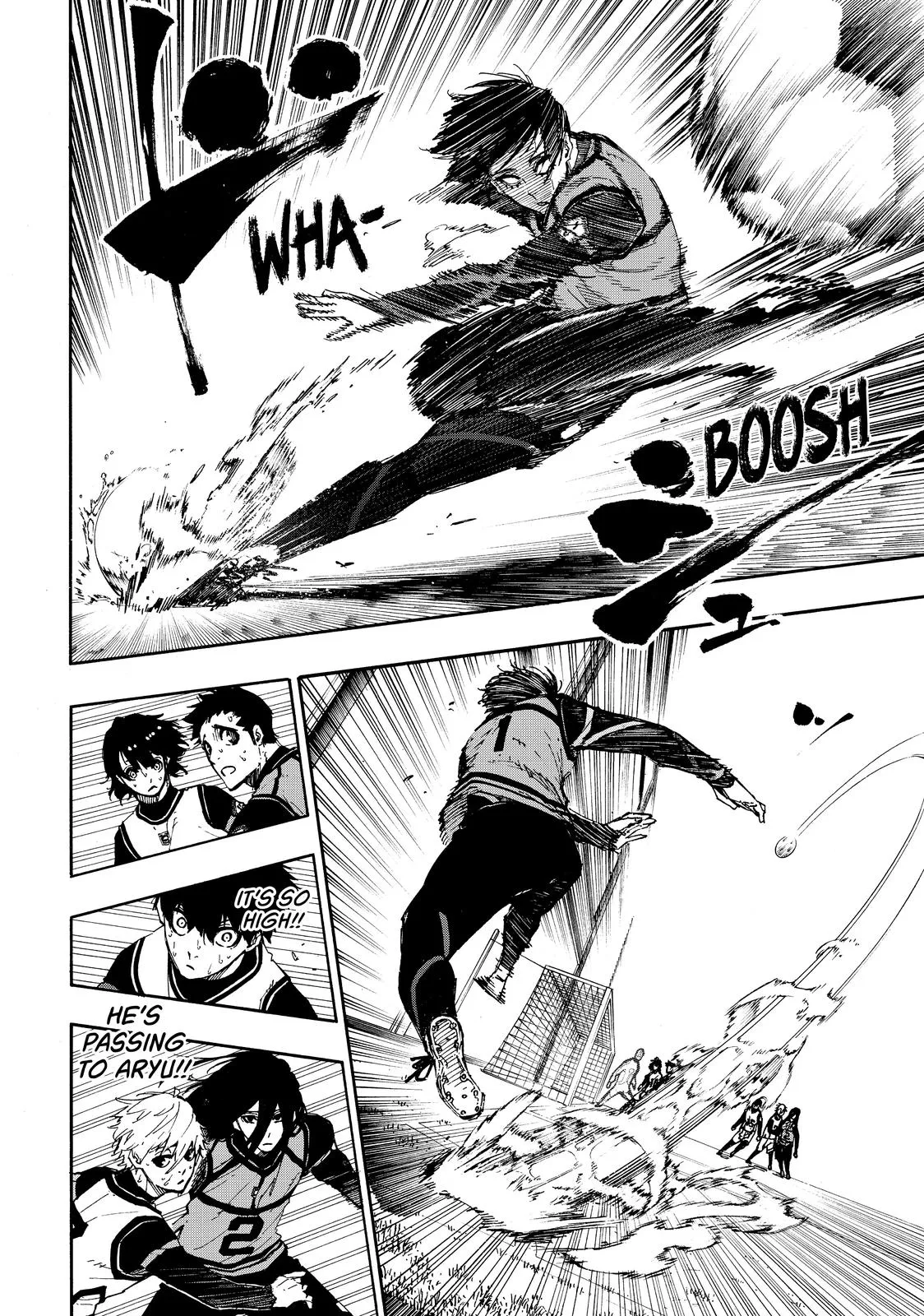
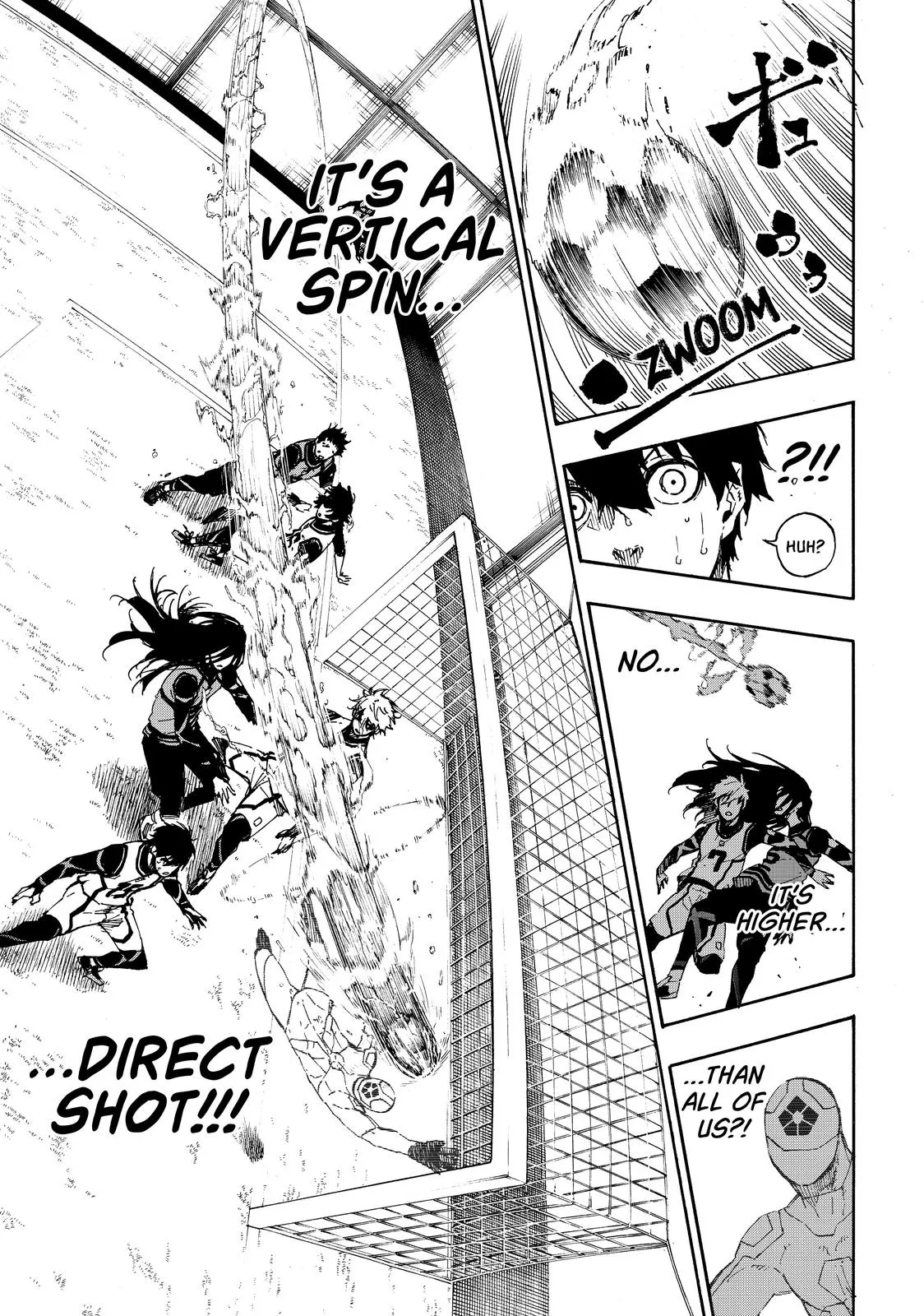
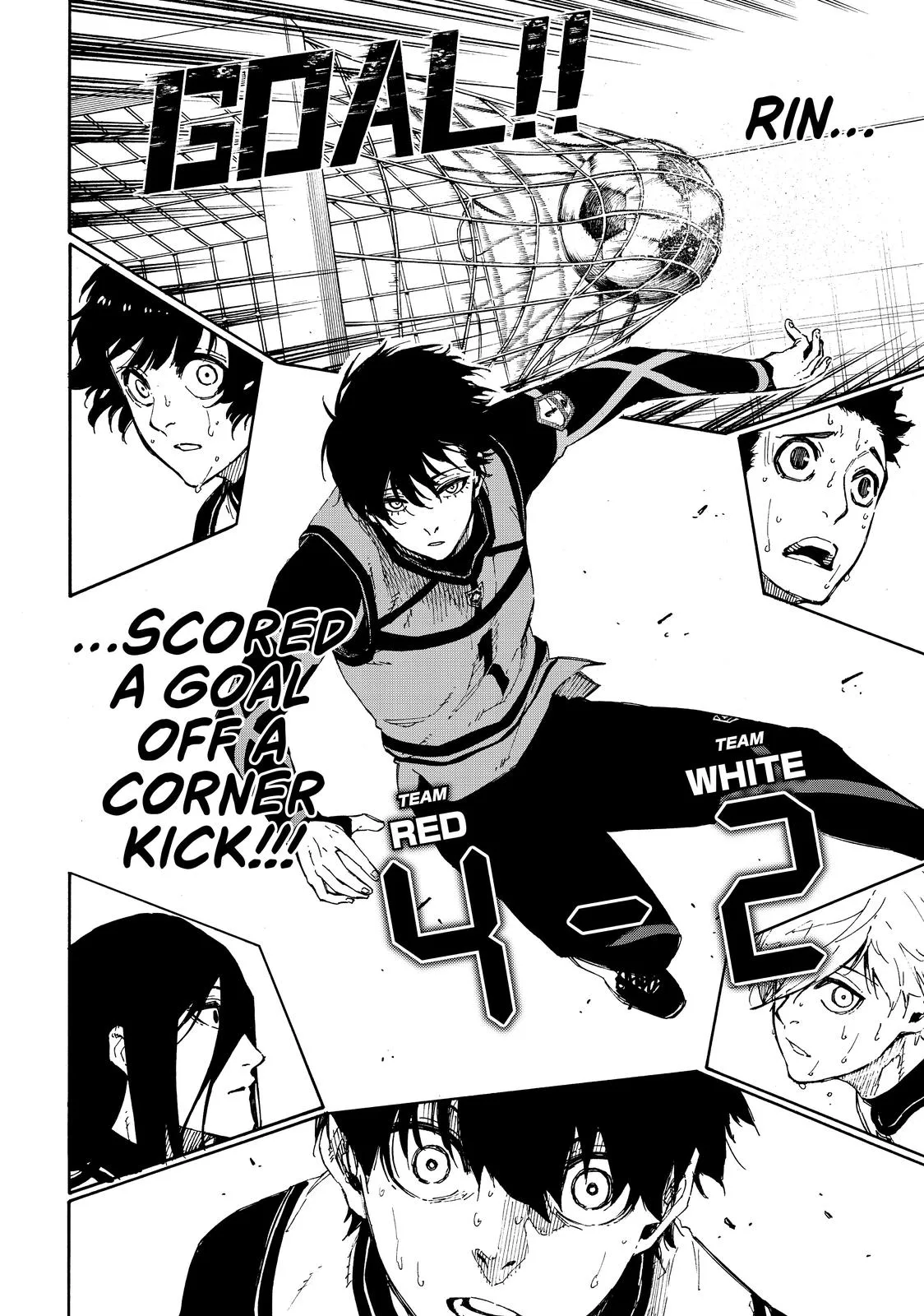
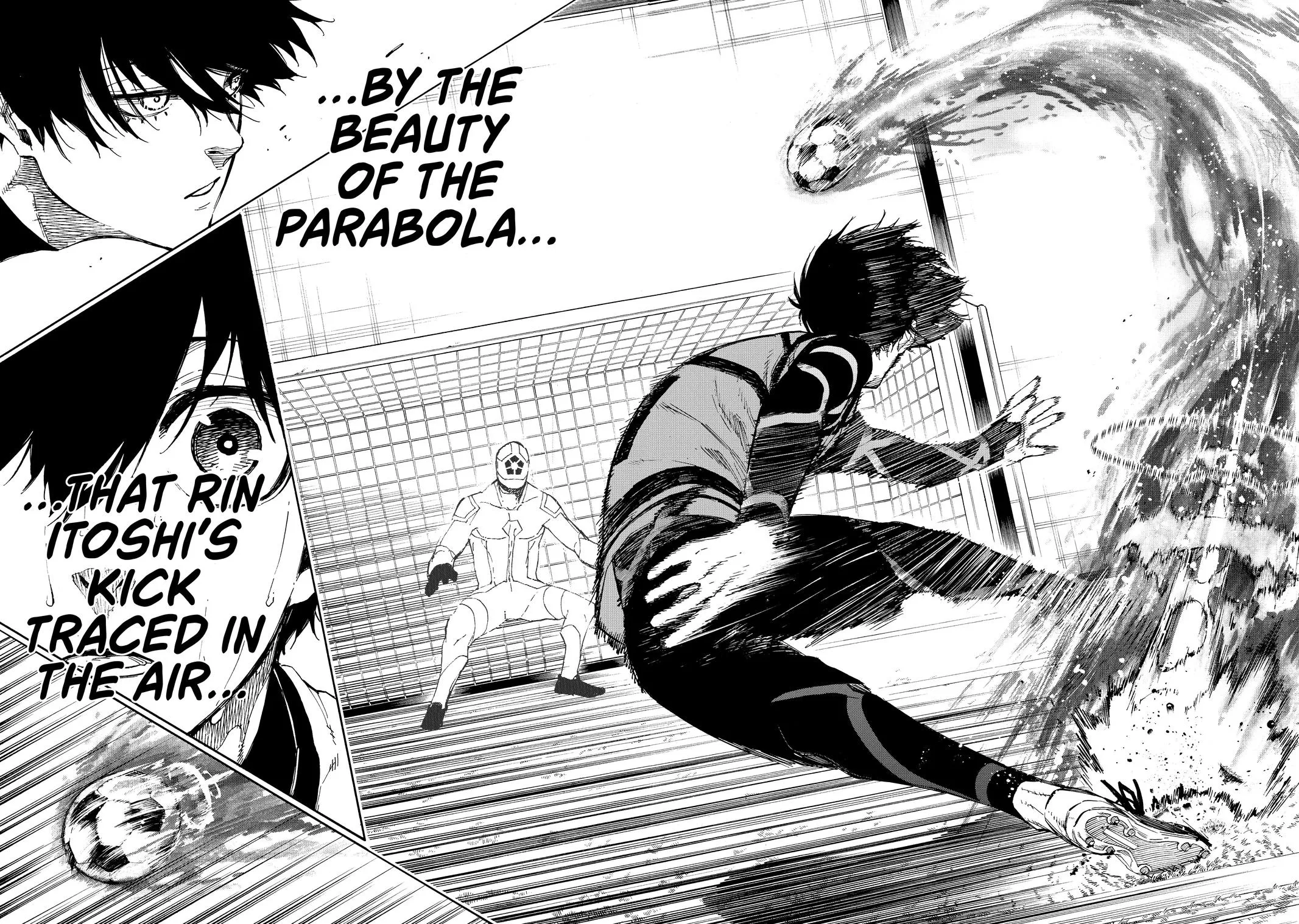
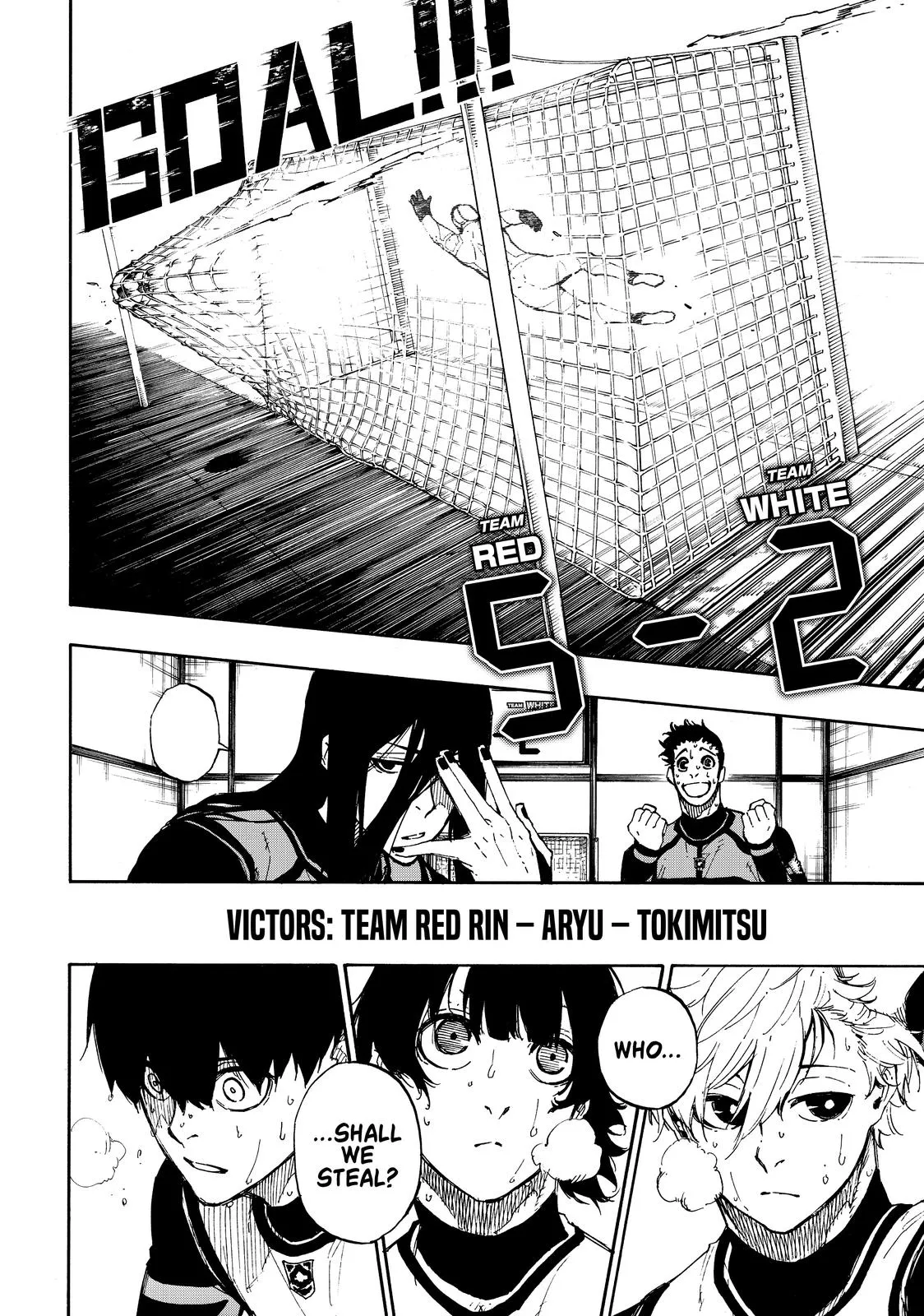
The chapter reaches its climax when Rin executes a stunning parabolic shot from a corner kick, tracing a perfect arc that bypasses every defender and seals the match. The goal confirms Team Red’s victory and establishes Rin as the one truly controlling the field. As the score settles, Isagi is left shaken yet awakened, recognizing that Rin’s vision represents a level he must someday reach. The chapter ends with defeat, but also with a clear direction for Isagi’s growth, turning loss into a catalyst rather than an endpoint.